BMW completes winter testing programme for upcoming i3
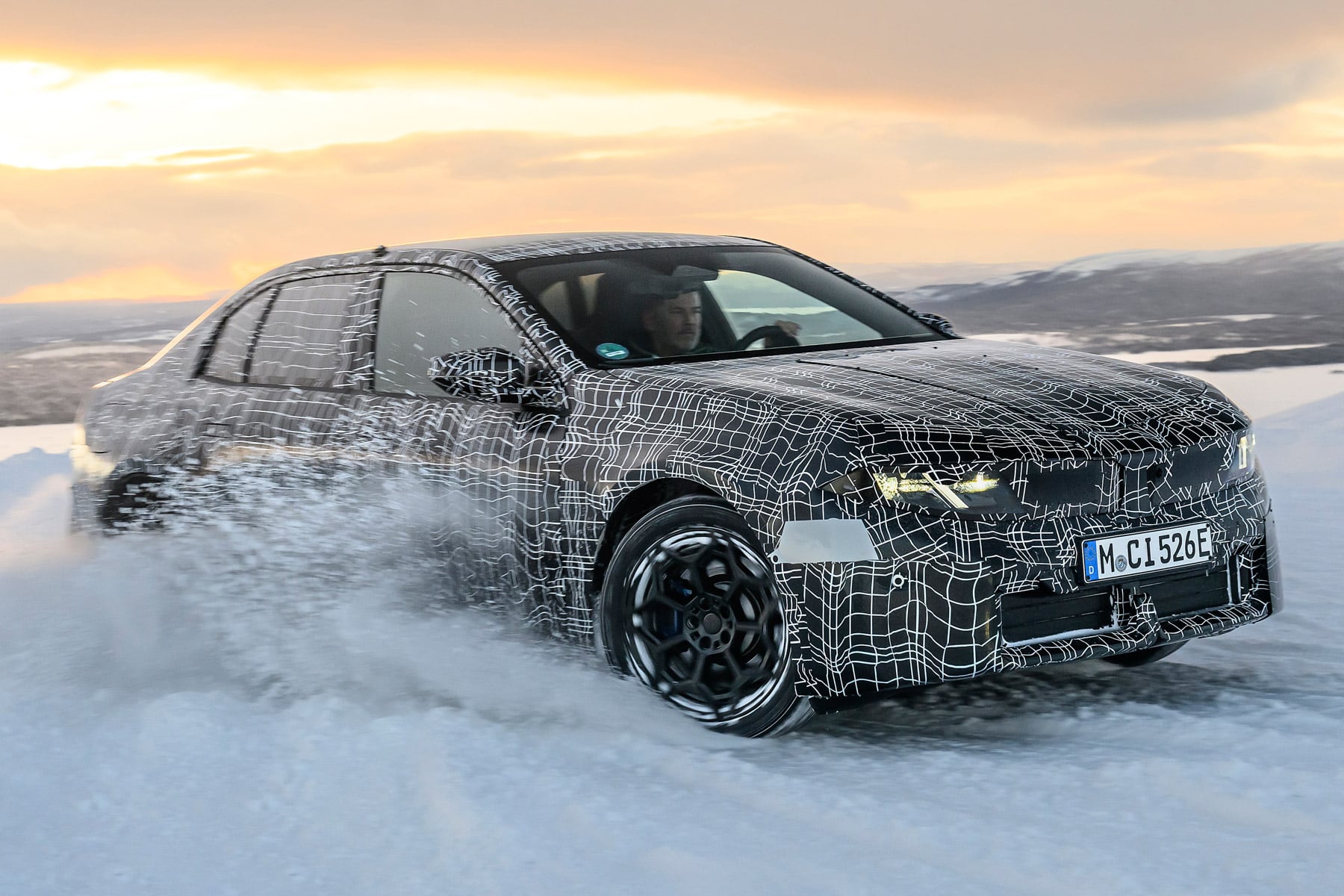
These tests no longer focus on functional checks or thermal management, which are typically evaluated during test drives in the Arctic Circle. Instead, BMW engineers are now refining the ‘Heart of Joy,’ the central control unit for driving dynamics in the models of the Neue Klasse.The i3, as the electric counterpart to the 3 Series saloon, will be the second model in the Neue Klasse, following the SUV model iX3. This new generation features the sixth iteration of eDrive (Gen6) and incorporates advanced powertrain units. As a result, not only is the control logic with the ‘Heart of Joy’ central computer new, but the powertrains themselves have also been upgraded. Additionally, the i3 is the first flat-floor model in the Neue Klasse, where fine-tuning differs significantly from the high-floor iX3.“As the BMW i3 approaches series-production readiness, the test and development team is performing the final fine-tuning of driving dynamics components on the snow-covered roads and frozen lakes of Sweden” the carmaker stated.The ‘Heart of Joy’ works in conjunction with the in-house-developed software ‘BMW Dynamic Performance Control’ to manage the powertrain, brakes, partial steering functions, and recuperation. According to BMW, the new central computer, also referred to as one of four ‘Superbrains,’ is up to ten times faster than previous systems. Other Superbrain central computers are used for infotainment and driver assistance systems. For the Heart of Joy, this advancement is expected to deliver ‘particularly effortless and exceptionally precise handling of the new BMW i3.’
Image: BMW
Image: BMW
Image: BMW
Image: BMW
Image: BMW
Image: BMW
Image: BMW
Image: BMW
Image: BMW
Image: BMW
Image: BMW
Image: BMWThe snow-covered roads around Arjeplog and the specially prepared surfaces on frozen lakes provide ideal conditions for testing and fine-tuning the powertrain and chassis.“Engineers to test, analyse and optimise the interactions of these systems under precisely reproducible conditions. This provides the foundation of the hallmark BMW driving pleasure,” BMW explained.The developers also praised the extremely fast regulation of the two electric machines, which enables ‘superior driving stability.’“Only electric motors are capable of processing and executing the lightning-fast commands. This enables the BMW i3 to deliver a light-footed and comfortable drive in every situation,” BMW stated.The challenge for the engineers was twofold: firstly, the i3, as a new saloon in the 3 Series format, is expected to set new benchmarks in driving dynamics. Secondly, as few customers drive their vehicles to such limits, comfort and driving safety are also key priorities. However, because the powertrains can be controlled so precisely, the Heart of Joy reduces the number of necessary control interventions, such as those by the DSC system.“The resulting cornering behaviour is more consistent and reproducible, giving the driver an even greater sense of assurance. In addition, the BMW i3 remains easy to control even when approaching the limits,” the German carmaker assured.While camouflaged prototypes are still being tested in Arjeplog, the final design of the i3 will be revealed soon: the design premiere is scheduled for 18 March in Munich. BMW has already released an initial teaser, which suggests that the production model will closely resemble the Vision Neue Klasse study at the front—just as the iX3 drew heavily from its concept car, the Vision Neue Klasse X.BMW has also shared the first technical specifications, though these come as no surprise. The i3 will debut as the i3 50 xDrive, featuring the same powertrain configuration as the iX3—a 345 kW all-wheel-drive system with a separately excited synchronous machine (SSM) on the rear axle and an asynchronous machine (ASM) on the front axle—BMW presented details of these powertrains a year ago. Charging power is rated at up to 400 kW peak, and the vehicle is based on an 800-volt architecture. However, the battery’s energy content and range have not yet been disclosed; this information will likely be revealed at the world premiere. The i3 is not expected to match the iX3’s 108 kWh battery capacity, as BMW uses round cells with a diameter of 46 millimetres and a height of 95 millimetres in the flat-floor models of the Neue Klasse, while the cells in the SUV models are 120 millimetres tall. Pre-series production at the Munich plant is already underway, with series production set to begin in the second half of 2026.bmwgroup.com