Gardeners are urged to ALLOW caterpillars to destroy their gardens this spring to improve dwindling moth numbers
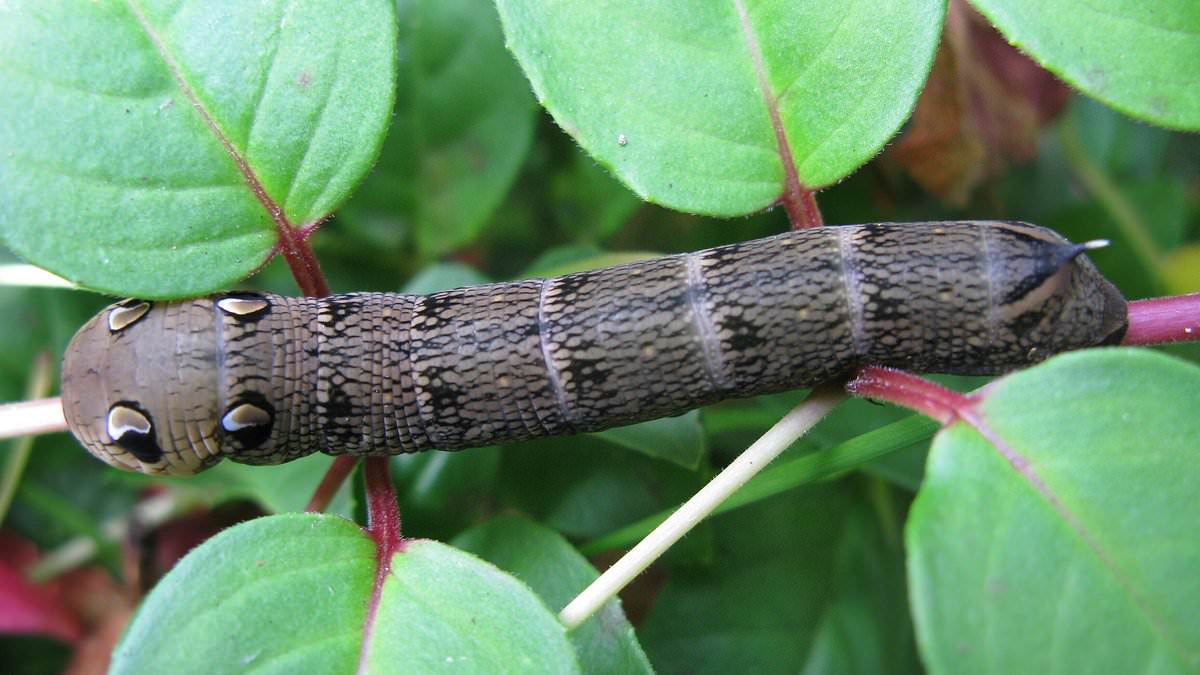
It might sound like a gardener's worst nightmare – but 'very hungry caterpillars' should be left to feast on plants this spring, conservationists say.Experts are warning that moths, which caterpillars grow into, have seen their numbers plummet by a third since the 1960s.The insects, which are vital pollinators, are struggling with climate change, pollution and an increasingly built–up Britain.Now, the Royal Horticultural Society (RHS) and The Wildlife Trusts are urging green–fingered households to put up with plants being nibbled by caterpillars in order to boost numbers.They explained that caterpillars need plenty of energy to get plump, ready for transformation into a moth.People should allow them to nibble on ornamentals and vegetable crops as well as plant caterpillar–friendly options such as willow, honeysuckle, foxgloves and marjoram, they said.It follows previous campaigns asking people to 'make friends' with slugs and snails who visit their gardens.'Moths have long played second fiddle to butterflies in the garden but understanding their value and needs, and that of their very hungry caterpillars, can support their recovery and help in creating a garden rich in biodiversity,' Helen Bostock, RHS Senior Wildlife Expert, said. 'Very hungry caterpillars' should be left to feast on plants this spring, conservationists say, as moth numbers have plummeted. Pictured: An elephant hawk moth caterpillarWhile some moth caterpillars feed on a range of plants, others are pickier eaters feeding on just one or a handful of species.Some adult moths do not eat at all, relying on their reserves from what they ate as a caterpillar, the experts explained.Some caterpillars are so small they live within plant leaves, while others are camouflaged as twigs, bark or bird droppings.The campaign also recommends making a 'night–time nectar bar' featuring plants that are at their best at dusk, to provide for the hundreds of species of nocturnal moths, such as sweet rocket, tobacco plants (nicotiana), jasmine and white campion.While moths are largely nocturnal, around 150 species are active during the day. Some have striking colours including the pink and olive–green elephant hawk moths and Jersey tiger moths which have red, cream and black markings.Vicki Hird, insect expert at The Wildlife Trusts, said: 'Moths are stunning in name and beautiful by nature.'It's no wonder the French call moths 'butterflies of the night'. Even little brown moths can have wonderful, intricate markings.'Let's all help them in our gardens and enjoy the benefits they bring.' The Jersey tiger moth (pictured) has vivid red, cream and black markings. Sadly, many of the UK's moths are strugglingThe experts said moths are especially important as they are a source of food for a host of other wildlife including birds and bats.The campaign's website reads: 'Moths are important pollinators, a vital food source for other wildlife and a valuable indicator of the health of their environment.'Sadly, many of our moths are struggling. The good news is, you can help! Our gardens and balconies can be a haven for both flying adults and their hungry caterpillars.'Providing flowers for nectar–hungry moths is a great place to start, offering a selection to last all through the year.'But to really help we need to think about feeding their caterpillars, too. We can plant native trees and shrubs that cater to a wide range of caterpillars, as well as being happy to share some of our garden favourites. A few holes in leaves are signs of success, not failure.'HOW DO CATERPILLARS 'SCREAM'?A new report explains how certain caterpillar species are able to emit cries when predators approach.Researchers from Carleton University in Canada learned that the creatures make these noises thanks to a process taking place in their guts.When air is forced through a constriction inside them, they make a screaming sound, which is loudest around their mouths.Researchers compared this process to that which takes place in tea kettles. Structures within certain caterpillars' guts act like tea kettles. Air is pushed through constrictions creating whistling noises inside them, researchers have found (file photo)However, the process is still somewhat confusing to scientists, who do not understand how air gets into caterpillars' upper guts.The insects do not have lungs, and air gets enters their bodies via openings called spiracles.Caterpillars are typically herbivores. However, some eat insects; a small percentage eat other members of their own species.Caterpillars are known for having hearty appetites and being a pest to gardeners. As their bodies grow, they shed their skin continuously.A body part found within their guts allows them to eat a great amount by monitoring potassium levels.A number of species of moths are most frequently associated with their caterpillar stages because they endanger growing fruits and other produce.Additionally, caterpillars are known as a source of silk for humans and as a source of food for animals.