Interactive map reveals your nearest nuclear shelter and states that are MOST exposed... amid fears of US attack: Make an emergency plan now
The fear of a nuclear apocalypse has reached levels not seen in decades as the US and Israel launch a deadly new conflict with Iran, raising alarms across capitals and prompting emergency diplomatic efforts to prevent a wider war.For Americans, the pressing question may soon shift from geopolitics to personal preparedness, including where the nearest fallout shelter is located and how to protect themselves if tensions escalate further.There is currently no public list of active shelters available for everyday Americans, since most are defunct or privately owned. But survival expert and Air Force veteran Sean Gold has built his own fallout shelter map, revealing that the vast majority of these radiation bunkers are scattered throughout America's largest cities. The map can be found on his survival guide website, TruePrepper.Gold's map includes dozens (and possibly hundreds) of basement shelters in cities such as Boston, Baltimore, Dallas, Detroit, Memphis, Milwaukee, New York, Oklahoma City, Sacramento and Washington, DC.He told the Daily Mail that each state has a link to its own map, sending users to a Google Maps page where radioactive symbols mark the locations of every shelter Gold has been able to verify still exists as of August 2025.Clicking on each symbol reveals the shelter's address and any notes he was able to find about the location, including what the bomb shelter signs look like or the current condition of the bunker.He said the canned food and medical supplies that were originally put in these bunkers decades ago are likely not there anymore, making it harder for people in 2026 to survive without bringing their own food and water.However, Gold said they should still provide the most important factor for making an ideal bomb shelter - layers of protection against radioactive fallout.
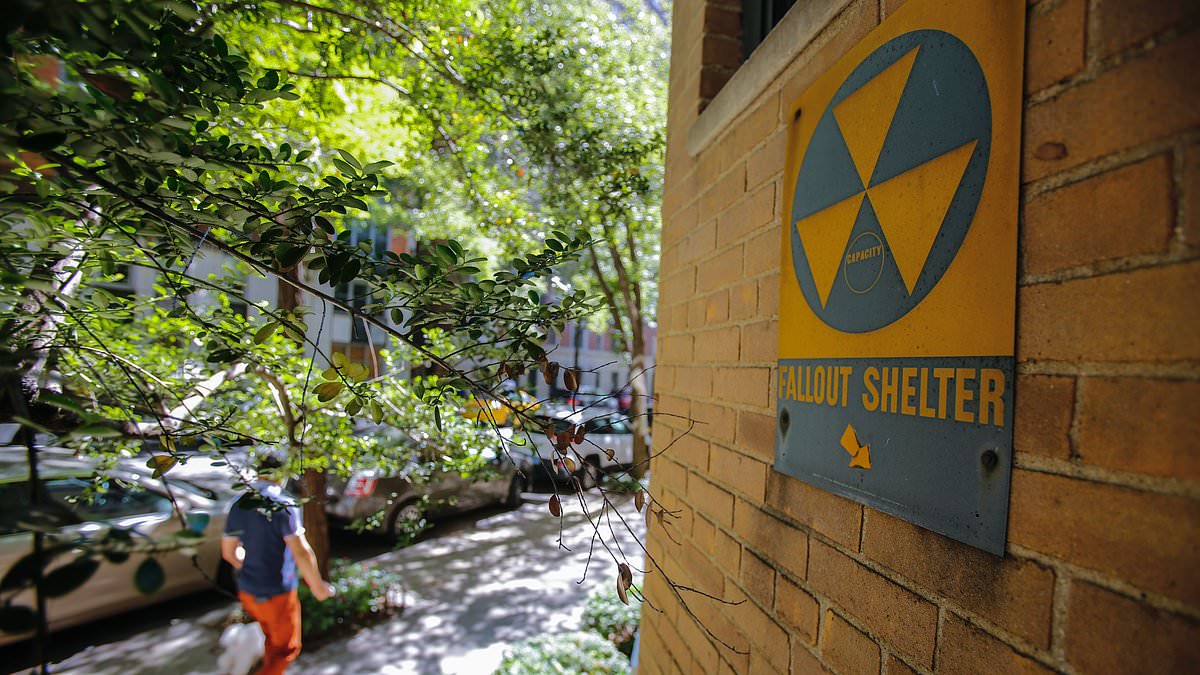
US and Israeli forces destroyed the headquarters of the Iranian Islamic Revolutionary Guard Corps (IRGC) in an attack that is believed to have killed Ayatollah Ali Khamenei on SaturdayFallout is radioactive dust and particles that fall from the sky and are carried by the wind after a nuclear explosion. They are invisible to the naked eye and land on the ground, people, buildings, food and water.According to the CDC, all of these particles give off harmful energy called radiation that can make people sick if they are exposed to it. High doses can start to cause nausea and vomiting within hours before killing those infected days later.Even lower doses of radiation exposure can lead to health problems, including cancer and birth defects if those infected have children later on. These issues may not result in immediate symptoms and could even take years or decades to emerge.'I do assume that they still provide adequate fallout radiation shielding, as they did over half a century ago when they were designated. They were typically thick, sturdy, concrete buildings with basements,' Gold explained.Since the 1950s, the US government has said that thick walls and a roof made of concrete or steel are necessary to block out the radiation produced by a nuclear explosion. Several yards of dirt can also keep out harmful particles.'Modern buildings can provide radiation shielding as well,' the survival expert continued. 'The center basements of thick, concrete buildings are ideal.'Gold noted that fallout shelters also need good ventilation with proper filters to trap radioactive particles in the air. Those inside will need enough food and clean water to last for weeks or months, an area for waste disposal so you don't contaminate clean supplies and a comfortable place to sit or sleep. The fear of a nuclear apocalypse has returned as officials in the US, Israel, Iran and Russia have all warned that the conflict in the Middle East could bring about an 'all-out war'A good fallout shelter should be in an area that isn't likely to take a direct hit from a nuclear bomb, and it should also be within a short distance of the people planning to use it. However, Gold noted that there's no guarantee you'll be home when disaster strikes.'If I'm out and about, 30 minutes from home, and get that dreaded missile alert on my phone, I'm heading to either a nearby fallout shelter or an equivalently-sized concrete building with a basement.'The Air Force veteran added that Americans may only have minutes to grab whatever supplies they can before running for a shelter, which likely will not have any already in it.'Food, water, an N95 mask, clothes that cover your entire body, and an emergency radio are the best items most people could hope for,' Gold said. 'It makes sense to have most of these supplies in your vehicle for a wide range of emergencies.'The US began building fallout shelters at a rapid pace during the 1950s and '60s. Efforts intensified around 1961 with the National Fallout Shelter Survey, a project to identify public buildings, including schools, libraries and basements, as potential shelters.To this day, residents in large metropolitan areas like New York can still see the fallout shelter symbol (three yellow triangles) on plaques nailed to older structures throughout the city.The signs let the public know the building housed a nuclear fallout shelter, and might have even provided directions on how to get there and how many people could fit inside. A good fallout shelter should be in an area that isn't likely to take a direct hit from a nuclear bomb, and it should also be within a short distance of the people planning to use it Sean Gold, pictured in a gas mask, told the Daily Mail he started his disaster-prepping website TruePrepper in 2016 after the birth of his first childOnce prominent, the bunkers were largely forgotten in the '80s as the threat of nuclear war faded and then nuclear weapons testing stopped in the '90s.Many Cold War-era shelters were eventually repurposed for storage, parking or other uses, especially in crowded metropolitan areas.After the 9/11 terror attacks in 2001 and Russia's invasion of Ukraine in 2022, however, doomsday preppers began feverishly trying to track down all of these hidden shelters as the threat of global destruction returned.Those fears have only grown since the summer of 2025, as the US more directly entered the conflict between Iran and Israel, with the Trump Administration vowing to 'finish' the war.Unfortunately, actually accessing a fallout shelter in your community may be harder than it sounds. America began building fallout shelters in the 1950s as tensions with Russia reached a critical tipping point. Many families began building their own shelters in basements or backyardsMost shelters from that bygone era are either defunct or privately owned - some homeowners built one for themselves in their basements and backyards.The Federal Emergency Management Agency (FEMA) now advises the public to shelter in place instead of looking for an old fallout shelter.FEMA also claimed that maintaining a nationwide shelter network was logistically and financially impossible for the US government.The agency recommended staying indoors for at least 24 to 48 hours, even though it could take much longer for the fallout to completely clear the area.Gold countered these recommendations, saying that Americans should wait up to 72 hours for the radiation to dissipate, and added that it will be vital to listen to emergency radio channels for important updates.