“The ideal minister”: Dr James Ryan’s role in the new state
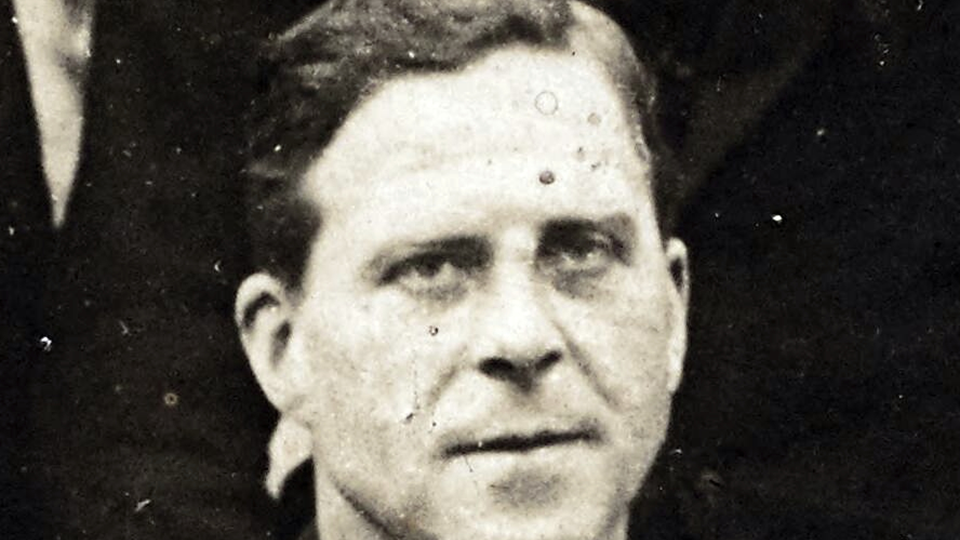
‘James Ryan and the development of independent Ireland, 1892-1970’ is the product of Dr. Michael Loughman’s PhD studies, and is surely one of the most important works of Irish political history in recent years.
As the author notes at the outset, Dr. James Ryan has been “a peripheral figure in the historiography of twentieth-century Ireland.”
This is in spite of his contribution to the independence struggle, his position at the heart of Fianna Fáil since its foundation and an extraordinary cabinet career which lasted well over a quarter of a century.
Loughman’s work is being widely-heralded and deservedly so. It would have been far easier (and perhaps more lucrative) for him to devote his attention to studying the life of de Valera, Lemass or one of the other former Taoisigh.
Instead, he has used his formidable research skills to carry out the difficult task of exploring the life of one of the secondary characters in the great national narrative. His success in creating such a compelling profile will be to the benefit of current and future scholars.
It is also notably fair when it comes to the historical context. Histories of 20th century Ireland are often bedevilled by a lack of context, and the reputation of Éamon de Valera in particular has been sullied as a result.
Loughman is not an uncritical apologist for Ryan or his Fianna Fáil colleagues, but he does them the courtesy of framing their actions within a broader picture.
For example, Ryan was Minister for Agriculture during the Economic War with Britain in the 1930s. This – along with the de Valera government’s broader protectionist philosophy – is often presented as being a destructive crusade motivated by insularity.
As the author explains though, protectionist measures were increasingly employed by Britain and other countries in the same time period.
Efforts by the de Valera government to increase wheat cultivation are also sometimes criticised, but a ‘cult of wheat’ was developing across Europe at the time.
Most importantly, he makes clear that the Economic War was ultimately a political struggle as well as an economic one, and a battle in which Ireland prevailed over Britain.
Not only were the Treaty Ports returned (thus making neutrality in World War Two a possibility), the ending of the payment of land annuities to the British was a major victory.
As Loughman reminds the reader, the “pursuit of Irish sovereignty was the political raison d’être for Ryan and his colleagues,” and he goes on to cite Professors J. Peter Neary and Cormac Ó Gráda who argued that the final settlement of the dispute was a “net welfare gain for Ireland in economic terms.”
Ryan’s 15-year tenure as Agriculture Minister was unquestionably difficult, but the man who T.K. Whitaker described as the “ideal minister” achieved a great deal in other departments.
Following the Mother and Child Scheme debacle, it was Ryan who repaired the damage and advanced legislation which accomplished much of what Noël Browne had sought to do, all while delicately dealing with overbearing bishops.
Ryan’s spell as Minister for Finance between 1957-1965 overlapped with a fundamental change in the country’s economic strategy, and yet Ryan’s role here has been criminally overlooked.
The aforementioned Whitaker and Seán Lemass are instead given all the credit. It is perhaps the case that Loughman’s single greatest contribution in writing this book is in drawing attention to the facts about this shift in thinking.
Lemass was Minister for Industry and Commerce when the youthful Department of Finance Secretary General put forward his ‘Economic development’ document in 1958.
It was Finance Minister Ryan who saw the potential contained within it, and it was Ryan who backed his civil service team and brought the recommendations to cabinet.
By the time a crucial decision had to be made about pursuing a free trade agreement with Britain, Lemass had succeeded de Valera as Taoiseach, but Ryan still had to battle against the new Minister for Industry and Commerce Jack Lynch in order to gain cabinet approval to phase out tariffs and pursue a new approach.
As Loughman writes, at this critical juncture, “the person within the cabinet most forcefully pushing the case for trade liberalisation was not Lemass but Ryan.”
Courage was needed and it was Ryan who provided it. Throughout his life, he had demonstrated that quality in abundance.
After the Easter Rising commenced, the young man had gone to the GPO to serve as a medical officer. In 1922, Ryan repeated the same feat in making his way into the Four Courts after the bombardment had begun. In 1923, he embarked on a hunger strike in the Curragh, in protest at the continued detention of IRA prisoners after the ending of the Civil War. After 35 days without food, it was agreed that the strike be discontinued, but there can be little doubt that Ryan and others would have gone on to the end.
Physical courage does not always translate into professional courage, but it did for him.
In spite of the dominance of the agricultural sector within the broader economy, he defied large beef farmers with his agricultural policies in the 1930s.
In the 1960s, as Finance Minister within a Fianna Fáil government which lacked a Dáil majority, he introduced a sales tax and pushed it through against fierce opposition.
Ryan knew that a sales tax would be required if Ireland entered the EEC, he knew that the tax base needed broadening, and he knew that the increase in public spending could not be continued without increased revenue. Knowing all of this, he risked everything politically in order to act in the country’s long-term interests.
Compare this with the fiscal recklessness of today’s politicians, and their legion of aimless special advisors.
James Ryan’s career is an example of what public service should be, and this book should be studied by anyone who seeks to change the direction of Irish governance, because Ryan was once in the position of discontented opposition that many of us now must endure.
He had been completely ideologically committed to the Republican cause, and probably to the point of blinding himself to reality at times. During a Dáil debate on the Treaty for example, Ryan stated that during five days spent in his Wexford constituency, he had “never met a person who was in favour.”
A few months later, Wexford’s voters elected three pro-Treaty TDs in a four-seat constituency, with Ryan losing his seat.
Then or now, spending too much time in an echo chamber is unhealthy. Nor is cutting oneself off from mainstream society a recipe for success; indeed, it was Ryan’s record as an advocate for his community and his professional reputation as a devoted doctor which helped him to become a successful politician.
After losing the Civil War, de Valera’s abstentionist Sinn Féin party was completely cut off from having any role in deciding the nation’s future, with its TDs instead sitting in an alternative Dáil in which de Valera was an imaginary head of government.
Interestingly, when Dev made his move in establishing Fianna Fáil, Ryan was so committed to Republican orthodoxy that he was initially minded not to follow him.
According to his sister, Ryan became repulsed by the attitude of “grievance and stupidity” of the abstentionist faction however, with Loughman adding that it also became “apparent to him that the more able element of the party were on the other side on his issue, and therefore, it only seemed right to join them.”
It is to our great benefit that he did join them, and helped to make Fianna Fáil into one of the most successful political parties in all of Europe.
A naysayer could scoff and say that Fianna Fáil never achieved its founding goals. This is partially true: Ireland remains partitioned, and there has been no Gaelic revival along the lines of what de Valera wanted.
But politics is not about getting everything you want, because perfection is not attainable in this world. Politics is instead about getting as much as can possibly be achieved.
James Ryan’s Fianna Fáil greatly weakened the influence of Britain on Irish political life. They achieved the final victory in the Land War, removed British military forces from the 26 counties and removed the British monarch from Irish law, developed a Constitution of our own and enabled the country to achieve material prosperity for the first time. Above all else, they established a conservative and patriotic political order which endured throughout the 20th century.
As we near the centenary of its foundation in 1926, we can say with certainty that that party is lost, being led by an amoral charlatan who despises all that its founders stood for.
But the example of James Ryan remains, and should be an inspiration to anyone who seeks to serve the Irish people.