Britain needs a Gaullist leader
Rain drummed away the minutes on the sash windows of Lancaster House, while those of us inside counted them down. The gilded halls where the future of Europe was thrashed out after the Second World War was the scene of the cabinet in mufti. It was February 2025 and we were at a government away day.
If anyone had told the Prime Minister we were keeping it casual, he hadn’t listened. Foregoing the housekeeping and room-temperature jokes that usually open these events, he spoke for 40 minutes, using only hand-scrawled notes as a guide. He talked about the journey the country had been on, the mood among the public and the moral imperative of his government. The man who would often say he was uninterested in -isms, who poured scorn on Westminster’s “great talkers”, who regularly told me to “lose all these extra words”, was in full flow. He spoke of progressives who had “been too confident about globalisation” and “too complacent about the power of the market and the role of the state”, of how “our voters, our people, told us over and over that we were wrong”.
Ironically, it was to Greater Manchester he reached to articulate that disconnect between the public and its representatives. He told the story of an elderly woman in Oldham who felt obliged to explain she “wasn’t a racist” before she could tell a Labour politician she didn’t like the antisocial behaviour on her street. “The contract,” he said, “has been broken.” That morning at Lancaster House came back to me watching Canada’s prime minister Mark Carney at Davos draw a line under an era with a critique similar to the one Starmer had been grasping for, and also because of the actions of the UK Prime Minister himself: his decision to ignore advice and not join the Gaza “Board of Peace”; his impromptu, impassioned press conference on Greenland; the taut anger as he responded to Donald Trump’s smear of the memory of British soldiers.
So often we see and read about Starmer the pragmatist or the technocrat. But this was a leader driven by the values and the traits that he sees as Britain’s – decency, respect, fairness, with a healthy dose of pride and stubbornness. Like Tennyson’s ageing Ulysses, the UK may not have the strength that in old days could move Heaven and Earth. But still, we are – to quote Starmer’s message to Trump – not to yield.
New year, new read. Save 40% off an annual subscription this January.
The acute threat disappeared as quickly as it had emerged, as so often with this US president. Europe is taking a breath. But the temptation to think we will return to normalcy – perhaps as soon as the US midterm elections – ignores reality. American politics will be conducted in the Maga frontier for the foreseeable future. Attitudes to Schengen will harden until Europe’s external borders mean something. Russia will continue to menace us. And the effects of all this will continue to be felt by people through their bills, their bank balances and in the general sense of unease and decline that has shrouded us too long. The assumptions that the modern West were built upon haven’t ruptured overnight – instead, the more they erode, the weaker they get. The UK – exposed because of our Atlanticism, size and indebtedness – needs to act, and act quickly.
However, amid the chaos and uncertainty there is opportunity to build a future that makes us genuinely stronger as a country: the bit of the bargain that governments – all those great talkers – keep forgetting to get to.
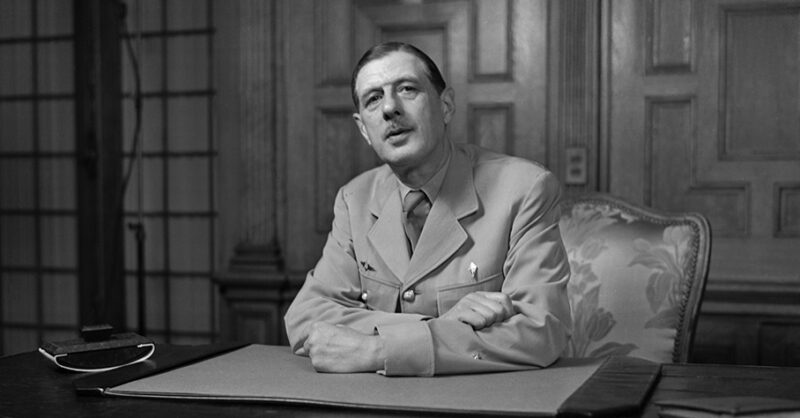
The white stucco of Carlton Gardens is only a quick detour on the way to Downing Street from Lancaster House. Here, in a quiet cul-de-sac close to the crowds of the Mall and St James’s Park, across the way from the war-time home of the Free French at number four, is a statue of Charles de Gaulle. This is a corner of England that will always belong to our two countries, our confused and confusing relationship, our shared sacrifice. It also belongs to anyone who dreams of restoration and rejuvenation, of national pride, of a future continuous with our past but not bound by it.
Eighty years before that day at Lancaster House, in March 1945, De Gaulle stood before the French Assembly and declared that his country had to choose between “the sweet shadow of decline and the harsh light of renewal”. The choice for Britain today could hardly be expressed better: do we as a country, a people and a government have the stomach for national renewal – or are we content to drift?
That light of national renewal is going to be harsh. It will require an honesty about what needs to change that is simply not in sight at the moment. Watching politicians dig their ideological trenches ever deeper – tax the rich vs shut the borders – one is left with a sense that we are surrendering to our troubles rather than taking arms against them.
Where people (wrongly) used to talk about polarisation, they now talk (rightly) of fragmentation: an electorate breaking into clusters. The temptation is for politics and political strategy to follow this, becoming ever smaller and shriller. Back to our values, shore up the base, hold what we have. In effect, this is to write off tens of millions of voters across the country. It is no recipe for creating a national story for a new era: it is an active choice to postpone any chance of renewal and instead take comfort in the schisms.
A modern Gaullist response to this moment would be to take on the frailty of our position and the smallness of our politics by acting bigger. It would be to give people a clear sense of what the sacrifices and the collective effort are all in aid of. In the spirit of comradeliness, let us take a generous interpretation of what Andy Burnham meant when he bemoaned in this magazine that we are “in hock to the bond markets”. It is both a cold, hard reality and a source of shame that we ended up here. But the challenge for Britain is more profound than mere market dependency. Whether it is our reliance on an unreliable ally for our defence, the fragility of our health system, our bloated but weakened state or our exposure to global energy prices, the story is the same: the life of the average Briton is not in hock just to the remorseless logic of the markets, but to outside events and actors everywhere.
The system of ever-closer integration has, after a quarter-century of shocks, been revealed as one of dependence and softness. The response should be a reclamation of sovereignty – real sovereignty. Not myths about Britain alone, or a return to the Tory, Brexit-era whimsy weaponised as politics. Instead, we should be selling the public the dream of a country that builds back its resilience and self-reliance – engaged with the world beyond, but in hock to no one but itself. This will require expensive decisions and at times painful trade-offs, but the public will accept them if they are accompanied by a sense of national direction and purpose that hasn’t existed in many people’s living memory.
Lucy Powell, deputy Labour leader, is right to say that success is going to require more fights. Part of the problem for the government has been that the fights it is having are fights it doesn’t want. Instead, it should take the best of what it is doing – industrial strategy, workers’ rights and planning – and turn them into a project to rebuild Britain.
If that means bills in the Commons to speed up critical projects, it should relish opposition from left and right rather than seek compromise: likewise when it comes to facing down those who wince at the language of picking winners. This is precisely the sort of moral theatre in which all great reforming governments thrive.
None of this will be possible without slaying some of the party’s most sacred cows. You don’t need to be a psephologist to know that the vast bulk of Labour MPs and members would dearly love to rejoin the EU. I disagree with them but have never doubted the sincerity of their belief or their reasoning. However, the discussions swirling around the party about rejoining the customs union or re-entering the single market are the arguments of 2016, not 2026. They are false promises that will be exposed by reality.
Not only would Britain crawling back to the EU from a position of weakness diminish us, but there is also no reason to think the Union would even welcome us at a time when Eurosceptic parties lead many polls and France faces an era-defining presidential election. If your goal is to rejoin the EU – and let’s be clear, that is what these arguments are about – then at least have a plan to do it from a position that does not leave the UK locked outside the rooms where decisions on its trade and industry are made.
Similarly, welfare is a core principle of the Labour Party. But there is no future for Britain if we choose to leave ever-increasing numbers of young people stuck on benefits. That is an economic and fiscal disaster as well as a moral one. We should aggressively push the technical education and apprenticeships the Prime Minister reveres, with real employer obligations. Migration can be used carefully to fill gaps in the labour market, but never again can it offer businesses a limitless supply of cheap employees.
The government should be singing from the rooftops about its industrial strategy because it is the clearest vehicle it has for showing what economy it wants for the UK in the 2030s and beyond. We should focus it more tightly still, making our defence and security needs the tributary from which all else springs – energy security, advanced manufacturing, tech. A booming university sector, life sciences, AI, quantum, finance – stuff we are either already good at or taking big bets on – is as much a part of this story of national resilience, one that promises that we can be rich in every sense of the word.
De Gaulle understood that vision, planning and theatre were key components of political storytelling. But the question of where power lies was central to everything. Today, ministers often find themselves explaining away decisions they didn’t make because of unaccountable bodies beyond their control. This is how nations decay, when citizens lose sight of the clear line between choice and consequence. It is wrong to lay the blame for this at the feet of civil servants – politicians created the system and should have the courage to undo it. But we cannot change at the pace we need while smothered by regulatory and legal bindweed.
Finally, we need seriousness. For a decade the Labour Party had front-row seats to Tory governments that thought changing the people at the top could somehow change the fundamentals of the country. They tried the smooth PR man, the shire conservative, the political celebrity and the smooth technocrat. At one point they even tried Liz Truss. The only thing this chaos achieved was to leave the country less prepared for future crises. When it entered government, Labour did so on a promise that it would bring an end to this style of performative politics. It also gave up the luxury of easy answers that flow undisturbed in opposition.
Facing uncertainty at home and abroad, this government can respond in one of three ways. It can follow the Tory example and spend months arguing with itself – which the country won’t forgive. It can cross its fingers and hope the past comes back – which it won’t. Or it can turn the painstaking, long-term fixes we all know Britain needs into a proper national story.
We are climbing a steep hill, one treacherous step at a time. We will stumble along the way. But at the top is a better country – one worth fighting to get to. We will have a national story of hard times to overcome, of fierce pride and independence, of new opportunities and optimism. The great general would never have admitted it, but even he might feel a grudging respect for that Britain of tomorrow.
[Further reading: How do you solve a problem like Whitehall?]
Content from our partners
Related