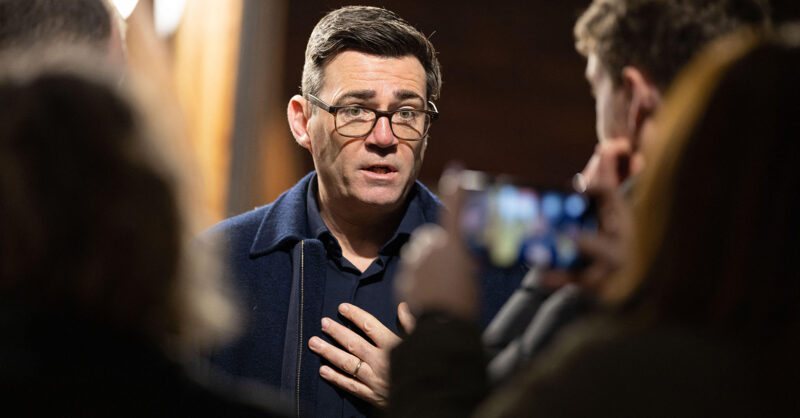
How a single call sealed Andy Burnham’s fate
It must have felt somewhat beneath Keir Starmer to dial into a Microsoft Teams call at 11am on 25 January – a Sunday – to deal with the grubby, mundane reality of Labour’s internal power politics. He intensely dislikes, and barely tries to understand, the arcane internal processes of the party he leads, often leaving such matters to Morgan McSweeney. But there he was, right before a call with Volodymyr Zelensky, joining an officers’ meeting of Labour’s National Executive Committee (NEC) to stop Andy Burnham from returning to Westminster. High-stakes political manoeuvrings were reduced to the indignity of a Teams call.
To the surprise of some others present, Starmer led the charge himself. Shabana Mahmood, as chair of the committee, opened with brief remarks on procedure, and then the Prime Minister launched in. He praised Burnham, said he liked him, but argued that triggering a fresh election for the Manchester mayoralty would have a huge impact on party campaign resources ahead of May, and would put Labour’s control of Greater Manchester at risk.
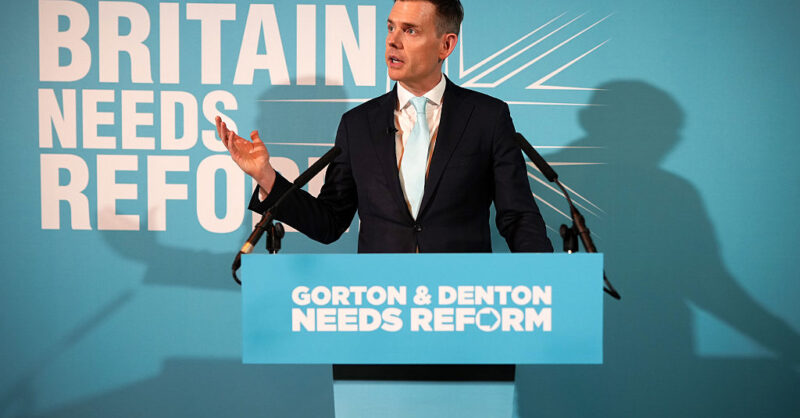
That the Prime Minister made this argument was an extraordinary admission of political weakness: 20 months ago, Burnham won the mayoralty with nearly two thirds of the votes cast. Lucy Powell, Labour’s deputy leader, delivered the counter-argument calmly and clearly. Then, one by one, the other seven officers lined up behind Starmer, voting 8-1 against Burnham being allowed to stand as the Labour candidate in the Gorton and Denton by-election. “No voices raised”; the explosive decision was made without fanfare. Whether it’s a strategic error or merely the best of no good options, the die has been cast.
But even those who voted with their leader don’t believe Starmer is in the clear. “I don’t think this makes a leadership challenge any less inevitable,” one member who voted to block Burnham told me after that fateful Teams meeting. Indeed, as another Labour figure puts it, “Keir has taken out one enemy, but emboldened another.”
New year, new read. Save 40% off an annual subscription this January.
Wes Streeting is still the obvious candidate waiting in the background. The calculation behind Starmer’s brute use of political force is that he would rather face Streeting than Burnham in a contest. Starmer’s supporters argue privately that, if it came to it, the Prime Minister could beat the Health Secretary in a ballot of Labour members.
After months of engaging with MPs – and appeasing them with measures like scrapping the two-child benefit cap in Rachel Reeves’s Budget – Starmer’s blocking of Burnham is a glaring reminder of what large parts of the Labour Party say they hate about this leadership. These include centralised power plays, boys’ club factionalism and disrespect for elected politicians – all of the things McSweeney has come to represent in the minds of many, fairly or unfairly. While Starmer fights to keep his party with him, he could have done without this episode. It is not a fresh crisis: it adds a new resentment to the simmering discontent already building in Labour ranks, ready to burst out in May or whenever a contest is finally triggered.
Only one thing has really changed: we now know that Burnham won’t be able to contest a Labour leadership election any time soon. “It has underlined what was probably always going to be the case,” observes one member of the party’s soft left. They say colleagues have struggled to “manifest” a Burnham return in recent months, hoping that by talking about it enough, they could somehow defy the maths on Labour’s NEC – and magically make their candidate appear. Now the middle of the party finds itself back where it was several months ago, without a clear candidate who could stand against Streeting.
As the Labour soft left comes to terms with the fading of the Burnham dream, cracks are showing in the faction. While some continue to insist there will be no Streeting coronation, others note that the Health Secretary will need a powerful soft-left backer – ideally a woman – to endorse any bid, indicating an openness from some to doing a deal. All they can agree on is a prop-up-Keir-for-now strategy, as one member of that faction dubs it.
After Burnham’s blocking, some on the soft left insist they do have a candidate: Angela Rayner. Yet Rayner remains in political limbo while waiting for her tax affairs to be resolved, unwilling to make a major comeback until she receives a final determination from HMRC. The will-she-won’t-she continues. In the meantime, she is focused on policy interventions. Most recently, she secured a victory on leasehold rules, as Starmer announced he would follow through on Labour’s manifesto and cap ground rents at £250 – after pressure from Rayner and others not to back out of the policy pledge.
Rayner’s next focus is on special educational needs and disabilities (Send) provision in schools, with Education Secretary Bridget Phillipson due to unveil plans to overhaul the system in the coming weeks. This is a potential area for rebellion if the government does not manage this sensitive subject well, and Rayner takes a keen interest in it both from a political and personal perspective. She understands Send well, having served as shadow education secretary in opposition as well as being responsible for local government – which currently bears the financial strain of Send provision – when she was in cabinet. She is also the parent of a son with a disability and understands what the issue means to families and colleagues on the Labour backbenches. Ominously for the government, she will be watching carefully to see how it develops.
For Starmer, the argument remains what it has always been: changing prime ministers will not alter Labour’s fortunes – only the long, painful work of delivery will turn things around. He takes that approach on his visit to China at the end of January, emphasising the link between closer ties with the world’s second largest economy and jobs at home.
Unusually, the Labour movement is broadly united in support for this approach to the superpower, despite concerns from external voices. Reeves has concluded closer ties with China are necessary for economic growth; Ed Miliband that Britain needs China for the green energy transition. Those close to the Prime Minister insist that the government can raise issues such as the treatment of Uyghur or publisher Jimmy Lai’s detention, while getting closer to China economically and remaining vigilant about the threat it poses. As with so much of Starmer’s foreign policy – from how to handle Donald Trump to how to move closer to the EU – when it comes to China, Starmer insists he can have it all.
As one Downing Street insider put it to me recently: “It’s not binary. We are a small but powerful trading nation trying to improve our relationships with the EU and the US, while opening up to China and finding pools of money in the Gulf states.” This, the insider argued, was “Starmerism” as foreign policy – “and it’s working”.
While some question whether Starmer’s cake-and-eat-it approach is indeed working, the Prime Minister will feel more comfortable being challenged on that than what he sees as the petty question of his survival. “He gets the respect he deserves when he’s on the world stage,” one insider said with a wry smile recently. Starmer would much rather be on a red carpet with Xi Jinping than on a Teams call with Labour apparatchiks. Yet it will not be on the world stage where Starmer’s premiership will live or die, but back in the UK, where his problems remain, ready to greet him when he returns.
[Further reading: Inside the Labour factions pressuring Starmer to rejoin Europe]
Content from our partners
Related