Gold glistens at its brightest as the world searches for a safety net: ALEX BRUMMER
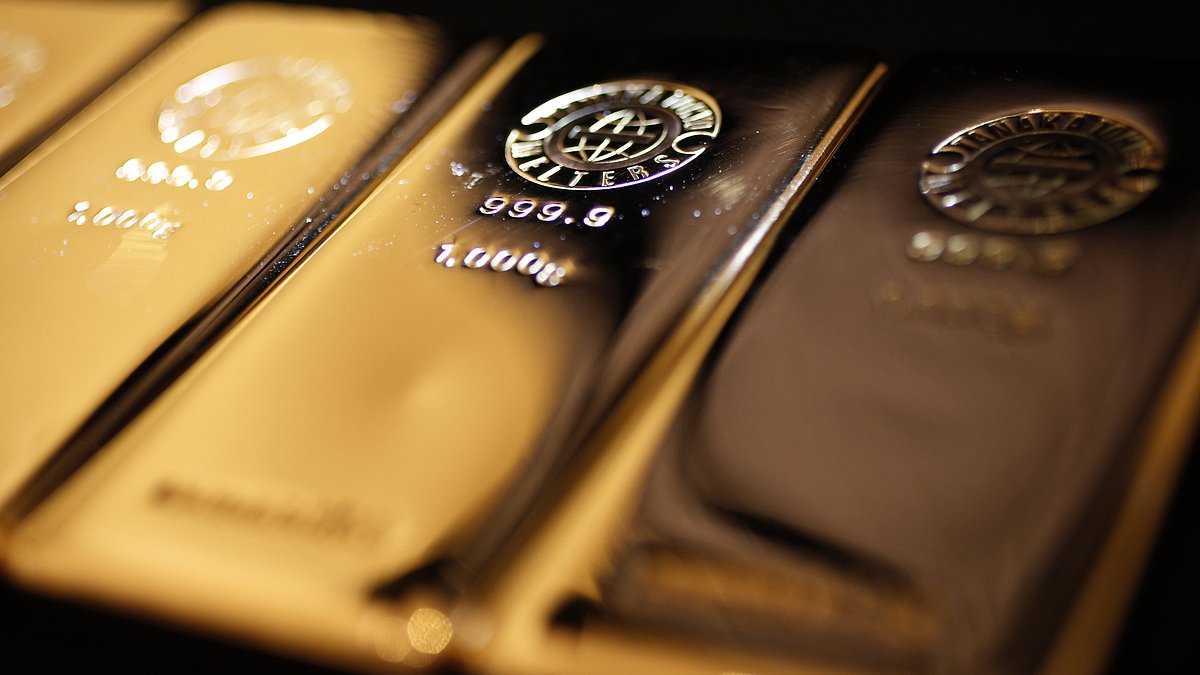
Gold lost its formal role as part of the monetary system long ago. Richard Nixon signed the death warrant in 1971 when the US ended the gold backing for the dollar.Most nations, including the US at Fort Knox, opted to hold gold in their official reserves as rainy day money.President Jimmy Carter chose to conduct gold auctions to support the dollar in late 1979.The International Monetary Fund (IMF) has, over the decades, come under pressure to sell down its gold reserves and make the cash available to the world’s poorest countries. It has mainly resisted.In recent times, only Britain among developed countries concluded that bullion was a waste of space and decided to diversify the UK’s holdings of the yellow metal into foreign currency. Gold rush: The price of gold has jumped above $5,000 an ounce for the first time as more investors to seek a safe harbour amid the ongoing global political turmoilHoarding gold was seen as the preserve of crackpots symbolised by the James Bond villain Auric Goldfinger.How wrong that judgment looks now that bullion prices have shot through the $5,000 mark and Goldman Sachs has raised its December 2026 forecast to $5,400 a troy ounce. That could soon require an upward tweak. ChancellorGordon Brown’s decision to sell at an average price of $275 an ounce starting in 1999, raising $3.5billion, plainly was a monumental blunder. If the UK had hung on it would currently have a war chest of $65billion.Until recently, a main driver of gold demand was Indian consumers. They, together with some of the former republics of the Soviet Union, kept gold prices perking up.It is the return of gold as a reserve asset which is driving prices upwards in an inelastic market.There is simply not enough gold ever to replace the dollar as a means of exchange. If it was attempted, a lack of liquidity in the global trading system would bring world commerce to a shuddering halt.This happened in Britain after Winston Churchill – under pressure from Bank of England governor Montagu Norman – restored Britain to the gold standard in 1925.The current boom is not being fuelled by cranks or Indian consumers. Quite the contrary. The surging price of precious metals is placing gold jewellery beyond the reach of all but the wealthy.Central banks dominate the daily price fixes. The US’ trade and geopolitical relations with China have meant buying anything but US Treasuries. Gold has been in Beijing’s sights. Russia learned the hard way, after its brutal invasion of Ukraine, that holding $270billion of cash reserves in overseas banks was a terrible mistake when assets were frozen.Geopolitical uncertainty in the shape of the Ukraine conflict, Venezuela, Israel-Gaza and Greenland has left much of the world looking for a golden safety net.And there is too much uncertainty around the creation of crypto assets for them to be a sound alternative.One response from the Polish authorities – ominously close to the Ukraine conflict – is to raise its target for gold from 550 tons at the end of last year to 700 tons in 2026. Since most traded gold is held in repositories run by the Bank of England, Swiss banks et al, it must be assumed that they are safe from marauding Cossacks.Is there a risk that we are in a gold bubble? Certainly, there will be investors who have bought into exchange-traded funds or mining stocks at near a market peak.They should be reassured that most of the buying is coming from fast-growing nations. These countries are buying a hedge against swelling national debt levels and Trumpian disruption.Film noirWarner Bros has made no secret of its preference for Netflix’s £61billion cash offer over Paramount Skydance’s higher-leveraged bid. Missing from the debate has been any reference as to why Netflix – the biggest beneficiary of entertainment moving to the sofa – should be regarded so warmly.Its record on movie production and general release is pathetic and poses a clear danger to an already struggling post-Covid cinema experience.What a pity it would be if Oscar favourites, such as Warner Bros’ Sinners, never made it to the silver screen.DIY INVESTING PLATFORMSAJ BellAJ BellEasy investing and ready-made portfoliosHargreaves LansdownHargreaves LansdownFree fund dealing and investment ideasinteractive investorinteractive investorFlat-fee investing from £4.99 per monthFreetradeFreetradeInvesting Isa now free on basic planTrading 212Trading 212Free share dealing and no account feeAffiliate links: If you take out a product This is Money may earn a commission. These deals are chosen by our editorial team, as we think they are worth highlighting. This does not affect our editorial independence.Compare the best investing account for you