If only Victoria Beckham could have been as honest as Take That
To view this video please enable JavaScript, and consider upgrading to a web
browser that
supports HTML5
video
I was eight years old when Take That first disbanded in 1996. It was my first experience of real grief and I was swept away in the public mourning.
It was the first time I was told something or someone I loved wasn’t ever coming back and that the memories I have now are all that will be left of them.
It was unbearable, and even watching the events unfold again in Take That, the moment Gary’s voice cracks as he tells a room full of journalists ‘Take That is no more’, I still feel that confused and hurt little boy.
In 2004, Take That reunited for an ITV documentary intended as a one-off meeting to reflect and heal. It’s been 20 years since Take That: For The Record and few bands have endured, achieved and evolved more in that time, making millions of once-bereft fans’ dreams come true – and then some.
They’ve toured stadiums, released five more number-one albums, and even convinced Robbie Williams to return to the band, despite once publicly disparaging Gary Barlow and becoming the biggest British solo star of all time.
They’ve reunited as four, expanded to five, and now only Gary, Mark Owen and Howard Donald remain, flying the Take That flag as a trio – the longest-lasting formation of the group since they began.
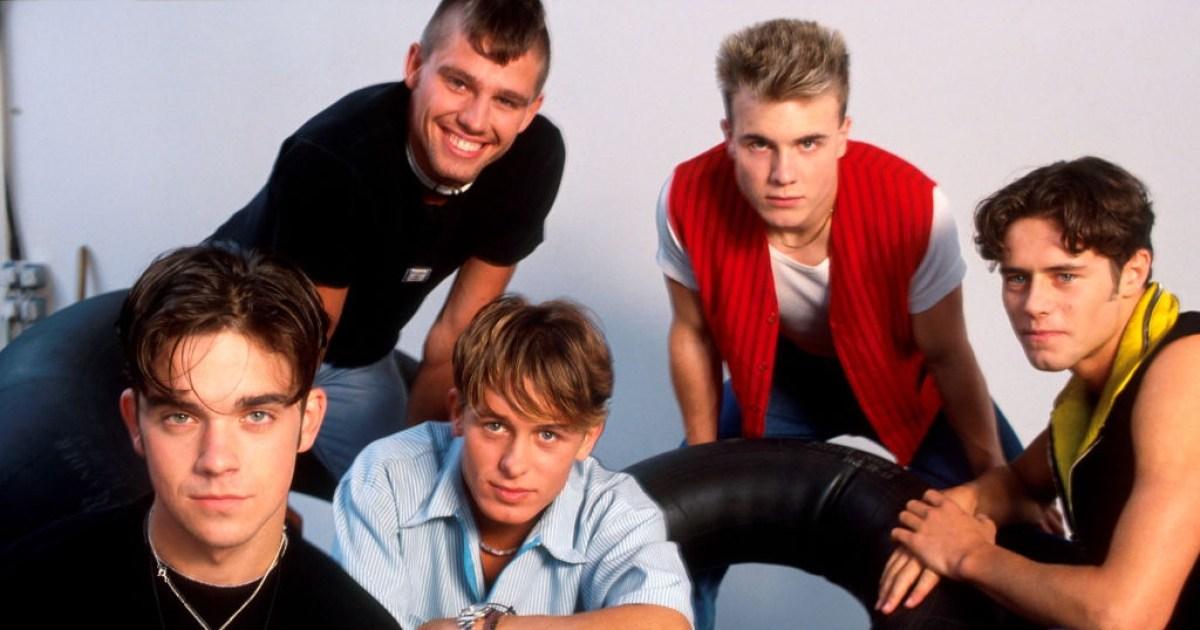
‘Take That disbanding when I was eight years old was unbearable’ (Picture: Michael Putland/Getty Images)
‘Victoria Beckham’s Netflix documentary didn’t delve deep enough’ (Picture: Gareth Cattermole/Getty Images)
No wonder Netflix came calling for its slice of the Take That pie with a new three-part documentary looking back at one of the most turbulent pop careers imaginable.
If only more Netflix documentaries were this unflinchingly honest. Last year’s Victoria Beckham series was so guarded – a transparent attempt to prop up her flailing fashion brand – that it felt almost offensive, failing to interrogate anything genuinely interesting about the Spice Girl. Take That, by contrast, thrives on discomfort.
Take That are somewhat of an anomaly in showbiz; their fractured relationship has been so well-documented by them that once again they’re able to reflect on their darkest times with total transparency, Gary holding his hands up to every accusation thrown at him, from giving Robbie a weight complex to refusing to split royalties evenly with the others.
‘When I joined the band, I didn’t really need anyone,’ admits Gary, frontman, lead vocalist and sole songwriter on most of the band’s early hits. The band was formed around Gary and he never forgot it.
Only the band’s current lineup shares their perspective here, viewed through a 2026 lens. Robbie Williams is absent, having arguably said enough elsewhere – through his own Netflix documentary and the surreal biopic Better Man.
Take That has been a trio for over a decade (Picture: John Phillips/Getty Images for The National Lottery)
Jason Orange left the band in 2014, saying at the time that his bandmates felt like ‘brothers’ (Picture: JMEnternational/Redferns)
Jason Orange’s absence, however, is harder to ignore. He left Take That after their final gig with Robbie and has since cut off contact entirely. The remaining members have previously insisted they have no idea why he left or vanished completely, even from them, but frustratingly, in this, they don’t expand any further.
While Take That is more candid and less fluff than most of Netflix’s recent celebrity documentaries, this remains a glaring omission. Robbie’s departure may be one of the most significant moments in 90s pop culture, but for a series that emphasises Jason’s importance in the band, devoting only minutes to his exit is disappointing.
Nonetheless, without his side of the story, clearly their hands are tied. Jason’s perspective is cautiously told as respectfully as can be without his determined lack of co-operation.
The documentary is split into three clearly defined chapters. Part one charts the meteoric rise of the biggest boyband Britain has ever produced, alongside their tensions with manager Nigel Martin-Smith, who formed the group after hearing Gary’s self-penned ballad A Million Love Songs.
Knowing the precocious singer wasn’t ready to go solo, Nigel built a band around him, sexualised their image, and found their first fans in gay clubs across the country.
Take That was formed around musical writing genius Gary Barlow (Picture: Stuart Mostyn/Redferns)
Robbie Williams’ experience in Take That was explored in his recently released biopic Better Man (Picture: Dave Hogan/Hogan Media/Rex Features/Shutterstock)
Yet it was always clear Gary was destined to be the star. For him, Take That was a stepping stone; for the others, it was the destination.
Part two focuses on Robbie’s exit and the brutal fallout that followed – a tabloid war of words as he mocked their music and revelled in Gary’s faltering solo career, while becoming the most successful British musician of his generation.
Meanwhile, Gary, Mark, Howard and Jason were abandoned by the industry, forced to watch as Robbie went on to tie with The Beatles for the most UK number-one albums of all time.
Much of this will be familiar territory for diehard fans. Take That retells well-worn stories over never-before-seen footage, but it still remains deeply affecting, listening to three men in middle age finally taking accountability and tending to wounds more than 35 years old.
But the final chapter is a story of true triumph that hasn’t been celebrated enough and unexpectedly becomes the highlight of Take That.
‘Ultimately, Take That is about learning forgiveness the hard way’ (Picture: Ian West/PA Wire)
The comeback of all comebacks – one that countless acts of the 90s and 00s have tried and failed to replicate. After selling out 30 arenas in 2005, Take That surprised themselves, if no one else, by releasing new music.
Their first release in a decade, Patience, peaked at number one and not only won back their fan base, it also gave a credibility that they could never have hoped for as leather-clad teenage dancers. They’re now one of the most successful touring artists of the 21st century and are still releasing some of their best music to date.
On paper, Take That appear indistinguishable from the many manufactured boybands that followed in their wake – but they’re so far from it.
Gary has now long been established as one of the greatest songwriters of all-time and Nigel was right to form the band around him, but they were both wrong to dismiss every other member as background singers.
Take That fans go wild after Netflix documentary reveals 'unseen footage' of fallout
The Traitors finalist pulled into room by producers after 'seeing red'
All the stars tipped for Celebrity Traitors season 2 including Cheryl
Take That shows their success now is undeniably down to all of its members finding their voice, place in the group and being championed by one another.
Ultimately, Take That is about learning forgiveness the hard way – of others, and of oneself.
It’s about hindsight, humility, and the slow erosion of ego, capturing the very crux of what it means to be a flawed or hurt human being, to grow older with regret, resilience and grace with buckets of nostalgia and fresh anecdotes for the fans who thought they’ve heard and seen it all – but, evidently, haven’t.
Take That is available to stream on Netflix now.
Got a story?
If you’ve got a celebrity story, video or pictures get in touch with the Metro.co.uk entertainment team by emailing us celebtips@metro.co.uk, calling 020 3615 2145 or by visiting our Submit Stuff page – we’d love to hear from you.
Arrow
MORE: Is Gary Barlow on the run from police? Some people in Kent think so
Arrow
MORE: Take That fans go wild after Netflix documentary reveals ‘unseen footage’ of fallout
Comment now
Comments
Add Metro as a Preferred Source on Google
Add as preferred source
TV Newsletter
Sign up and tell us which TV shows you love to watch to get personalised updates every morning.