Richard Linklater’s love letter to the New Wave
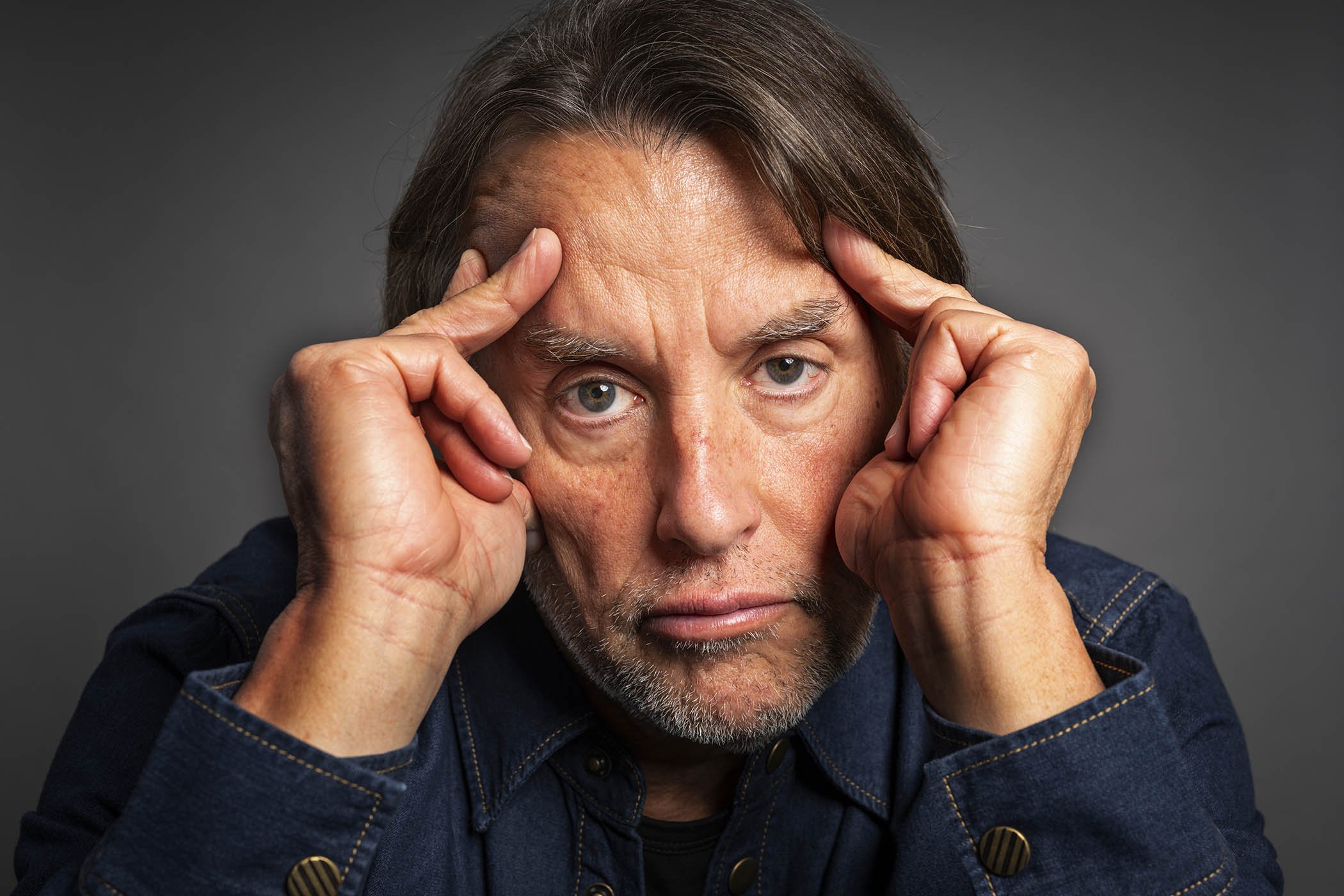
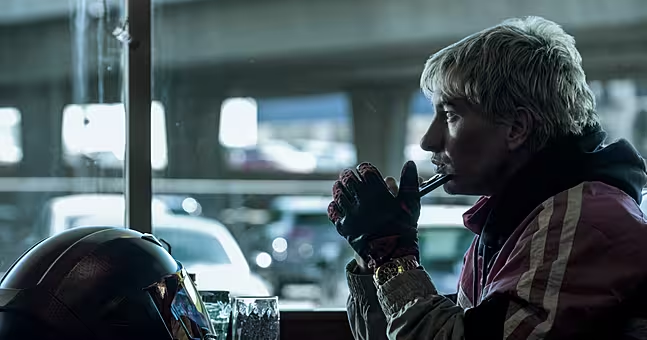
In the early 1980s, Richard Linklater was living in Houston, Texas, and trying to figure out what to do with his life. Barely into his 20s, he had dropped out of college and, for a time, worked on an oil rig in the Gulf of Mexico, before returning to his home state.“That was when I first started really getting deep into film,” he recalls in his still discernible Texas drawl. “I was going to the movies alone most days to watch everything I could. By then, I’d read about French New Wave films, but À Bout de Souffle [Breathless] was the first one I encountered and I didn’t really understand it.”Directed by Jean-Luc Godard, Breathless rewrote the rules of film-making on its release in 1960, making instant icons of its leading actors, Jean Seberg and Jean-Paul Belmondo. One of Godard’s most famous aphorisms was: “All you need to make a movie is a girl and a gun.” Breathless attested to that in its singular way, the freewheeling plot tracking a casually amoral, self-obsessed petty criminal, Michel (Belmondo), who is in thrall to US gangster films.He steals a car, shoots dead a cop who pursues him for speeding and then goes in search of an American student, Patricia (Seberg), whom he is romantically fixated on. Propelled by Godard’s now celebrated use of jump cuts while editing, the film sketches their uncertain relationship and Michel’s efforts to evade capture. It ends with him being shot in the back while fleeing the police, who have been alerted to his whereabouts by Patricia.Writing about Godard’s innovative approach, the feted US film critic Pauline Kael concluded: “It’s possible to hate half or two-thirds of what Godard does – or find it incomprehensible – and still be shattered by his brilliance.”Aubry Dullin as Belmondo and Zoey Deutch as Seberg in Linklater’s Nouvelle VagueUnsurprisingly then, it took another viewing for Linklater to grasp the implications of Godard’s formal audacity. “The second time, it was, like: ‘OK, I get it now,’” says Linklater. “There was just something so pure about it. It’s modernist, it’s groundbreaking, but it’s also full of love for movies, for genre. There’s just no other film like it.”That early exposure to the French New Wave – the Nouvelle Vague – of the late 1950s and 1960s was pivotal in pushing Linklater towards his own style: the determinedly low-key, naturalistic depiction of young American kids whose meandering lives for a time echoed his own. In 1990, he garnered a sizable cult following with Slacker, which was made for just $23,000 and perfectly caught the stoner zeitgeist of the nascent gen X indie culture of the time.Three years later, his more traditional take on the American high school movie, Dazed and Confused, which drew on his adolescent years at Huntsville high school in Texas, nudged him into the edges of mainstream, as well as alerting the world to the singular charm of Matthew McConaughey.Now, more than 40 years after his initial encounter with Godard’s subversive debut feature, Linklater has made a film about the making of Breathless. Titled Nouvelle Vague, it is a meticulously faithful and deftly stylised ode to a radical moment in cinema history that reverberates still.Featuring French dialogue with English subtitles, Nouvelle Vague was shot in black and white on the same streets in Paris where the young, mercurial director and his small crew filmed without permission. Writing in the New Yorker recently, the film critic Richard Brody described it as “a personal thank you note” to Godard.“I liked that,” Linklater says, beaming. “Not just a love letter, but a personal thank you. It’s true in a way because what I took from that generation of New Wave film-makers was that you can basically make a movie about anything. Before they came along, genre ruled – crime, romance, musicals, whatever – but with Breathless especially, people were leaving the cinema asking: ‘What kind of film is this?’ Is it all of the above or none of the above? The fact is, it just is what it is.”I caught up with Linklater in a chic Soho hotel in October, just a few hours before he appeared in front of an adoring audience at a London film festival Q&A event for his most recent feature, Blue Moon. It too centres on a dramatic episode in the life of an eccentric artistic genius, the troubled American songwriter Lorenz Hart of the Broadway partnership Rodgers and Hart. What prompted him to make two consecutive films based on real life characters?“For me, it’s more about capturing moments in time,” he replies, “which is also what I do when I’m dipping into my life to make more personal movies. With these two films, one is about the beginning of a career and the other is about the end. There’s something fascinating about both, but with Breathless, it’s a moment in time that defined a cultural movement as it was actually happening. In a way, it was the closest the movies ever got to having a punk rock moment.”At 65, Linklater looks like a weather-beaten surfer and exudes a laid-back vibe that is at odds with his prodigious work rate. Since Dazed and Confused pitched him into the mainstream, he has ranged far and wide in terms of style and subject matter. His 2005 remake of the 1976 all-American sports comedy The Bad News Bears, for instance, has little in common with the languid narrative drift of his lauded Before trilogy: Before Sunrise (1995), Before Sunset (2004) and Before Midnight (2013). There’s an even bigger conceptual chasm between the hyper-feelgood comedy School of Rock (2003) and the epic but intimately observed coming-of-age film Boyhood (2014), which was shot at various intervals over more than a decade.The latter film is critically acknowledged as his masterpiece to date and has a distinctly European sensibility. I put it to him that it owes more to the work of another esteemed New Wave director, François Truffaut – who wrote the original story for Breathless – than it does to the wilfully provocative Godard.“Oh, for sure,” Linklater says, nodding. “I think Truffaut’s been hanging around me my whole life. He’s one of my big influences just in terms of his humanity and his psychology, but I could add a lot of people to that list – Robert Altman, Lindsay Anderson and so many others. The thing is, you can learn from those guys, but you can’t imitate them. It’s impossible to imitate a great art film. My advice to anyone coming up is: ‘Don’t even try – you’ll embarrass yourself.’”Jean-Paul Belmondo and Jean Seberg in À Bout de SouffleDoes that apply, above all, to Godard? “Well, his impact was so dramatic that, to this day, it’s hard to escape him if you are a director who’s trying to do something a bit different and challenging. People will automatically say: ‘Oh, that’s a bit Godard.’”Blessedly, Linklater’s homage to Breathless is about Godard – and his defining moment in cinema history – without being the slightest bit Godardian. Instead, it recreates a time, place and creative milieu in which the critic turned director was given free rein to deconstruct film-making in a way that no one, before or since, has done.“What’s remarkable to me is that Breathless was made within the French mainstream system, but on a low budget,” says Linklater. “It had a producer and a distributor. When I started out, I had credit cards and I kind of did it on my own.”The way Linklater shot Nouvelle Vague was, he says, “the 180-degree opposite” of Godard’s approach. “Breathless was fast-and-loose film-making,” he elaborates. “But we had to be tightly scripted and well rehearsed in order to make it look like that. We had to construct that looseness. We had all the archives, the camera reports. I could even tell you what lenses they shot with and how many takes they did. We even replicated the camera setups. It was the equivalent of a musician from today going into an old studio with the tube amps and the analogue setup.”In Nouvelle Vague, Guillaume Marbeck, a French actor who is also a photographer, brilliantly captures Godard’s ambition and sense of extraordinary self-belief that bordered on arrogance. Though buoyed by a stellar network of like-minded souls, including Truffaut and fellow New Wave film-makers Claude Chabrol and Jacques Rivette, whose characters all have walk-on parts in Linklater’s movie, Godard nevertheless comes across as a discontented outsider. Unique to that time, they were all critics turned directors; their shared vision initially expressed in theoretically driven reviews for the influential film magazine Cahiers du Cinéma. Godard was the last of the bunch to make a film and thus had a lot to prove. He set about it as if his life depended on it.There was just something so pure about Breathless. It’s modernist, groundbreaking. There’s no other film like itThere was just something so pure about Breathless. It’s modernist, groundbreaking. There’s no other film like it“Well, it kind of did,” nods Linklater. “This was his opportunity – one he had waited 10 years for. He was driven because maybe he was the only one who understood the revolution he felt was needed. He’s making the revolution: it’s happening in his head and in the filming.”Godard does come across at times in Nouvelle Vague as a caricature of a budding French existentialist intellectual. “I think it’s OK to laugh at him a little, as we do in the film – his pretentiousness, his habit of talking in aphorisms. Some people might even watch my film and think: ‘This guy is so full of shit.’ But that’s OK. The reason we can poke fun at him a little in the film is because we know what he’s doing will result in something significant.”Godard’s assault on cinematic convention in making Breathless involved him rewriting or jettisoning entire scenes, while the actors and crew waited for the day’s filming to commence. He shot on the streets and in hotel rooms and bars using only natural light, with no sound recordist (the dialogue was dubbed later), no art department and a minimal crew, who were as bemused as the actors by the director’s unpredictability.“It really shouldn’t have worked but, miraculously, it did,” says Linklater. “And it reflects his total confidence in his own quick-thinking cinematic mind.”Breathless’s female lead, Seberg – played by Zoey Deutch in Nouvelle Vague – was particularly unsettled by Godard’s methodology, while the more carefree Belmondo (Aubry Dullin) seemed to relish the uncertainty it created. Though poles apart temperamentally, the two actors bonded to a degree that rattled Seberg’s husband and the pair were rumoured to have had an affair a few years later.“I took the tack that Belmondo made it fun for Seberg,” elaborates Linklater. “She liked him, she liked Paris, but, being used to American directors, she just didn’t understand why someone would make a film without a finished script and who didn’t want his actors to perform. It took her a while to get in sync with Godard because he tended to alienate the people he worked with, mainly because they didn’t understand what he was doing.”NewslettersChoose the newsletters you want to receiveClear, calm analysis on the stories driving the day’s news.The very best of our journalism, reviews and ideas – curated each day.A dispatch from The Observer’s kitchen table – from Nigel Slater’s recipes to interviews, features and hot tips.For information about how The Observer protects your data, read our Privacy PolicyLinklater’s film is rich in deftly mannered performances that perfectly capture the heady mix of intellectual rigour and Parisian cool that defined the New Wave movement. In one scene, the singer Juliette Gréco blows a kiss at a confused Éric Rohmer; in another, Godard confides in fellow film-maker Suzanne Schiffman, who, as played by Jodie Ruth-Forest, is the epitome of perfectly tailored French chic.As with Breathless, the film is propelled by the presence of its two leading actors: Deutch plays Seberg with suitably understated cool, while Dullin effortlessly inhabits the role of Belmondo – the walk, the talk, the casually amoral attitude. “He’s incredible,” enthuses Linklater. “When you’re casting a role like this, you’re not looking for a physical resemblance as much as an attitude, a personality. It can’t be an impersonation.”Did the director feel a weight of responsibility given the original film’s status among cinephiles and critics? “We had to step back from that in order to look at it the way [Belmondo and Seberg] looked at it while they were making it. At that moment, they weren’t the icons we know and revere; they were just two young people excited by the chance they had been given.”Would it be possible to make a film as audacious as Breathless today?“You could make it,” he says, “but I just don’t know if anyone would see it. It’s probably the best time to be a film-maker, but the most difficult time to get your film seen widely or for it to have a cultural impact. In contrast, when I started out in the 1990s, the cinema landscape felt more cohesive and the mainstream was curious about indie films. They had a different idea about nurturing talent. That’s gone. Now [the mainstream film industry is] stuck in their own mega world that is just so huge and commercial.”Given all that, he hasn’t done too badly. He smiles. “I try not to get too depressed about it, because cinema is always shifting around and we somehow always find ways to make interesting films. It’s the compulsion to create, and the curiosity it involves, that leads to stuff you haven’t seen before. If you’re into movies, there’s still a lot to be excited about.”Nouvelle Vague is in UK and Irish cinemas from 30 JanuaryPortrait by Antonio Olmos. Photographs courtesy of Netflix, Alamy, The Hollywood Archive/Alamy