Opposition parties take aim at Government Mercosur stance
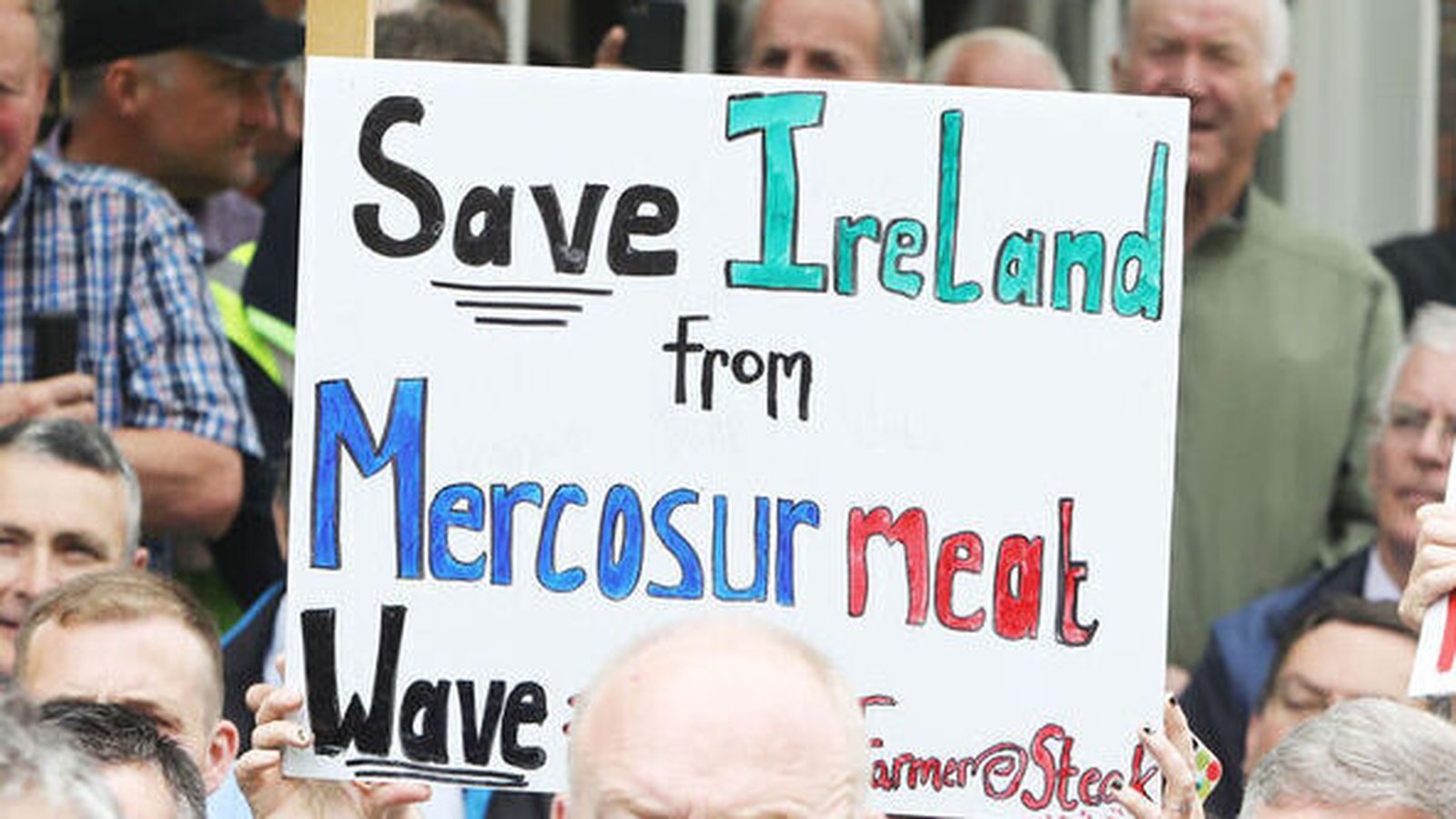
The Government has been accused of "selling out" farmers over the Mercosur agreement between EU and Latin American countries, after opposition parties claimed Irish farmers will be among the big losers from the deal.
The criticism was made during a Dáil debate on a Sinn Féin motion opposing the Mercosur deal on Tuesday evening, which also heard calls for Government to explain what actions it has taken to prevent the deal from going ahead.
At a European Council meeting late last week, EU member states approved the long-discussed deal, which is now being sent to the European Parliament for a separate vote by MEPs on what happens next.
The Mercosur deal is considered to be one of the largest trade deals ever, and at its core involves German cars being freely sold in Argentina, Brazil, Paraguay and Uruguay in return for beef products from those countries being freely sold in the EU.
While supporters of the deal say it will increase the EU economy by almost 40% at a time when alternative non-US funding channels may be needed, its critics say EU beef farmers, and health and safety standards, will be impacted.
During last week's vote, 20 member states voted in favour of the deal, Belgium abstained, while five countries - Ireland, France, Austria, Hungary and Poland - opposed the agreement.
This meant the deal was passed by a qualified majority of at least 65% of the EU population.
Of Ireland's 14 MEPs, only two - Fianna Fail's Barry Andrews and Fine Gael's Regina Doherty - are in favour of the deal.
Speaking in the Dáil on Tuesday evening, Sinn Féin TD Martin Kenny said he believes the Government has done "nothing to block it or stop it".
Deputy Kenny said the deal is "a simple betrayal" of farmers and called on the Government to "publish all the moves you made to block it - prove that you've done what you said you've done".
He was supported by a number of his party colleagues, including Matt Carthy TD who said "Government played an absolutely obscene game of duplicity" in terms of Mercosur, and Claire Kerrane TD who said the deal is "back-breaking" for Irish farmers.
However, the criticism was rejected by a small number of Government TDs who attended the motion debate, including Fine Gael minister of state Neale Richmond who said Ireland repeatedly attempted to build "a broad-based blocking minority" which would address Irish concerns.
Minister Richmond said the concerns raised by the Government were based on the need to protect food safety and EU standards, but said the reality is Ireland is "an open economy", before criticising Sinn Féin for "trying to catch up on people who have criticised them".
That view was repeated by Fianna Fail's minister of state at the Department of Agriculture Timmy Dooley, who said while there are concerns with the deal the agreement "could open up new opportunities" for Ireland and the wider EU.
As the debate continued, Labour TD Robert O Donoghue warned that "Mercosur may make a difficult situation even worse" as "we may lose the family farm tradition", while party colleague George Lawlor TD said it was about "selling out Irish beef".
Social Democrats TD Jennifer Whitmore said: "I believe farmers and indigenous communities in Brazil are being sacrificed to get this deal through" a view echoed by People Before Profit TD Richard Boyd Barrett, while Independent Ireland TD Michael Collins said in his view the deal is bad for farmers and the wider public.
Mercosur improvements not enough - Martin
Speaking at the IFA AGM Taoiseach Micheál Martin said that the Government voted against the Mercosur deal becaue they continued to have significant concerns relating to certain agricultural standards under the agreement and the impact this could have on European farm incomes
"In recent weeks we did secure improvements to the overall Agreement, including through the proposed regulation on safeguards," he said.
"The proposed trigger for activating these safeguards, which had already been moved from 10% to 8%, has been set at a further reduced threshold of 5% of import volume increase or 5% price reduction at individual member state level over a three-year average period."
Read more:As it happened: EU countries vote for Mercosur trade dealEuropean Parliament vote 'not a done deal' - Tánaiste