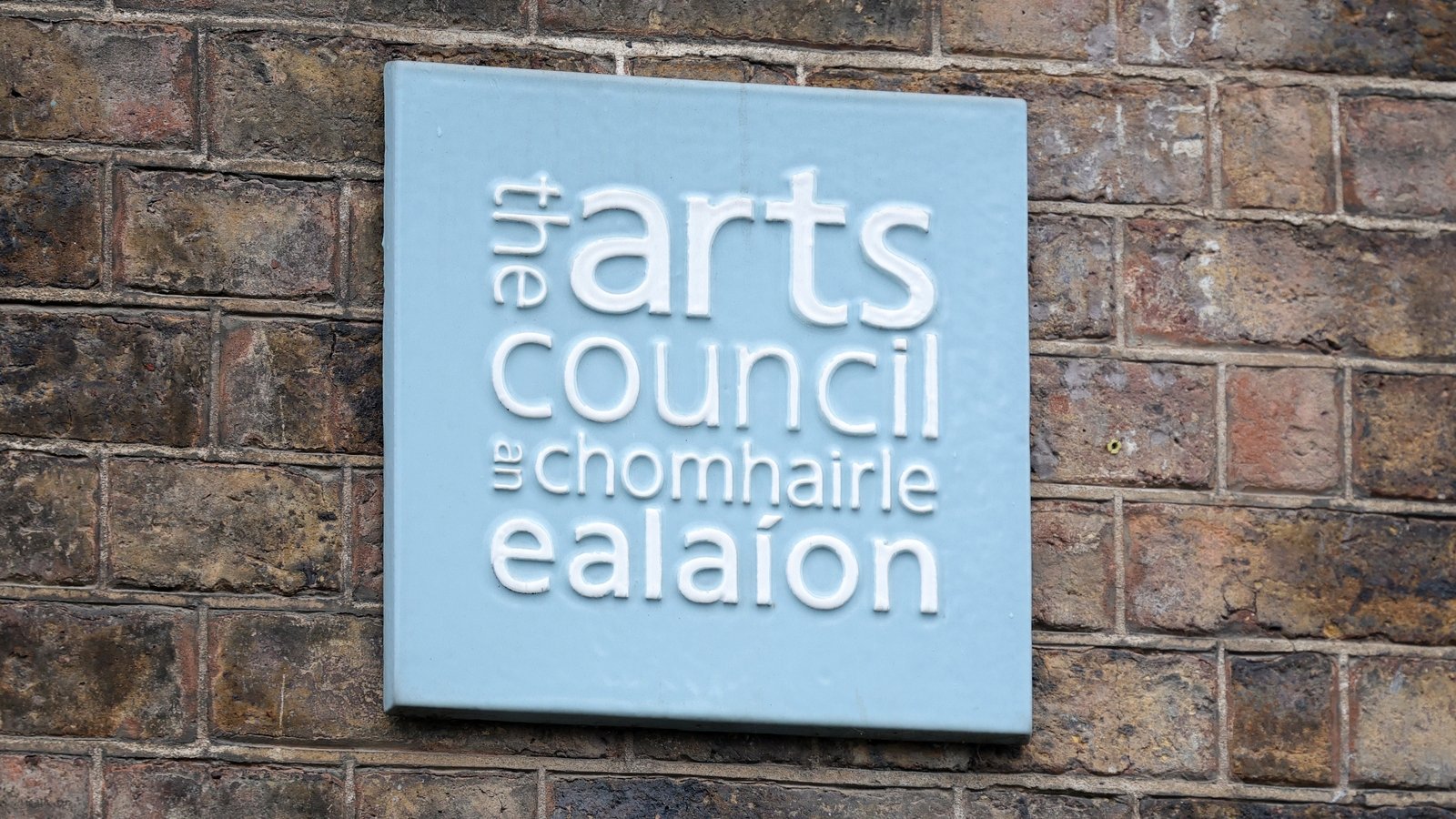
Arts Council IT project 'understated costs' - review
A new independent review into the abandoned IT project at the Arts Council at a loss of €5.3 million, has found that the business case for the project "understated" the costs involved and that it "did not include VAT" nor the cost of "streamlining business processes".
The review, which was commissioned by Minister for Culture Patrick O'Donovan in February 2025 on foot of reports into the finances of the failed project, was led by Professor Niamh Brennan and the final report from the EAC (expert advisory committee) has now been submitted to the Minister.
Responding to questions today after details of the review had emerged in the media, Minister O'Donovan said that the findings were "fairly stark" and that the 149 recommendations are "fairly clear".
He also confirmed that he would be bringing the report to Cabinet in the next fortnight.
Details of the EAC report have been obtained by RTÉ News and its findings show that "this once in a 10-15-year capital project exposed gaps" in the Arts Council's "governance architecture".
The EAC, chaired by Professor Niamh Brennan and including Dr Margaret Cullen and John McCarthy, found that the Arts Council’s systems of governance did "not protect" it from project failure due to a "lack of cohesion at senior management level" and lack of collective vision.
The project also exposed "challenges" in its organisational culture and stated that "significant" changes in project objective and scale meaning that the Arts Council "did not have a settled sense" of what it wanted at the outset.
Listen: Fresh information on the Arts Council costly computer
We need your consent to load this rte-player contentWe use rte-player to manage extra content that can set cookies on your device and collect data about your activity. Please review their details and accept them to load the content.
These "deviations" from the original plan were "not properly considered nor adequately risk-assessed" by the governance structure for the project, the report found, and these problems highlighted "significant failings at below board and board level".
It pointed to an "immature" risk culture, a "lack of internal ICT" project management expertise, and "ineffective governance structure".
The EAC found that there was an "over-reliance" on third-party suppliers, "weakness in procurement" and project management and "inadequate governance architecture".
It found that the board's committee structure and the organisation's "system of internal governance", did not set the board up for success in delivering and overseeing the project.
The authors "observed" an "insufficiently" rigorous approach to compliance with State governance processes and requirements, with the Arts Council "breaching" multiple State requirements "in multiple ways".
Concerns were raised too in relation to board oversight, with the report stating that the EAC found a "pattern" of decisions not coming to the Arts Council board for approval, describing detailed papers being submitted to the board as "excessive" and "difficult to interpret".
The EAC considered that a board with a "broader range of governance skills" among its members would "likely" have resulted in more "rigorous" oversight.
The findings explored the communications between the Department officials and the Arts Council and found that "liaison" meetings between the Department and the Arts Council were "too informal".
The EAC stated that when the Department became aware of the multiple increases in the project budget, matters related to the project "were not escalated" within the Department to the appropriate level.
It also stated that while the committee reviewed nearly 2,000 documents and interviewed over 40 key stakeholders, the report was "critical" that certain documents identified in the course of interviews were "not provided up front" and were obtained from other parties.
Recommendations
The EAC has set out 149 recommendations in the report, including three recommendations for all government departments, 17 for the Department of Public Expenditure, 31 for the Department of Culture, and 100 recommendations for the Arts Council.
The EAC recommends that the Arts Act 2003 should be amended so that board members may be appointed who "may not have experience, or a special interest, in the arts" but who possess "strong corporate governance experience".
The Arts Council should also ensure that its costing of projects is "robust, reliable and realistic", including a "generous contingency" the report recommends.
In relation to communications between the Arts Council and the Department, the EAC states that the Department should ensure that discussions at liaison meetings are "clearly minuted".
The Arts Council board and the new director should consider reducing the size of the senior management team to enhance its effectiveness within the organisation’s system of governance, it said.
The report stated that the Department also intends to establish a "robust" implementation and oversight system to "monitor implementation of the recommendations".
Progress
It is noted in the report that "significant work" to improve governance standards in the Department and the Arts Council has already taken place since June 2024 on foot of the Department's own examination of the "failure of the project" and the independent review by the Institute of Public affairs (IPA) in 2024.
The governance and organisational culture at the Arts Council must be improved to "minimise the possibility of future governance failures", with the Minister intending to "initiate" a review of the Arts Act 2003 on foot of the findings of this review which will bring detailed proposals to Government in due course.
In the report, the EAC noted that they have observed "numerous positive characteristics" that support the Arts Council’s public service objectives.
The authors wrote that everyone they engaged with is "committed to funding, developing and promoting the arts in Ireland", and they noted a "deep regret" for the impact that the project has had on the reputation of the Arts Council.
The EAC also noted that digital transformation projects are difficult for large, as well as small organisations, as they are fundamentally different to "business as usual" ICT and require different skills.
There is a recommendation that "consideration be given" as to how best to ensure that public sector organisations embarking on such projects can best be supported to avoid repeat instances of ICT project failures.
The EAC also noted in the conclusions that they understand there have been several notable changes to board practices and procedures introduced since June 2024 and that the chair, the board and Arts Council management are committed to improving processes.
Speaking on his way into Cabinet, Minister O' Donovan said he hoped to follow through on the recommendations in "their entirety", adding that "it will be a fundamentally different Arts Council".
The Minister added that "we have to restore the public's confidence" in the organisation.
He intends to bring the report to cabinet on 20 January.