Polestar secures $600 million loan from Geely
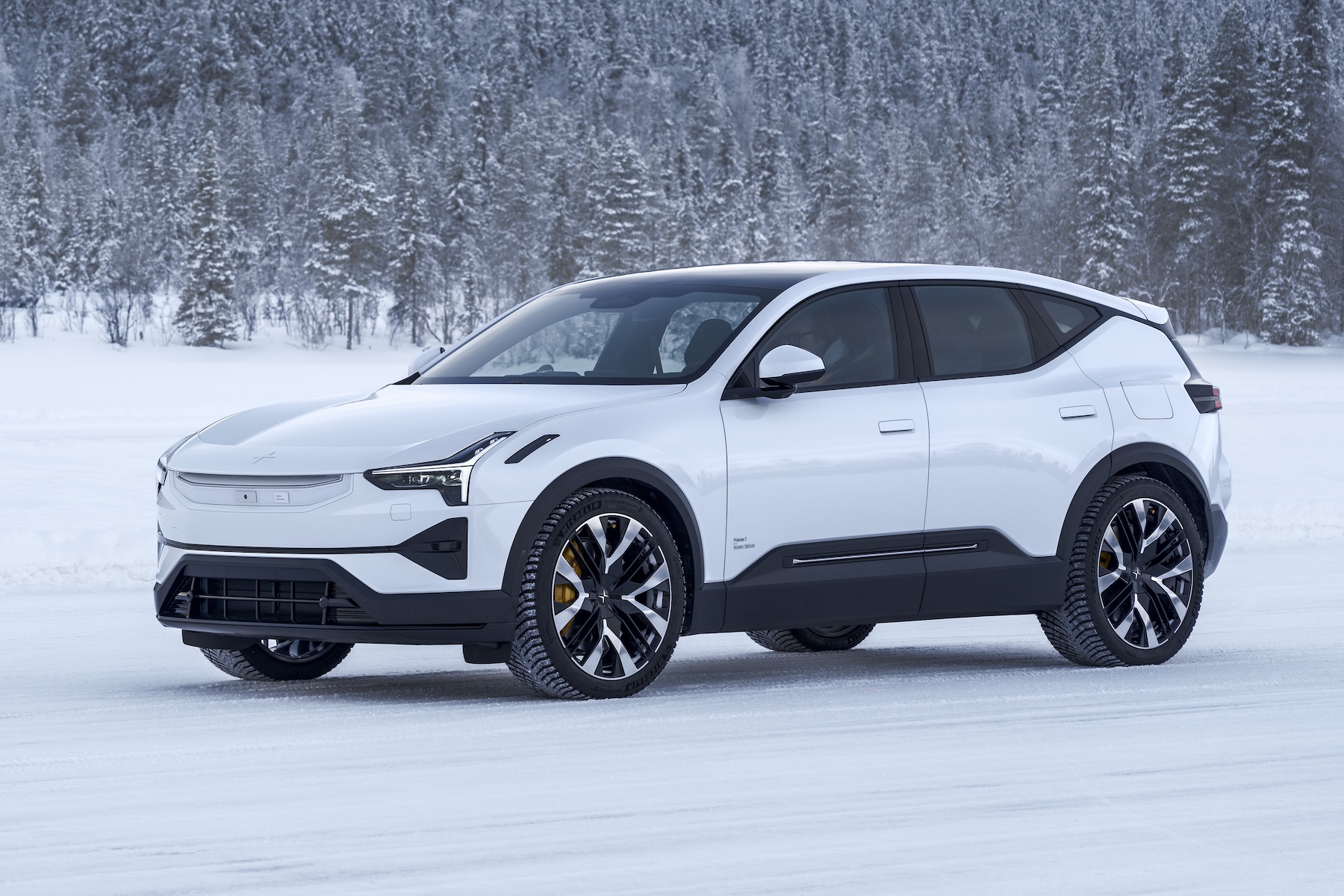
Time and again, Polestar’s quarterly financial results paint a familiar picture: the company continues to post heavy losses. In the third quarter of 2025, it reported a net loss of $365 million, representing a 13 per cent increase compared to the same period last year. For the year to date (January to September), Polestar’s net losses surged by 80 per cent, totalling $1.56 billion, while its gross margin plummeted to -34.5 per cent. This decline was partly due to a one-off effect: the company, part of the Geely Group, had to write down $739 million on its battery-electric SUV, the Polestar 3, which has underperformed expectations.At the same time, revenues have risen significantly—by 48.8 per cent to $2.17 billion for the period from January to September. This means Polestar now faces a major challenge in controlling its costs, particularly as it prepares for further costly model launches, such as the Polestar 5. The Polestar 5 is a high-end grand tourer with a 650 kW powertrain. Additionally, the company faced the threat of delisting from the US Nasdaq stock exchange, as its share price had fallen below $1 for an extended period.For months, the company has been implementing countermeasures to steer itself back on course—and the new $600 million loan commitment from Geely Sweden is likely part of this effort. Geely Sweden, a Swedish subsidiary of the Chinese Geely Group, is one of Polestar’s largest shareholders.A key aspect of the new loan, half of which Polestar can access immediately while the other tranche will follow later, is that it is a subordinated loan. In the event of insolvency or liquidation, the lender is repaid only after all other senior creditors have been settled. This structure has two potential implications: such a loan can secure liquidity when conventional bank loans are no longer available on market terms. Alternatively, it could motivate banks to extend credit to Polestar on more favourable terms, as the subordinated loan may act as a buffer in the event of insolvency.Polestar has already taken another step to address its crisis: to avoid delisting from the Nasdaq, the company carried out a ‘reverse split’ of its American Depositary Shares (ADS), which are traded on the Nasdaq. This involved converting every thirty old shares into one new share. As a result, the share price after the reverse split now stands at around $12, well above the critical threshold.As a supportive measure, Geely founder Li Shufu had already injected $200 million into Polestar in June through a capital increase. This deal increased the stake of Li Shufu’s PSD Investment in Polestar to 44 percent, while the Geely chief now controls a total of 66 percent of the shares—split between PSD Investment and the aforementioned Swedish subsidiary of Geely. Additionally, Geely’s majority-owned subsidiary, Volvo Cars, holds a 16 percent stake in Polestar. In summary, this means that Polestar, including Volvo’s shares, is approximately 80 percent owned by Li Shufu’s empire.polestar.com