VW explores design for autonomous cars without steering wheel or pedals
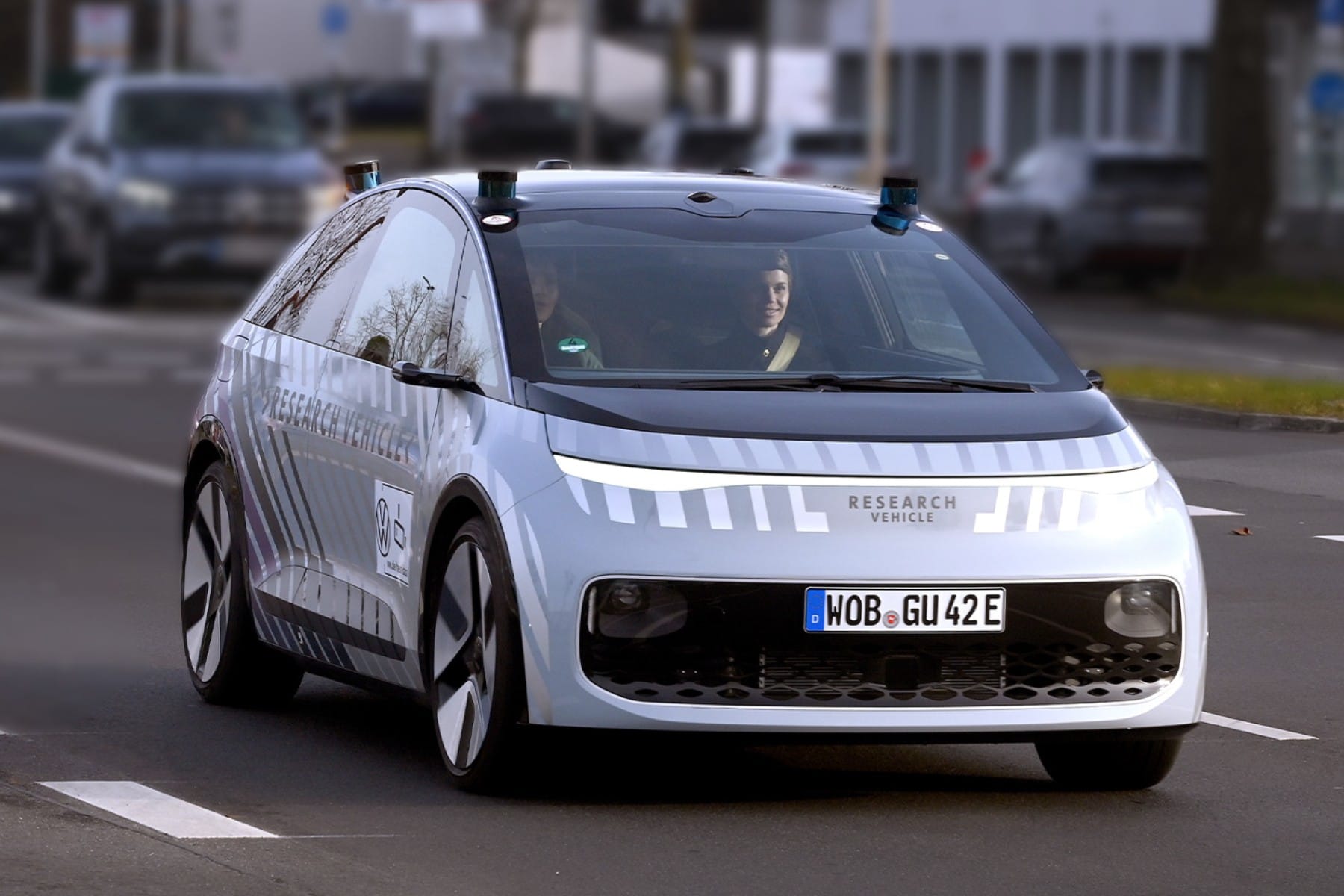
The development and production of self-driving cars have, in most cases, followed a familiar pattern: a standard production vehicle is taken and equipped with hardware and software for autonomous driving. For example, robotaxi provider Waymo converts regular Jaguar I-Pace vehicles accordingly, though these still retain steering wheels and pedals for test drives and safety drivers. Similarly, the ID. Buzz AD from Volkswagen, which will soon be deployed in the ALIKE project in Hamburg and with ride-hailing provider Uber in the USA, is based on the regular electric minivan ID. Buzz combined with technology from Mobileye—and still features a conventional steering wheel and pedals.However, the VW Group recognises that such vehicles do not yet fully exploit their potential for passengers and luggage. After all, if steering wheels and pedals are no longer needed—and the driver’s seat becomes redundant—entirely new design possibilities emerge. This is demonstrated by concepts such as Tesla’s Cybercab or Rimac’s Verne.The all-electric test vehicle named Gen.Urban, now being trialled on the streets of Wolfsburg, is reminiscent of Rimac’s Verne. Like Verne, which is set to operate as a robotaxi in various European cities soon, the Gen.Urban is relatively small and features only two seats. Its doors, which slide forward like those of a minibus, also resemble those of Rimac’s Verne. Ultimately, Volkswagen appears to have drawn significant inspiration from the Croatian manufacturer’s robotaxi, particularly as VW’s subsidiary Porsche holds around 21% of the shares in the Rimac Group and is also a partner in the Bugatti Rimac joint venture for super sports cars.
That covers the background. The VW Group has now launched the next test phase with its self-driving research vehicle, Gen.Urban, on public roads. In real urban traffic, Volkswagen aims to understand how people experience riding in a self-driving vehicle without a steering wheel or pedals. Key questions include: How do people spend their time in a self-driving vehicle? Which digital content supports work, entertainment, or relaxation? How should the interaction between the vehicle and passengers be designed, particularly for elderly people or children? And, quite simply: Do people feel comfortable?A team of designers, software developers, materials specialists, and other experts from the automotive group is collecting comprehensive data on user behaviour and interaction experiences with the Gen.Urban. These insights will later inform the development of future interior and user experience (UX) concepts for the group’s brands.Technology Should Adapt to PeopleDr. Nikolai Ardey, Head of Volkswagen Group Innovation, states: “The technology for autonomous driving is advancing rapidly. With our Gen.Urban research vehicle, we want to understand precisely how people experience autonomous driving. After all, the key to a positive customer experience is building trust—through meaningful interaction, a relaxed atmosphere, and intelligent assistance systems that respond precisely to passengers’ needs. Ultimately, technology should adapt to people, not the other way around. These insights will benefit the entire group in the long term.”A test drive in the Gen.Urban lasts 20 minutes and begins in the visitor car park at the Volkswagen brand’s high-rise building. From there, the nearly ten-kilometre loop passes through Wolfsburg’s urban area, including traffic light intersections, roundabouts, current construction sites, residential neighbourhoods, industrial zones, and potentially congested traffic. The route is designed to reflect typical urban traffic challenges.Set Preferences Before the Journey via AppIn the current test phase, only VW employees can participate. Before the journey begins, passengers can set their personal preferences—via an app or directly in the vehicle—ranging from cabin temperature to ambient lighting. After boarding, the Gen.Urban greets the passenger, and the seat automatically adjusts to the desired position. The wide front display, along with lighting and sound, is then tailored to an individual theme.Although the vehicle is designed to operate at autonomy Level 4 and therefore does not require a steering wheel or pedals, a specially trained safety driver is on board in the front passenger seat to monitor the vehicle. Using a specially developed control panel with a joystick, the safety driver can intervene in critical situations.volkswagen-group.com