


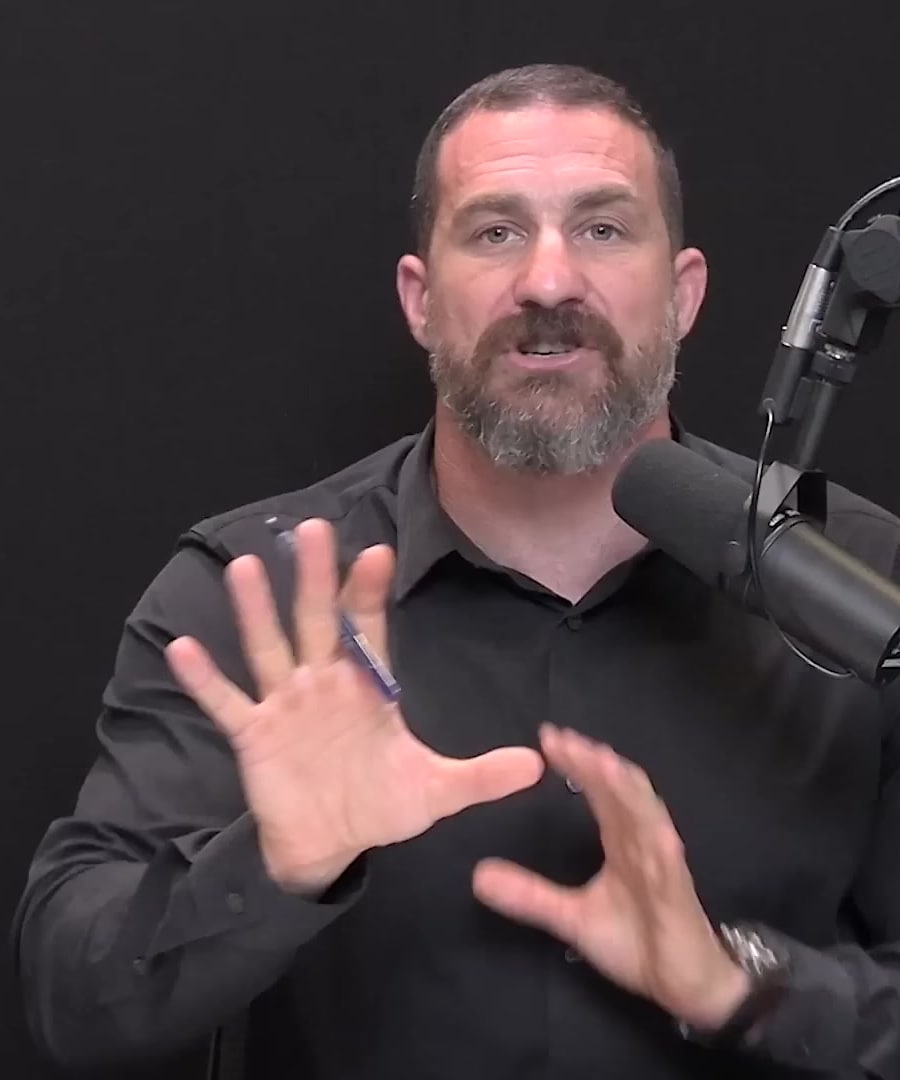
Andrew Huberman holds a unique position in the world of neuroscience. He is trained as both a neurobiologist and an ophthalmologist, and this dual expertise shapes everything he teaches. Most researchers study the eye as a sensory organ or study the brain as a thinking machine. Huberman studies the direct line between them. He argues that the eye is not just a camera that sends pictures to the brain. It is an extension of the brain itself, a piece of neural tissue that happens to be light-sensitive and located outside the skull. By understanding how the retina converts light into electrical signals and how those signals travel to different brain regions, Huberman has uncovered links between vision and behavior that most people never consider. His integrated approach explains why what you see changes not just what you know, but how you feel, how you learn, and how you perform.
The Retina as a Window into Brain Health
Most people think of the retina as the film in a camera. Huberman explains that this metaphor is dangerously incomplete. The retina is actually a thin sheet of brain tissue that has been pushed outward during development. It contains five distinct cell types, including ganglion cells that project directly to brain regions controlling alertness, mood, and circadian rhythms. Because the retina is optically transparent and accessible with a simple handheld tool, it offers a rare window into the health of your central nervous system. Neurologists can now detect early signs of Parkinson’s disease, multiple sclerosis, and even Alzheimer’s disease by examining the thinning of specific retinal layers years before cognitive symptoms appear. Huberman emphasizes that regular eye exams are not just about checking your prescription. They are one of the few non-invasive ways to assess the actual health of your brain tissue.
The Melanopsin Discovery That Changed Circadian Science
One of the most important contributions to come from Andrew Huberman field involves a photopigment called melanopsin, which he has studied extensively. Unlike rods and cones, which help you see images, melanopsin is found in a small population of retinal ganglion cells that do not contribute to conscious vision at all. These cells detect the overall brightness and blue content of light and send that information directly to your brain’s master clock. This discovery explains why blind people who cannot see images can still have normal circadian rhythms. Their melanopsin cells are still functioning. It also explains why looking at a screen before bed disrupts sleep even if you do not feel blinded by the light. Huberman uses this finding to argue that light exposure is a drug. It does not just help you see. It directly alters your brain chemistry through a pathway you cannot consciously control.
The Superior Colliculus as a Behavioral Switchboard
Beyond the visual cortex, which processes what you see, Huberman has focused significant research attention on a brain region called the superior colliculus. This structure, located in your midbrain, receives direct input from the retina and controls reflexive eye movements, head turning, and orienting responses. But Huberman’s work has shown that the superior colliculus also influences emotional behavior. When this region is activated, animals become more vigilant and reactive. When it is suppressed, they become calmer and more exploratory. The practical implication is that where you direct your gaze does not just reflect your attention. It actively shapes your emotional state. Looking toward the periphery, for example, reduces superior colliculus activity and promotes calm. Locking your gaze onto a potential threat increases its activity and amplifies anxiety. Your eyes are not passive. They are steering your brain’s emotional rudder.
How Binocular Rivalry Reveals Conscious Perception
Huberman has also used a phenomenon called binocular rivalry to study the neural basis of conscious perception. When different images are presented to each eye, your brain does not see a blend. It alternates between seeing one image and then the other, every few seconds. This alternation is a direct measure of visual awareness because the physical stimulus has not changed—only your perception has. Huberman’s lab has shown that binocular rivalry is controlled by the same neuromodulators that regulate attention and learning. Increasing acetylcholine speeds up the alternation rate, which correlates with faster cognitive processing. Decreasing it slows alternation and impairs perceptual flexibility. This research has practical applications for understanding conditions like schizophrenia and ADHD, where perceptual stability is disrupted. It also offers a simple self-assessment: if you find yourself getting stuck on one interpretation of an ambiguous image or situation, your visual system may be signaling a broader cognitive rigidity.

The Optic Flow Pathway That Regulates Anxiety
One of Huberman’s most directly useful findings involves optic flow, the visual experience of moving through an environment while objects stream past you. His lab traced this signal from the retina to a specific nucleus in the brainstem called the nucleus opticus, which then projects to the cerebellum and the amygdala. When optic flow is present, this pathway suppresses activity in the amygdala, your brain’s anxiety center. When optic flow is absent—such as when you are staring at a screen or sitting in a static room—this suppression lifts, and your baseline anxiety tends to rise. This finding explains why walking in nature feels calming even when you are not trying to relax. The optic flow itself is doing the work. Huberman recommends getting ten to fifteen minutes of optic flow exposure daily, preferably outdoors, as a non-negotiable part of anxiety management. The mechanism is visual, ancient, and automatic.
The Gaze Stability Connection to Cognitive Performance
Finally, Huberman has explored how the tiny, involuntary movements of your eyes called microsaccades relate to cognitive performance. Microsaccades occur even when you try to fix your gaze on a single point. Their rate and direction are controlled by the superior colliculus and the basal ganglia, the same circuits involved in movement initiation and habit formation. Huberman’s lab discovered that people with higher microsaccade rates during a fixation task tend to have faster reaction times and better working memory. Those with very low microsaccade rates, where the gaze is almost frozen, tend to show signs of cognitive fatigue or even early neurodegeneration. The practical tool is simple: periodically during focused work, deliberately move your eyes in small, quick jumps between two nearby points for about ten seconds. This practice trains the microsaccade system and maintains the alertness that underpins clear thinking. Your eye movements are not random noise. They are a direct readout of the health of your cognitive motor circuits, and like any circuit, they benefit from regular exercise.
Comments (0)