Zuckerberg Makes Rare Admission: Meta's $145 Billion AI Agent Bet Falling Short of Expectations
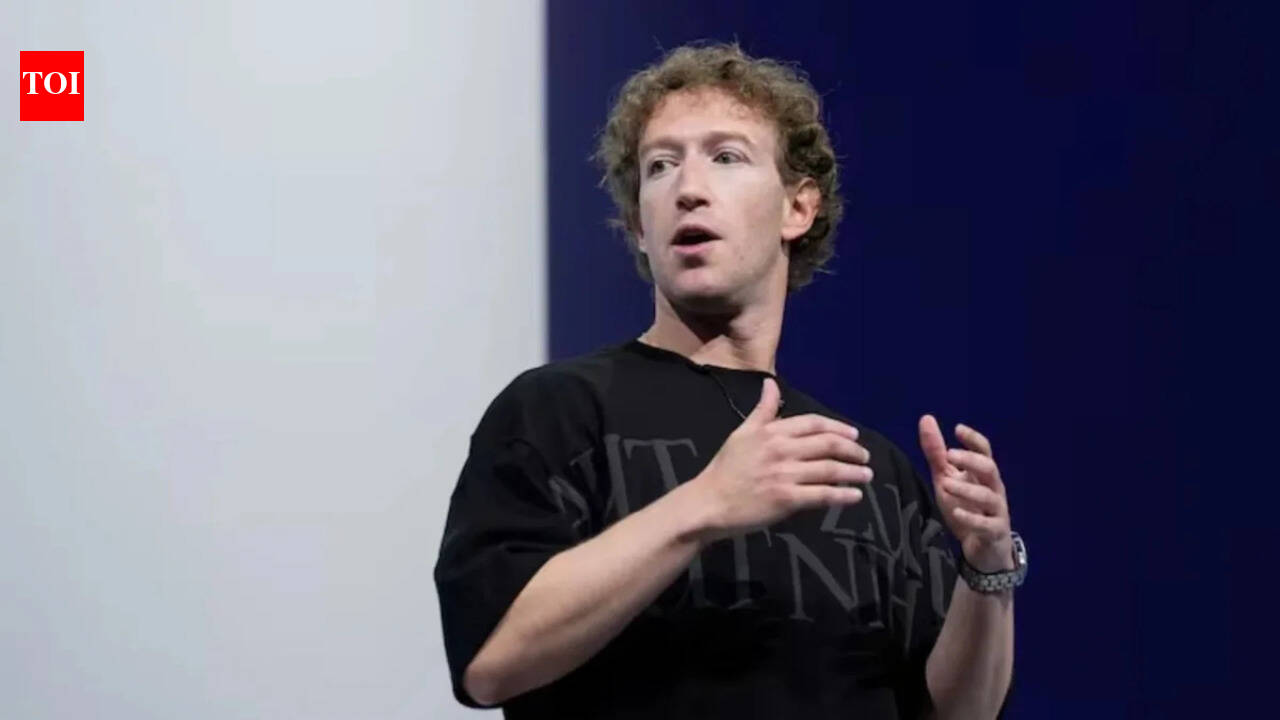
On July 2, 2026, during Meta's company-wide all-hands meeting, CEO Mark Zuckerberg did something he rarely does in public: he admitted the company had made a strategic miscalculation.
According to an audio recording of the meeting obtained exclusively by Reuters, Zuckerberg told employees that the AI agent technology the company has bet its future on is developing far slower than management anticipated. His exact words: "At least over the past four months, the trajectory of AI agent development has not accelerated in the way we expected."
Behind that statement lies a wager large enough to take the entire tech industry's breath away. In 2026, Meta has allocated a staggering $145 billion budget for AI infrastructure. Just this past May, the company laid off approximately 8,000 people — roughly 10% of its global workforce — while reassigning another 7,000 to AI teams. This was an AI-centric, company-wide restructuring of a magnitude virtually unprecedented in Meta's two-decade history.
Zuckerberg acknowledged during the meeting that the restructuring was executed "less cleanly than it should have been," and that the senior leadership team had collectively misjudged key timelines. He disclosed that when planning the restructuring in January and February, management was "super optimistic" about the performance of AI coding tools like Anthropic's Claude Code, and redesigned the company's organizational structure and workforce allocation based on those rosy assumptions. The capability leaps they were banking on, however, have yet to materialize.
In short, Meta bet that AI agent capabilities would undergo a step-change breakthrough in the first half of this year, and staked an organizational overhaul on that bet. The chips are down, but the cards have not turned in Meta's favor.
Yet Zuckerberg showed no sign of folding. He has set himself a three-to-six-month observation window, by which time he expects to see "more significant returns." This signals that Meta is doubling down rather than cutting its losses.
Intriguingly, during the same meeting, Alexandr Wang, head of Meta Superintelligence Labs, conveyed a markedly different message.
According to Business Insider, Wang told employees that the company's next-generation AI model, internally codenamed "Watermelon," has already matched the performance of OpenAI's GPT-5.5 — released in April this year — on benchmark tests. More notably, the compute power required to train Watermelon is an order of magnitude greater than that used for Muse Spark (internally codenamed Avocado), which launched in April.
Wang also publicly hinted at the company's progress on X. He stated that an updated version of Muse Spark is coming soon, with "significant improvements" in coding and agent capabilities. When a user asked when Meta would deliver a coding model comparable to Anthropic's Claude Opus, Wang responded that it would come "very soon," adding that users would like what the company is "cooking."
On one side, the CEO is admitting that AI agent deployment is moving too slowly. On the other, the AI business chief is declaring that foundational models have caught up with the industry's best. These two seemingly contradictory voices emerging simultaneously perfectly capture the deepest fracture in today's AI industry: foundational model capabilities are indeed growing steadily, but between "a model can pass a test" and "a model can genuinely replace human workers" lies a chasm that the industry has systematically underestimated.
Capital markets reacted swiftly and violently. On July 2, Meta announced plans to sell compute capacity to external customers through its Meta Compute cloud business, sending shares up 8.8% in a single day. However, when Zuckerberg's remarks about sluggish AI agent progress surfaced, Meta shares tumbled 4.9% on July 3. Panic quickly spread: the Philadelphia Semiconductor Index plunged 5.44% that day, triggering a broad sell-off in global chip stocks.
The market's logic was brutally direct: if one of the world's largest buyers of AI compute admits that the commercial deployment of AI agents is falling short of expectations, then the entire demand curve for AI compute may need to be redrawn.
However, prominent semiconductor research firm SemiAnalysis cautioned investors against over-interpreting the news in a report. The firm noted that signals such as Meta's continued upward revision of capital expenditure and Watermelon matching GPT-5.5 indicate the company has not abandoned the race in frontier models. Selling compute capacity externally is more likely a new monetization channel rather than a signal of strategic retreat.
From a broader perspective, the true weight of Zuckerberg's admission lies not in what he acknowledged, but in the staggering scale of the bet he placed beforehand. $145 billion in capital expenditure, a restructuring affecting tens of thousands of employees, a company-wide all-in AI agent strategy — this is arguably the most expensive "we were too optimistic" in the history of global technology.
As it stands, OpenAI released GPT-5.5 in April and launched GPT-5.6 last month, though the latter has not yet been made fully available at the request of the U.S. government. Anthropic and Google are also continuously iterating on their respective model capabilities. In this clash of giants, Meta is attempting to close the gap through aggressive capital investment and talent poaching. Reports indicate that Meta has offered compensation packages worth hundreds of millions of dollars to attract top AI researchers.
The next three to six months will be the critical window for testing Meta's monumental wager. If Watermelon and the updated Muse Spark can deliver a qualitative leap in coding and agent capabilities, Zuckerberg's "admission" may be reframed as a successful strategic calibration. If not, and the anticipated returns still fail to materialize, the $145 billion bet will face far greater scrutiny.