What’s the secret success sauce? Ex-Meta exec revealed Mark Zuckerberg’s policy on work-life balance: ‘Only so many hours in a day’
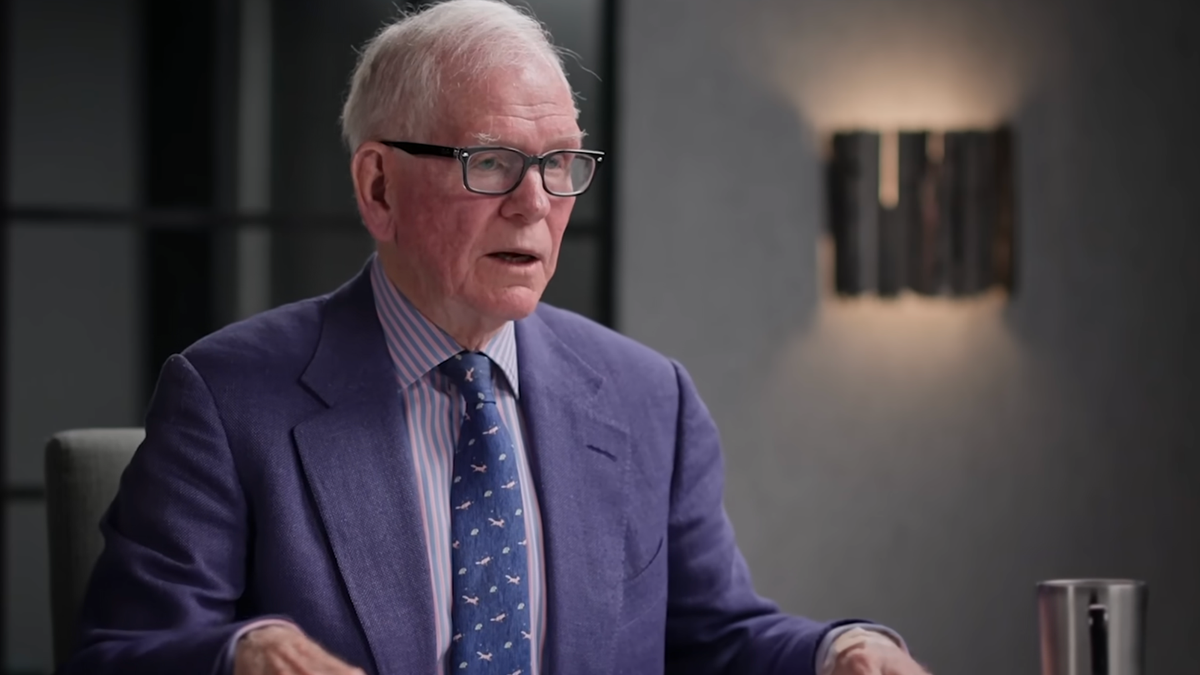
For years, Mark Zuckerberg has had a reputation as the unstoppable force behind Facebook, a founder who turned a college project into one of the world’s biggest tech companies. While his peers witnessed his rise first-hand, we got a pretty sufficient glimpse of it from ‘The Social Network’. We even saw him behind, glued to his desk, with his laptop in front — remember the scene where Andrew Garfield came at Jesse Eisenberg?Yeah, that. Most people have always pictured Zuckerberg hustling nonstop, leading an “always on” culture that’s basically come to define Silicon Valley.So it’s natural that people were surprised when a former Meta executive said one of the most important things he learned from Zuckerberg was the value of true work-life balance — making every hour at work count, instead of letting work fill every hour of your day.Now, that ex-exec brings this philosophy to his own job at a Berlin-based tax tech company worth over $1 billion, where he enforces strict rules on meetings, emails, and personal time.How’s the work culture like at Meta?That executive is Martin Ott, CEO of Taxfix, the Berlin-based digital tax filing platform valued at more than $1 billion, as per a Fortune report. Before taking over at Taxfix, Ott was at Facebook for several years as Managing Director for Northern and Central Europe. He joined the company in 2012, just as Facebook was about to go public and was pivoting to mobile. Understandably, it was a pretty intense period, and one where he worked closely with Zuckerberg and saw his leadership style up close. But Ott says the big takeaway from those years wasn’t about working longer hours or pushing for constant grind.It was about learning to focus.Talking to Fortune, Ott said that Zuckerberg always pressed him to think: What’s the single thing I can do today that will really make an impact? Instead of running to every meeting or trying to see to every little thing personally, Ott came away believing leaders should keep their time focused on what truly moves the business forward.When Ott joined Facebook during its scrappy pre-IPO days, he saw firsthand how the company scaled and how a young Zuckerberg handled growth. The lesson he carried with him wasn’t about running yourself (or your team) ragged. Rather, it was about getting results during the time you had.“There are only so many hours in a day,” Ott said. He urges people to ask whether they even need to be at every meeting, or if their time is better used somewhere else.“One of the things I’m passing on is — there’s only so many hours,” Ott told Fortune. “Ask yourself, what’s the one thing you could do today to really move the needle? Do you really need to be at that meeting?”The work culture that became part of his legacyWhile tech culture is full of billionaires who claim you have to work 24/7 or you’ll fail, Ott doesn’t buy it. He says that kind of “always on” approach just leads to burnout. Take Lucy Guo, Scale AI’s young billionaire cofounder, who starts her day at 5:30 a.m., works until midnight, and says anyone who wants work-life balance is just in the wrong business. Or Twilio’s CEO, who told Fortune the only time he doesn’t think about work is a small chunk of time on Saturdays. Even LinkedIn’s Reid Hoffman says work-life balance doesn’t exist for startup founders, and he expects his team to always be working unless it’s family dinner time.“That 24/7 thing only works for so long,” Ott says. “It’s just as important to protect your team from burning out as it is for you to watch your own limits. You don’t want to end up there.” In his view, it’s about intention — showing up on purpose, not being stuck on “constant on.”How Martin Ott built his workplaceTo keep boundaries, Ott has built habits that protect both himself and his team. “The key thing is, I structure my day.” He wakes up around 5:30 a.m. most mornings, reads for half an hour, and then goes running by the lake. He stays connected to his support network and meditates for his mental health, though he admits he goes in and out of that routine.Even when Ott starts early and drafts emails before the official workday, he schedules them to send later so that his team doesn’t wake up to pings that could pull them out of their own downtime. “I schedule Slack messages or emails for 8 or 9 a.m., so people aren’t bothered in their free time. They need to recharge. This is a marathon.”And it really is, as Ott points out, that running a company brings constant pressure and plenty of ups and downs. “You’ve got to remember it’s a marathon, not a sprint. To maintain high performance over a long time, you can’t run at 24/7. You just can’t.”