
Remember me



Counterfeit gadgets have been around for decades. Ever since the '80s, when Taiwanese companies began reverse-engineering Nintendo consoles and producing unofficial clones, knockoff tech has steadily spread around the world.
There's at least one gadget below that you or someone you know has likely fallen for. I know I have.
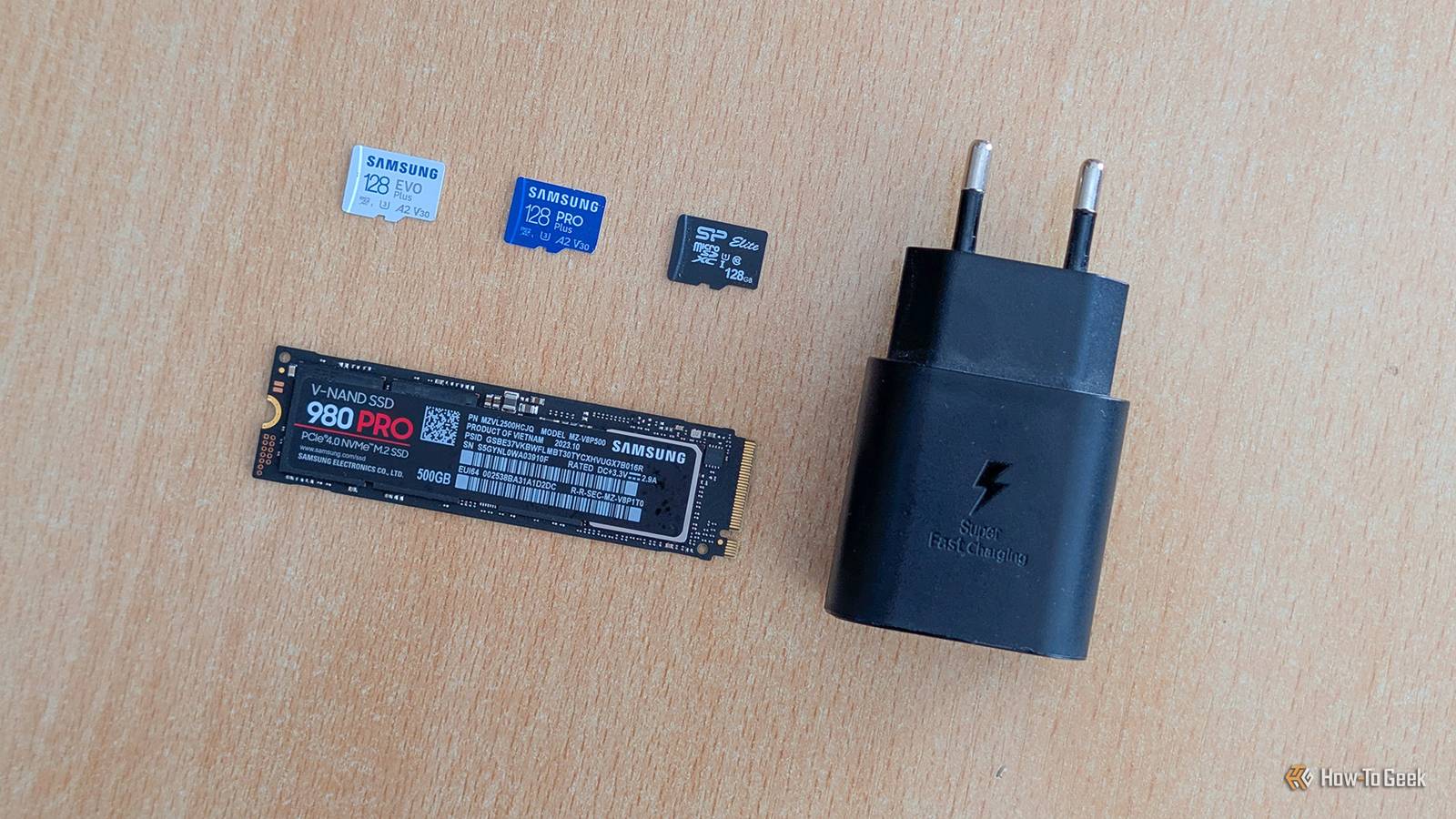
microSD cards Knockoff memory cards are everywhereFake microSD cards have been infecting e-tailers around the world for decades. There are so many fakes circulating that major microSD brands, such as SanDisk, have published articles that include more than a dozen examples of counterfeit SD cards. The counterfeit microSD card phenomenon became widespread in the late 2000s and early 2010s, when knockoff memory cards even began showing up on Amazon.
Since then, the situation has only gotten worse. These days, you shouldn't buy a microSD card on Amazon, AliExpress, Temu, and similar online retailers because there's a solid chance you'll get a fake on Amazon and an even higher one on the other sites I've mentioned. The safest route is to buy memory cards from websites and brick-and-mortar stores that don't allow third-party sellers or directly from manufacturers' online stores, as some brands sell memory cards through their own web shops.
Solid state drives (SSDs) Remember that scandal involving fake SSDs being sold on Amazon?How-To Geek wrote about fake external SSDs being sold on Amazon a few years ago. Those drives sported ridiculous specs, such as 16TB of storage, along with ridiculously low prices. What we found inside was a microSD card (likely with a 64GB capacity) slotted into a USB-C adapter, roleplaying as an SSD. Fake SSDs had been flooding websites such as AliExpress for years before they started showing up on Amazon, and you can still find plenty of them on AliExpress today.
The counterfeit SSD market has evolved since then, with more recent examples including counterfeit SSDs from trusted brands such as Samsung. Der8auer, a well-known overclocking expert and YouTuber, posted a video a few years ago in which he tested one such fake "980 EVO" SSD. It turned out to be an M.2 SATA device with painfully slow flash storage chips, and its maximum write speed was below 1MB/s. He also tested a fake "990 Pro" SSD and saw much higher performance, with read speeds of about 2,500MB/s and write speeds of about 1,000MB/s, but the results were still well below what a real Samsung 990 Pro can achieve (about 7,100MB/s reads and 6,800MB/s writes). Worse still, the write speed dropped to about 100MB/s after writing just over 100GB of data to the drive.
More recently, quite convincing fake Samsung 990 Pro SSDs appeared in Europe and were sold by an Austrian retailer. They looked similar to the genuine drives but couldn't even be formatted. Another counterfeit Samsung 990 Pro SSD that surfaced in Japan was of much higher quality, closely matching the original in most performance metrics. Other brands, such as Seagate, have also had their products counterfeited.
The good news is that these high-quality knockoff SSDs are exceptionally rare and that even cheap knockoffs are uncommon, as long as you buy from reputable retailers. On the other hand, if you shell out cash for a suspiciously cheap SSD with terabytes upon terabytes of claimed capacity on AliExpress or Temu, you're almost certainly getting a fake.
Wireless earbuds Mostly AirPods and Galaxy BudsEarly AirPods knockoffs were of poor quality and very easy to recognize. They were cheap-looking, had very poor sound quality and even worse battery life, and their lifespan was measured in months, or even weeks in the case of especially poorly made counterfeits.
More recently, however, the market has seen the arrival of sophisticated fakes that are very hard to recognize. The packaging and design are almost indistinguishable from the real thing, they don't sound that bad, and they often even use real Apple serial numbers, so you can't rely on Apple's website to determine whether your earbuds are fake. They're so convincing that there are multiple long-form Reddit guides on how to tell whether your AirPods are fake that include dozens of potential giveaways.
A similar thing has been happening with Samsung Galaxy Buds, but the market for counterfeit Galaxy Buds isn't nearly as widespread as it is for AirPods. I remember Galaxy Buds2 Pro knockoffs being especially widespread, but the knockoff AirPods market is on a whole other level. These days, Facebook Marketplace is rife with counterfeit AirPods listings, so I recommend avoiding it if you're planning to buy a new pair of AirPods.
If you're in the market for new AirPods, the best course of action is to buy them from Apple or an Apple Authorized Reseller. But if you want to save some cash, I highly recommend arming yourself with multiple guides on how to spot fake AirPods before you start shopping around.
Phone chargers I willingly fell for this oneEver since Apple stopped including chargers with iPhones, starting with the iPhone 12 series, the counterfeit phone charger market has been thriving. The situation only got worse when Samsung and other phone brands started following Apple's lead. While they aren't as widespread as knockoff AirPods, fake phone chargers are still common around the world.
I willingly bought a fake Samsung 25W charger after I got a Samsung Galaxy S21 FE. It cost less than half of what Samsung charged for a genuine charger, so I thought, "How bad could it be?" and went out and got a fake one. I remember the box being pretty convincing, but the charger itself was obviously fake. It didn't even have Samsung's logo on the back, and the brick itself was suspiciously light. While it did indeed deliver 25W of power to the phone, it became uncomfortably hot while doing so.
I used it for a few days before shelling out cash for a genuine charger, and the difference was dramatic. The original charger was noticeably heavier, it only got warm while charging the phone, and the writing on the back was of much higher quality and also included the Samsung logo.
Phone cases Knockoff OtterBox iPhone cases were quite widespread back in the day Credit: Goran Damnjanovic / How-To Geek
Knockoff OtterBox cases for the iPhone 4/4s and the iPhone 5 were one of the earliest examples of counterfeit phone cases. They surfaced in the early 2010s and were mostly limited to iPhone cases. Nowadays, though, we're flooded with counterfeit iPhone, Samsung, and Google Pixel cases that look almost indistinguishable from the real thing but cost much less.
While older knockoffs would quickly go down the drain, with the plastic being prone to breaking and silicone cases falling apart after just a few months, modern knockoff cases can be of excellent quality and, in some cases, are almost as good as the official ones. That said, I recommend skipping first-party phone cases altogether and getting a quality third-party option, such as a Spigen case or a genuine OtterBox case.
Counterfeit gadgets will likely never go awayAs long as there's money to be made and the gadget in question can be counterfeited cheaply, knockoffs won't go away. The thing is, stuff like chargers, phone cases, and even wireless earbuds are extremely cheap to produce, so I don't think we'll ever get rid of those. The same goes for fake SSDs and SD cards.
While we're in the middle of global memory and storage shortages, you can still get tons of bottom-of-the-barrel flash memory chips for pennies, solder them onto a cheap PCB, or simply use a super-slow memory card slotted into a USB-C adapter and sell it as the real deal.
If you're in the market for any of the gadgets mentioned above and don't want to get scammed it's best to buy from reputable sellers, or at least read a few guides on how to recognize knockoffs if you want to save some cash or try your luck on the used market.