The Golden Mantella, Madagascar’s tiny jewel at risk
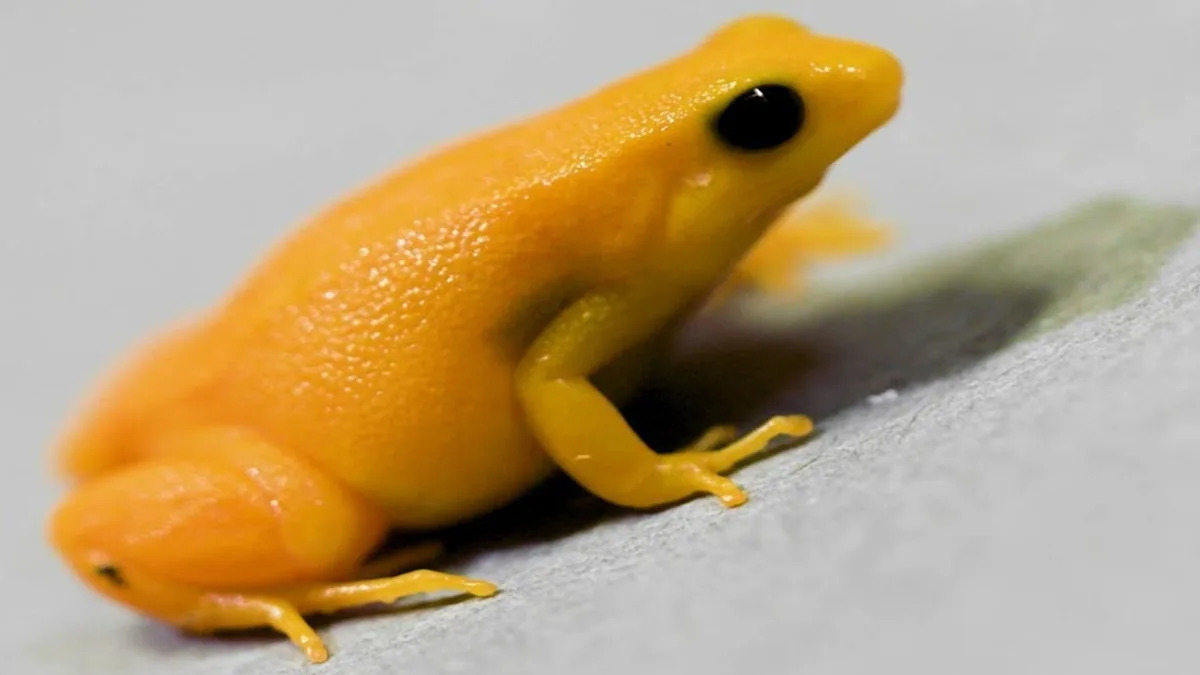
The golden mantella is one of the smallest yet most striking frogs in the world. Critically endangered, it inhabits only a tiny four square mile area in East Central Madagascar. Despite its diminutive size of about one inch, the Golden Mantella commands attention with its vivid coloration. Its bright yellow-orange and occasionally red skin is a warning signal to potential predators, as the frog is mildly toxic. This combination of small size and brilliant color makes it a unique and remarkable species, captivating scientists and conservationists alike.
Golden mantellas are insectivores, feeding primarily on termites, fruit flies, and a variety of other small insects. Their diet allows them to play a key role in controlling insect populations within their limited ecosystem. Although they face few natural predators in the wild, their survival has been threatened by human activity. Over-collection for the exotic pet trade has placed additional pressure on wild populations. These tiny frogs, already confined to a small area, are highly vulnerable to removal from their natural environment, which can disrupt their breeding and foraging behaviors.
The Golden Mantella is endemic to swamps at elevations close to three thousand feet. These habitats provide the moisture and shelter necessary for their survival. Unfortunately, rapid deforestation in Madagascar has destroyed much of this unique ecosystem, leaving the species critically endangered. Trees and vegetation are cleared for agriculture, logging, and development, fragmenting the frog’s habitat and reducing the availability of safe breeding grounds. The loss of swamps and the surrounding forest affects not only the Golden Mantella but also other species that rely on this delicate habitat.
Conservation efforts are essential to prevent the Golden Mantella from vanishing entirely. Programs focused on habitat protection, captive breeding, and regulated trade have been implemented to preserve the species. Raising awareness about the frog’s limited range and unique ecology is critical to garnering support for these initiatives. By protecting the remaining swamps and restoring degraded areas, conservationists aim to provide safe environments where the Golden Mantella can thrive and reproduce naturally. Education and outreach can also help reduce the demand for wild-caught specimens in the pet trade.
The Golden Mantella serves as a vivid reminder of the fragility of biodiversity and the importance of preserving endangered species. Its brilliant colors and unique behaviors reflect the intricate beauty of Madagascar’s ecosystems. Every successful conservation effort helps ensure that future generations will be able to witness this tiny amphibian in its natural habitat. Protecting the Golden Mantella is not just about saving one species; it is about safeguarding the complex web of life that makes Madagascar so ecologically special.