
Remember me





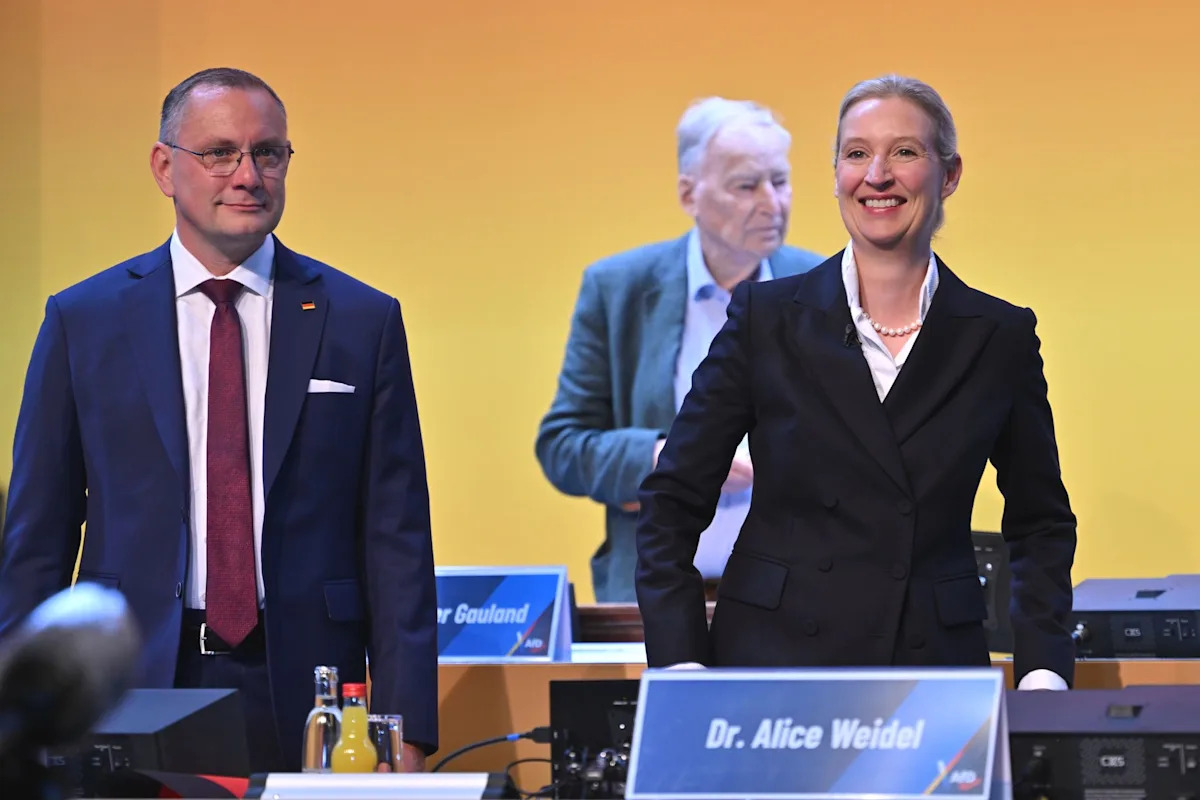
The far-right Alternative for Germany (AfD) party focused on upcoming elections as a national conference began on Saturday, despite protests that brought in police from across the country and sparked legal battles.
Buoyed by high hopes ahead of regional elections to be held in several states later this year, the AfD launched its national convention with determination in the eastern city of Erfurt.
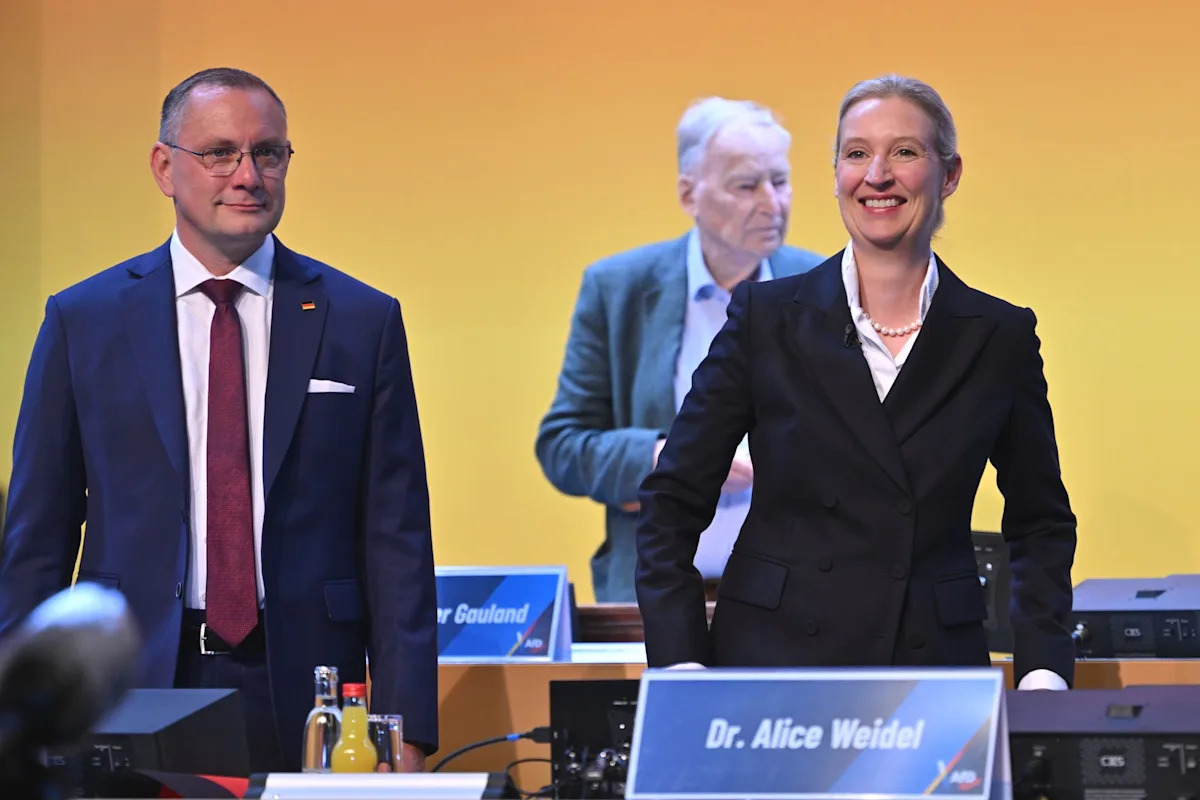
Party co-leader Tino Chrupalla said, "Perhaps we will soon be able to govern on our own." Addressing the lead candidates for Berlin, Saxony-Anhalt and Mecklenburg-Vorpommern, where the votes are to be held, he said, "You are our hope this year." Of the coming votes, he said, "We will win."
Chrupalla dismissed reports of rivalries at the party's helm, particularly between himself and co-chair Alice Weidel. "Our party is more united than ever before," he said.
Weidel meanwhile challenged the party's political opponents and counter-demonstrators outside the party conference in Erfurt. "You won't bring us down! Quite the opposite - we're getting stronger and bigger all the time!" she shouted to the hall, to be greeted with loud cheers.
She called on her party to bathe the country in black, red and gold, the colours of the German flag. Many delegates waved German flags in response.
Weidel said the AfD currently has 75,000 members, a significant increase, up from around 50,000 in 2024.
Later in the day, the party's leadership is due to be re-elected and 12 further positions on the executive board are to be filled.
The new board is to address business including membership rules.
Early start for delegatesChrupalla also referred to the thousands of demonstrators outside, praising delegates for arriving ahead of protesters who sought to block the access roads to the event. "The early bird catches the worm. The Antifa rioters overslept their own disruption tactics," he said.
Before the AfD conference was due to begin, growing numbers of demonstrators gathered in Erfurt city centre. Police said more than 200 buses carrying people wishing to protest against the conference had arrived so far and earlier estimated some 20,000 taking part in the protests.
To avoid blockades, hundreds of AfD delegates gathered at meeting points well outside the city before 4 am (0200 GMT) and travelled by coach escorted by police to the venue. By 8 am, the protests made it difficult to reach the site.
Two large demonstrations and several blockades were under way and no dispersals carried out so far, police said. A dpa reporter observed individual demonstrators who were blocking the progress of another march being pulled or carried away by police officers.
Security authorities had anticipated up to 50,000 counter-demonstrators.
Several thousand officers from across the country have been deployed to Erfurt to support the local force.
The state of Thuringia's interior minister, Georg Maier, said police have been preparing for weeks for the large-scale operation at the party conference. He reiterated his appeal to demonstrators to express their protest against the AfD without violence.
Legal wrangle over protestEven as two large demonstrations and several blockades were under way, a legal battle was raging over the protests and the legality of blocking certain routes.
A ban on demonstrations on several access roads around the AfD party conference venue remains in force, police said on Saturday morning, after the city lodged an appeal against a court ruling that had struck it down.
AfD grows in popularity, but remains controversialThe anti-migrant AfD became the country's biggest opposition party after scoring the best result ever for a far-right party in Germany since World War II in last year's general election.
The party has been able to further capitalize on the poor approval ratings of the coalition government of Chancellor Friedrich Merz, which has struggled to present a united front and find swift solutions to Germany's economic woes.
However, the AfD remains highly controversial, with all mainstream parties having ruled out cooperation over what they consider the party's anti-democratic and extremist views, particularly on migration.
Many want the party banned, while it continues to see growing support elsewhere, eyeing a potential absolute majority in a regional vote in the eastern state of Saxony-Anhalt in September, which could see it lead a regional government for the first time.

Protesters block the A71 highway near Gispersleben, during a demonstration against the national party convention of the Alternative for Germany (AfD) party. The AfD's national party convention is taking place on July 4 and 5 at the Erfurt Convention Center. (is associated with: «Far-right German party looks ahead to elections as thousands protest») Michael Reichel/dpa

Left-wing protestors hold a large banner during a demonstration against the national party convention of the Alternative for Germany (AfD) party. The AfD's national party convention is taking place on July 4 and 5 at the Erfurt Convention Center. (is associated with: «Far-right German party looks ahead to elections as thousands protest») Sven Kaeuler/dpa

Protesters block the B7 highway, during a demonstration against the national party convention of the Alternative for Germany (AfD) party. The AfD's national party convention is taking place on July 4 and 5 at the Erfurt Convention Center. (is associated with: «Far-right German party looks ahead to elections as thousands protest») Sebastian Münster/dpa

An armored police vehicle and a water cannon on their way to the convention center, during a demonstration against the national party convention of the Alternative for Germany (AfD) party. The AfD's national party convention is taking place on July 4 and 5 at the Erfurt Convention Center. (is associated with: «Far-right German party looks ahead to elections as thousands protest») Martin Schutt/dpa