
Remember me
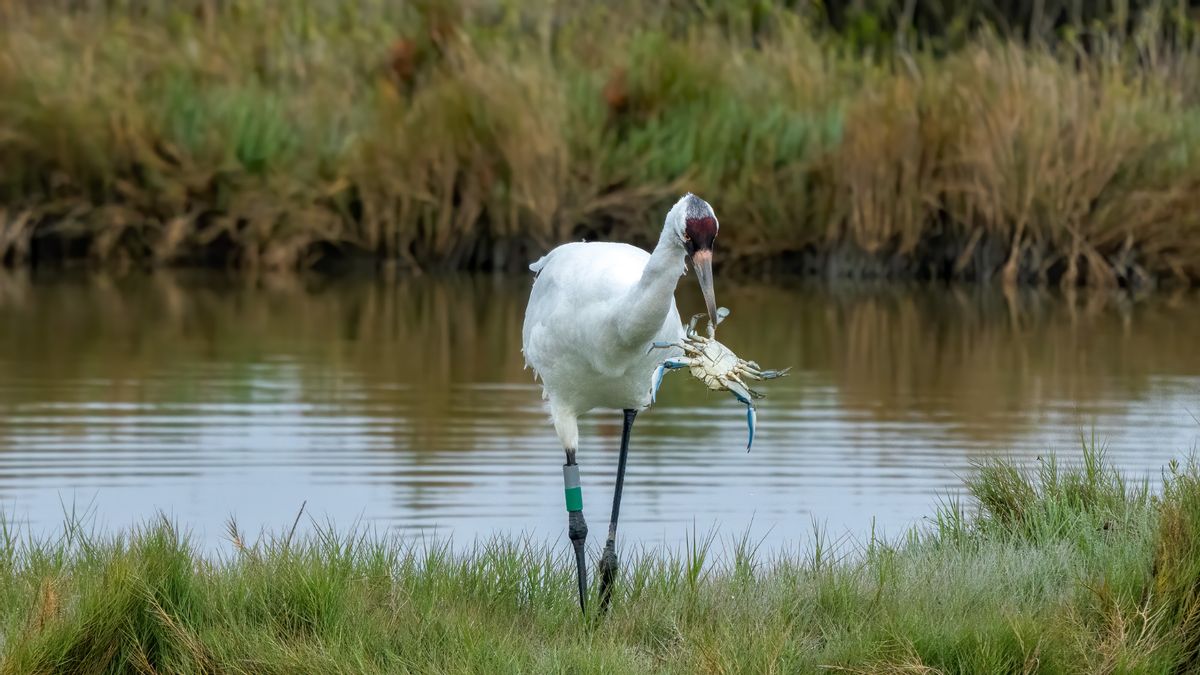




In June 2026, some people on social media expressed outrage over the potential loss of habitat for the whooping crane, an endangered species whose population has, since the 1940s, recovered from less than two dozen birds to several hundred.
The reason the whooping crane and its habitat are in danger, social media users claimed, is because U.S. President Donald Trump's administration is removing protections from that habitat. For example, one Threads post (archived) read:
"The Trump administration has removed federal protections for the habitat of the endangered whooping crane.
Only 500 whooping cranes remain."
He's eviI. There is no other explanation.

The claim that the Trump administration removed federal protections for whooping crane habitat also spread on other social media sites, such as Instagram (archived), Facebook (archived) and X (archived).
While the Trump administration isn't directly targeting whooping crane habitats, conservation groups have pointed out that a series of rule changes the administration seeks to implement would open the door for the destruction of habitat along the whooping crane's migration route. These rules have yet to be implemented. Considering the claim is based on the predicted impact of these currently unimplemented policies, we've left this claim unrated.
There did not appear to be any recent changes to the status of the rule changes. Instead, it appears the social media claims were inspired by a June 25, 2026, Bloomberg Law article about how Trump administration policies could affect the whooping crane.
We've reached out to two federal agencies affected by the changes, the U.S. Fish and Wildlife Service and the Environmental Protection Agency, seeking more information about when the changes will go into effect. We will update this story if we learn more.
Whooping crane overviewWhooping cranes are the tallest birds in North America, according to an FWS webpage. They are considered a "flagship species" for America's wildlife conservation movement. That's because the species has been steadily rebounding from near-extinction due to active conservation efforts.
According to the International Crane Foundation, there were between 21 whooping cranes left in 1941, 15 of which were from the same flock. As of June 2026, there are reportedly about 550 whooping cranes in that very same flock, and more than 800 surviving cranes in total.
The FWS website said that the primary causes for the species' near-extinction were hunting and "destruction of habitat in the prairies from agricultural development."
The primary flock of whooping cranes spends its winters in coastal marshes near Corpus Christi, Texas, and spends its summers in northern Canada. However, the bird migrates between the two places over the American prairies, a migratory bird route often called the Central Flyway.
The cranes routinely make stops along their migration path; wildlife photographer Michael Forsberg recorded 11 stopover locations while flying with the whooper crane migration in 2022. The cranes need wetlands along their route to serve as stopover locations.
In April 2026, the FWS celebrated that several of the birds in this flock spent their entire winter in Oklahoma's Salt Plains National Wildlife Refuge, one of the stopover locations Forsberg recorded, for the first time. At the time, the FWS said in an article that maintaining protection for places that retain water in the Great Plans is vital for bird conservation.
In a press release published June 17, 2026, the FWS said that "conservation efforts across the Central Flyway and at and around Aransas National Wildlife Refuge have helped whooping cranes make a miraculous recovery." Aransas National Wildlife Refuge is the location near Corpus Christi where most of the flock spends its winters.
Trump rule changesThe claim that the Trump administration was removing protections from whooping crane habitats referred to two major changes to preexisting rules.
On April 17, 2025, the Trump administration proposed rescinding the FWS' definition of "harm" in the enforcement of the Endangered Species Act.
The Endangered Species Act prohibits the "take" of endangered species. As defined in the ESA, "take" means "to harass, harm, pursue, hunt, shoot, wound, kill, trap, capture, or collect, or to attempt to engage in any such conduct."
According to previous FWS regulations, "harm" in this definition means "an act which actually kills or injures wildlife. Such act may include significant habitat modification or degradation where it actually kills or injures wildlife by significantly impairing essential behavioral patterns, including breeding, feeding or sheltering."
Conservation groups, such as the Center for Biological Diversity, say that the FWS' definition of harm is important for protecting endangered species and preventing the destruction of their most important habitats. The Center for Biological Diversity says that removing the harm definition opens the door for the wetland habitats the whooping crane relies on during migration to be "drained, polluted, paved and destroyed."
The National Crane Foundation says it expects "freshwater diversions, wetland drainage, land development, powerline collisions, and other disturbances at key nesting, feeding, and roosting sites" for whooping cranes to increase as a result of this order.
As of time of writing, it does not appear as if the Trump administration has implemented the rule change yet. The regulation's webpage still included the definition of harm on June 26, 2026.
The other rule change highlighted in the Bloomberg Law article is similarly based on narrowing regulatory agencies' authorities. The EPA and the Department of the Army proposed a rule in November 2025 reducing areas protected as a "Water of the United States" or "WOTUS" by the Clean Water Act. The proposal would do so by newly defining terms in preexisting regulation and by adding new terms.
In short, the proposal would intentionally reduce the amount of wetlands protected as a "Water of the United States" by the Clean Water Act.
In their regulatory impact analysis of the proposed rule, the two proposing agencies estimated that about 17 million acres of wetlands of the nearly 91 million acres mapped in lower 48 states — about 19% — would be protected under this proposal (PDF Pages 54 and 55).
However, the impact of this proposal would be considerably more substantial in states along the whooping crane's migration route. Less than 4% of wetlands in Kansas, little more than 5% in Oklahoma and South Dakota, 11% in Nebraska and 14% in North Dakota would be protected.
In its comments regarding the proposal, the Center for Biological Diversity again pointed to the damage the proposal would do to whooping crane habitat (Page 21).
As of June 29, 2026, the EPA still lists the less restrictive, prior definition of Waters of the United States as the current definition.
Essentially, both proposals are attempts to narrow definitions to restrict regulatory agencies' authorities to the detriment of conservation efforts. The Trump administration has used this strategy before, such as when it narrowed the definition of "livestock" to revoke a conservation organization's bison grazing permits. In both this case and the one regarding bison, the administration framed the deregulation as beneficial to the American agricultural industry.