
Remember me
In a quiet corner of rural Lancashire sits the small village of Warton. Medieval in origin, it’s not far from the infamous sands of Morecambe Bay, and a rocky limestone crag looms to the north-west. Just off the main street stand the ruins of a c14th-century rectory; nearby – and of a similar vintage – is the parish church, dedicated to Saint Oswald. It is a picturesque spot, now largely cast adrift from the tides of history. But it was not always so.
In fact, like a handful of other locations in England, it proudly claims a connection to a figure of immense historical significance: George Washington. The first US president’s ancestors once owned land here. There’s still a Washington House in the village, and the local pub – next to St Oswald’s Church – is named for the great man.
With such connections, it’s no surprise that the people of Warton have often revelled in celebrating their links to the US. This was never more apparent than in July 1976 – the bicentennial of the Declaration of Independence.

The George Washington pub in Warton. The village has celebrated its significant connections to the United States in several ways over the years | Credit: Alamy
Celebrating US independence... in LancashireIn the US, the bicentennial was a huge occasion marked by numerous celebrations across the country. Some of them were even attended by Queen Elizabeth II, at the personal invitation of President Gerald Ford.
The Queen embraced the opportunity to reflect on the historical ties between the US and the UK. In fact, during a speech in Philadelphia, she went so far as to say that the Fourth of July “should be celebrated as much in Britain as in America”. She would surely have been delighted to learn what the good folk of Warton were doing at that very moment.
By July 1976, Warton was no stranger to celebrating American independence. Back in 1932, for example, during another bicentennial – of George Washington’s birth – the village was the focal point for a special Fourth of July pilgrimage. A large group of expatriate Americans from across northern England came to lay wreaths at the two Washington graves at St Oswald’s – the very last members of the family to be buried at Warton: Elizabeth died in 1751, Thomas in 1823.

Queen Elizabeth II speaks at a White House state dinner during her visit to commemorate the bicentennial of American independence. She believed that Britain should celebrate the Fourth of July “as much as in America” | Credit: Getty Images
This significant occasion no doubt offered a useful precedent for those in the village preparing for the July 1976 events. As it turned out, though, Warton’s plans for the independence bicentennial were on a different scale entirely.
The celebration, developed over several months, featured a 10-day programme involving children’s sporting competitions, a transatlantic radio broadcast, a carefully choreographed procession, and various theatrical and musical performances, including one from a visiting American choir. At its centre was a Fourth of July ceremony in St Oswald’s church led by the Bishop of Blackburn – an event so well attended that it was standing room only for many of those present.
By all accounts, it seems to have been a roaring success – “Warton’s Week of Glory”, as one local paper described the celebrations. It was certainly good for local businesses: the landlord of the Black Bull pub – renamed the George Washington only in the 1990s – was delighted to discover that he had sold four times as much beer and lager as usual.
Baseball, flags and partiesThe events in Warton in July 1976 were, admittedly, rather unusual. But they were not entirely without precedent or parallel. In fact, groups of Britons had been commemorating 4 July across the 20th century, certainly since the First World War.
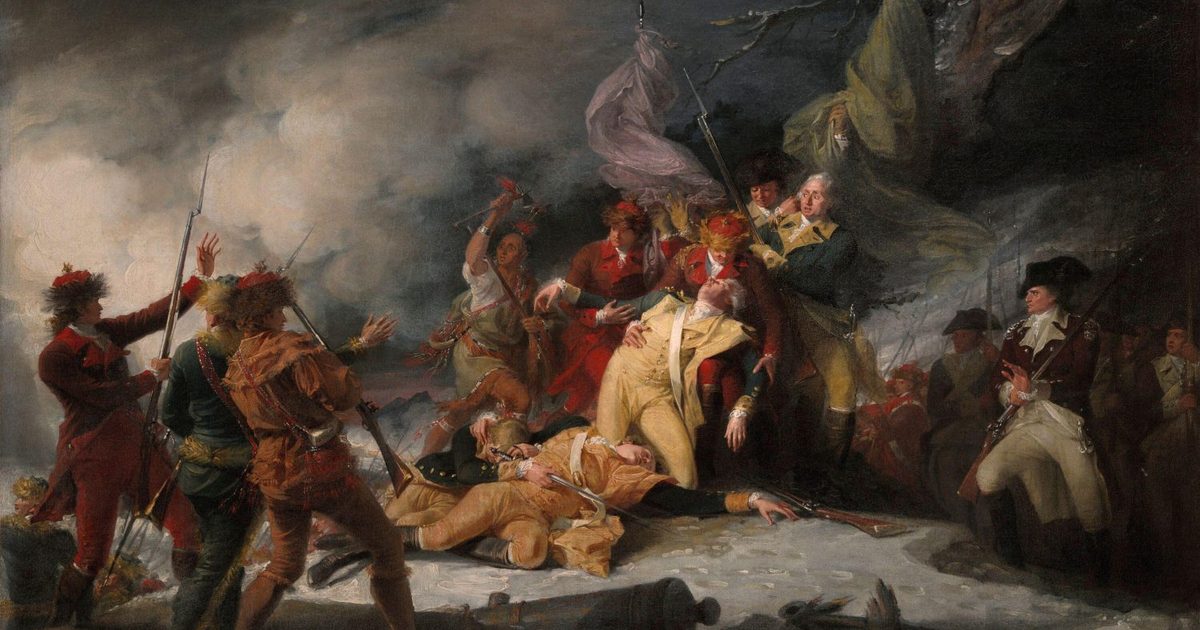
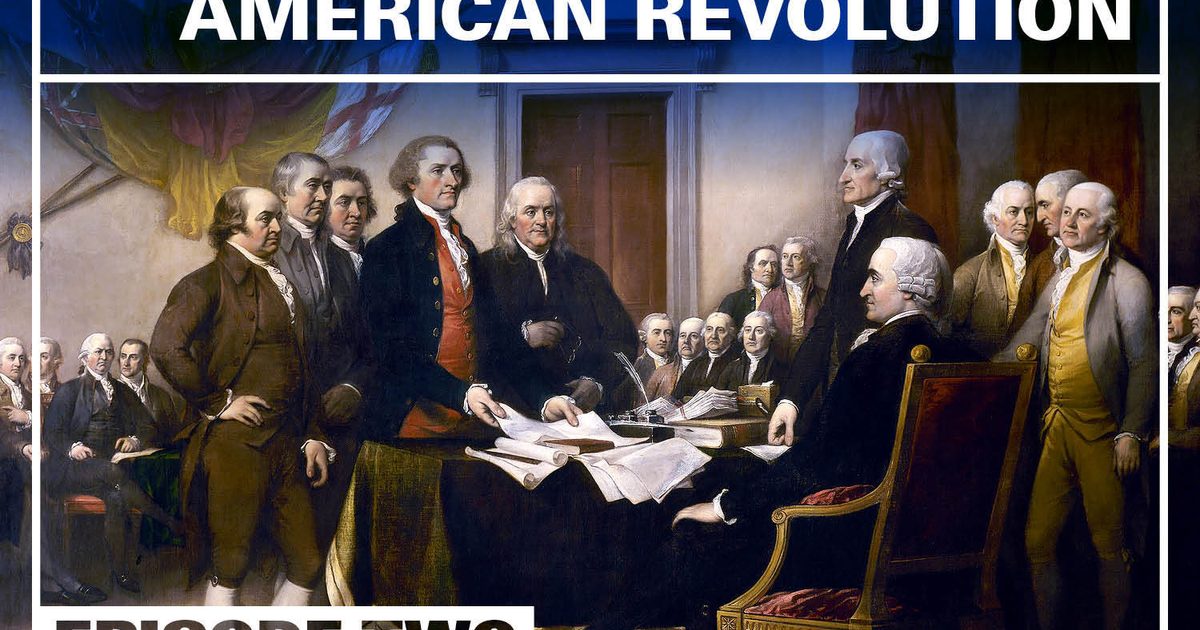
During the Revolution, when news of the Declaration of Independence first broke in Britain, the London press was largely hostile. The now-famous lines authored by Thomas Jefferson were seen in many quarters as a dressed-up attempt to justify treason.
Sentiment softened in the decades following American victory, which was formalised in 1783. By the time the US entered the First World War, in April 1917, feelings in Britain had changed significantly. The intervening years had witnessed a ‘great rapprochement’, with many influential figures in Anglo-American government, business and culture very keen to look beyond the disagreements of distant history and celebrate instead the ‘ties that bind’.

John Trumbull’s 1817 painting The Declaration of Independence, July 4, 1776. The initial reactions to the Declaration in Britain were antagonistic | Credit: Alamy
America’s decision to fight alongside the Allies, including Britain, offered a perfect opportunity to further consolidate what had become an increasingly close transatlantic relationship. After all, the two countries had now embarked together on a noble endeavour: to make the world safe for democracy, in the famous words of US President Woodrow Wilson.
By July 1918, thousands of US troops were passing through Britain on their way to the front in France. The stars were aligned for something significant: the first formal and widespread celebration of 4 July in Britain. As ever, the capital led the way.
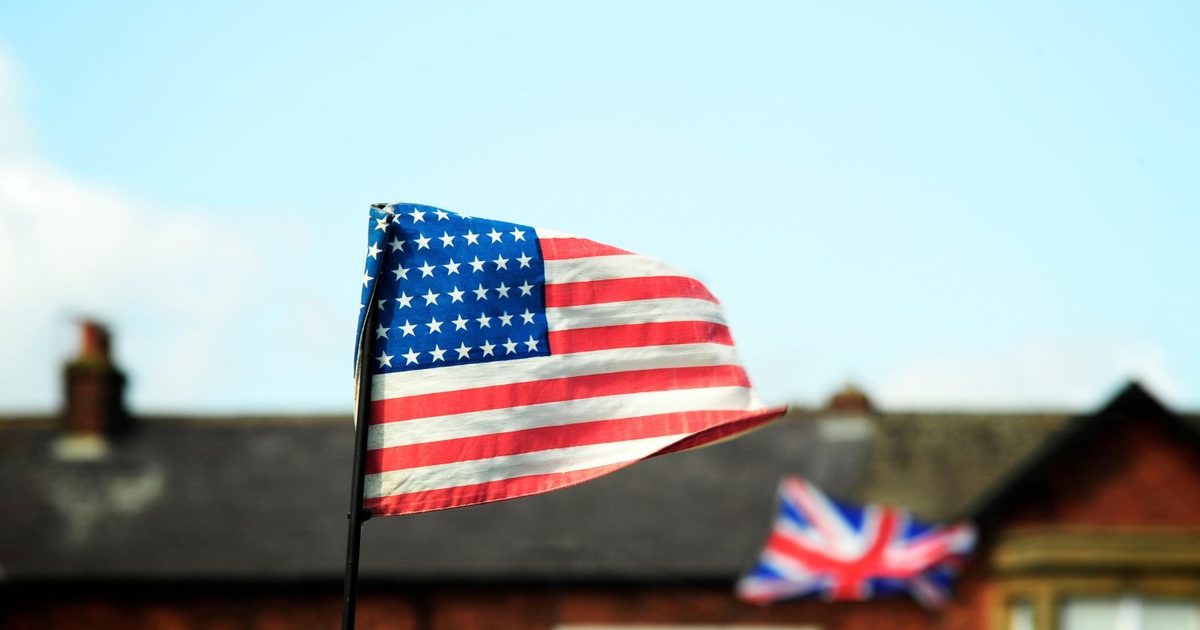
In Westminster, the Stars and Stripes and the Union Flag were flown together above government buildings. Watching from below as the breeze picked up, one reporter wrote that the two flags appeared “hopelessly entangled” in “a serious love affair”.
At Stamford Bridge, home ground of Chelsea Football Club, an exhibition baseball game was played between teams from the US Army and US Navy, with thousands of Britons in attendance – including King George V and Queen Mary. And at various other locations across the country, especially in those communities hosting US troops, there were parties and locally organised civic celebrations.

American soldiers on a sightseeing tour of London, 1918. That year, the first formal celebration of Independence Day took place in Britain
Other members of the great and good got in on the act. In a special speech delivered to mark 4 July, Winston Churchill told a gathering of Americans that he and his countrymen were now “glad to know that an English colony declared itself independent under a German king”. (George III, the monarch who ‘lost’ the American colonies was, of course, from the Hanoverian dynasty.)
Conflict resolutionSimilar events were staged during the Second World War, with the presence in the country of hundreds of thousands of US troops once again encouraging the authorities to celebrate 4 July.
On 4 July 1942 – the first anniversary of independence following American entry into the war – the Royal Air Force and US Army Air Force teamed up in a joint bombing operation against German airfields in the Netherlands. From across the Atlantic came a very welcome editorial from the New York Times calling on Americans to use Independence Day to “reaffirm our faith in British courage, British endurance, British honor”.

King George V (centre) attends the exhibition baseball game at Stamford Bridge in honour of Independence Day, 1918 – one of many celebratory events to mark the anniversary that year | Credit: Alamy
Just as in 1918, there was also activity in various British communities. At Sulgrave in Northamptonshire – another location with an ancestral connection to George Washington – a group of American soldiers were welcomed to the manor house built in the 16th century by the first president’s ancestors.
Up in Warton, meanwhile, locally based US troops attended an Independence Day service in St Oswald’s. On leaving, they gifted to the villagers a US flag which was flown from the church tower every 4 July for many years afterwards.
In July 1943, reflecting on how the Anglo-American relationship had gone from the violent break-up of 1776 to the burgeoning ‘special relationship’ of the Second World War, one British reporter happily claimed 4 July as “part and parcel of our common heritage”.
As the 250th anniversary of the Declaration of Independence approaches, it’s worth noting that the events of 1776 no longer trigger the negative response they once did in Britain. On the contrary: for many decades now, 4 July has sparked recurrent (and often enthusiastic) British interest, especially in those communities – like Warton – that revel in their links to the people and places of the 13 colonies that formed the nascent United States.