The 70-Year-Old Plane Disaster That Led To The Creation Of The FAA
Tragically, it sometimes takes a horrific event to change things for the better. Before 1958, there was no Federal Aviation Administration to regulate and manage civil aviation. Sure, notoriously overworked air traffic controllers were tracking and directing the nation's airplanes. But the FAA as we know it today didn't exist. Things changed in 1958. That year, the U.S. government formed the Federal Aviation Agency, later the Federal Aviation Administration. And unfortunately, the primary reason for the agency's formation was a harrowing disaster over one of America's most gorgeous landscapes: Grand Canyon National Park.
Seven decades ago, commercial air travel was still something of an oddity. Less than one-third of Americans flew in 1956. Nowadays, around 90% of Americans have taken a commercial flight at some point in their lives. But that doesn't mean there wasn't enough air traffic for accidents to happen 70 years ago. In 1956, the mid-air collision between a Trans World Airlines flight and a United Airlines flight claimed the lives of every passenger and crew member on both aircraft.
The ill-fated flights of TWA Flight 2 and United Airlines Flight 718
On June 30, 1956, TWA Flight 2 was set to depart Los Angeles International Airport for a routine flight to Kansas City, Missouri. The aircraft, a Lockheed Super Constellation with 70 passengers and crew aboard, was delayed due to minor maintenance requirements. The flight was soon cleared for takeoff and was airborne at 9:01 a.m. Three minutes later, another flight, United Airlines Flight 718, which was also delayed, took off from Los Angeles. That flight, a Douglas DC-7 with 58 people aboard, was bound for Chicago. Originally, each airplane's flight plan had them heading in opposite directions before crossing paths at different altitudes near the Grand Canyon.
Unfortunately, the TWA flight encountered rough air at 19,000 feet, prompting the captain to request a new cruising altitude at 21,000 feet. Initially, air traffic control denied the request because it would put the TWA flight at the same altitude as Flight 718. Instead, the TWA pilot received clearance to fly 1,000 feet above the rough air. That adjustment put TWA Flight 2 at the same altitude as United Airlines Flight 718. Soon after, air traffic control lost communication with both flights.
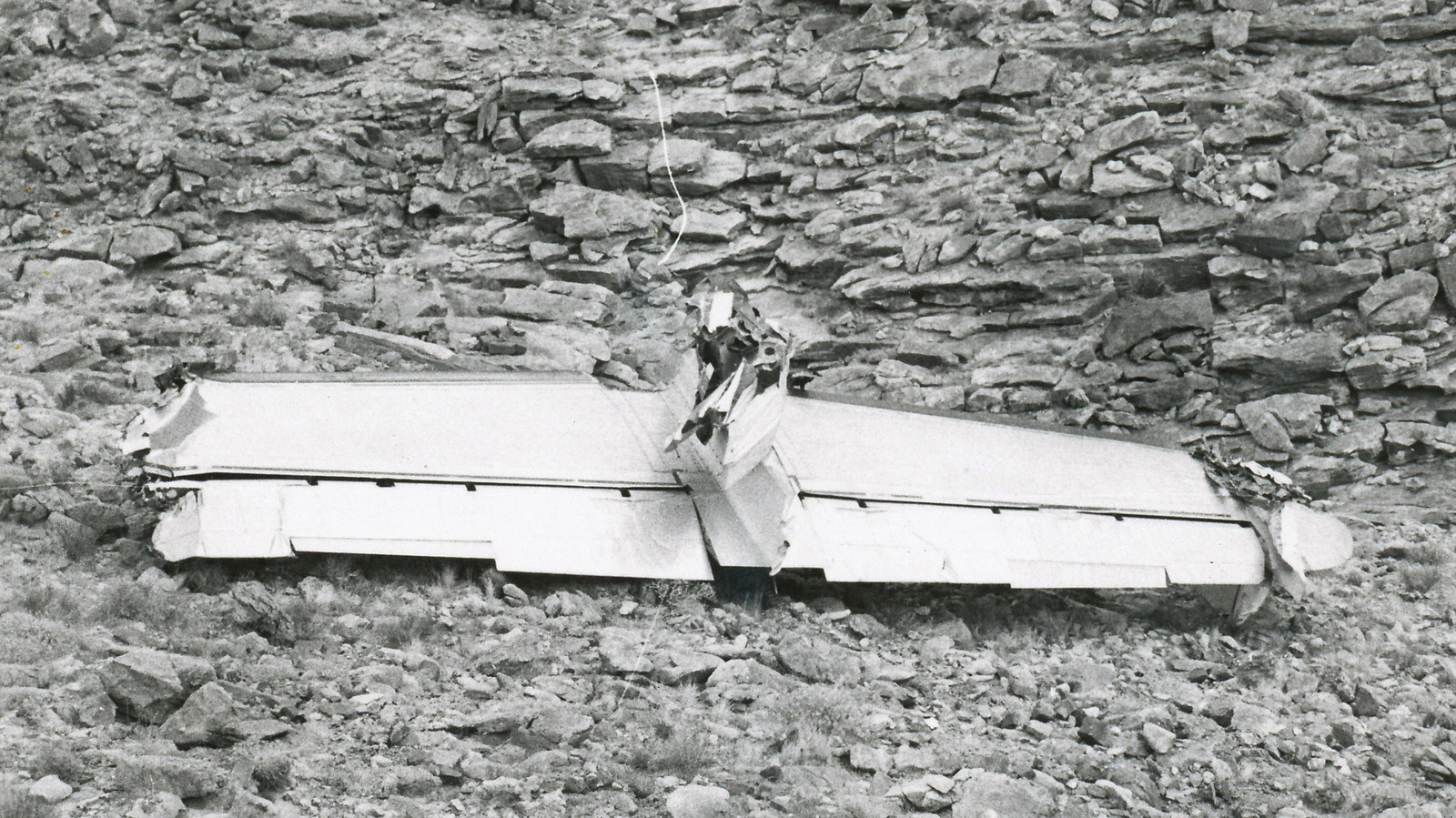
The two aircraft collided over the mighty Grand Canyon, sending wreckage down into the canyon. And unlike modern air disasters like the U.S. Army Blackhawk that collided with an airliner in January 2025, there wasn't a credible eyewitness. A pilot who flew near the crash sites recalled seeing smoke, and, after hearing about the missing-aircraft alert, returned to the area. He located the empennage, or tail section, of TWA Flight 2. The wreckage of the United Airlines flight wasn't far away, just a mile from the TWA crash site.
A risky recovery and the founding of the FAA
Finding the crash sites was one thing. Recovery was another ordeal entirely because the wreckage was deep within the Grand Canyon's challenging terrain. To access the crash sites, United Airlines contracted a specialized team of Swiss mountaineers – the terrain was that tricky. And though the team included a paramedic, none of the 128 passengers and crew survived the mid-air collision. Like the sad story of exhausted Soviet pilots crashing Aeroflot Flight 5143, the wreck was simply unsurvivable.
In addition to making headlines, the air disaster prompted the White House to rethink air traffic management. Then-President Dwight D. Eisenhower had already tapped World War I flying ace and U.S. Air Force legend Edward Curtis to address air traffic control issues. The resulting strategy included Curtis' recommendation to establish an agency to regulate and oversee domestic aviation. Congress agreed and passed the Federal Aviation Act in 1958, founding the Federal Aviation Agency. The organization would later change its name from "Agency" to "Administration" in 1967, just as it joined the U.S. Department of Transportation.