Why Are Some Airport Runways Concrete While Others Are Asphalt?
If you number among those lucky enough to still have summer vacation plans after more than 12,000 flights were canceled in May, do the rest of us a favor on your travels. Take a minute at the airport to set down your pre-flight cocktail and stop gloating about getting the last plane tickets at pre-war prices because air travel isn't getting cheaper anytime soon. Instead, look out on the tarmac. What do you see there? What's the so-called "tarmac" actually made of?
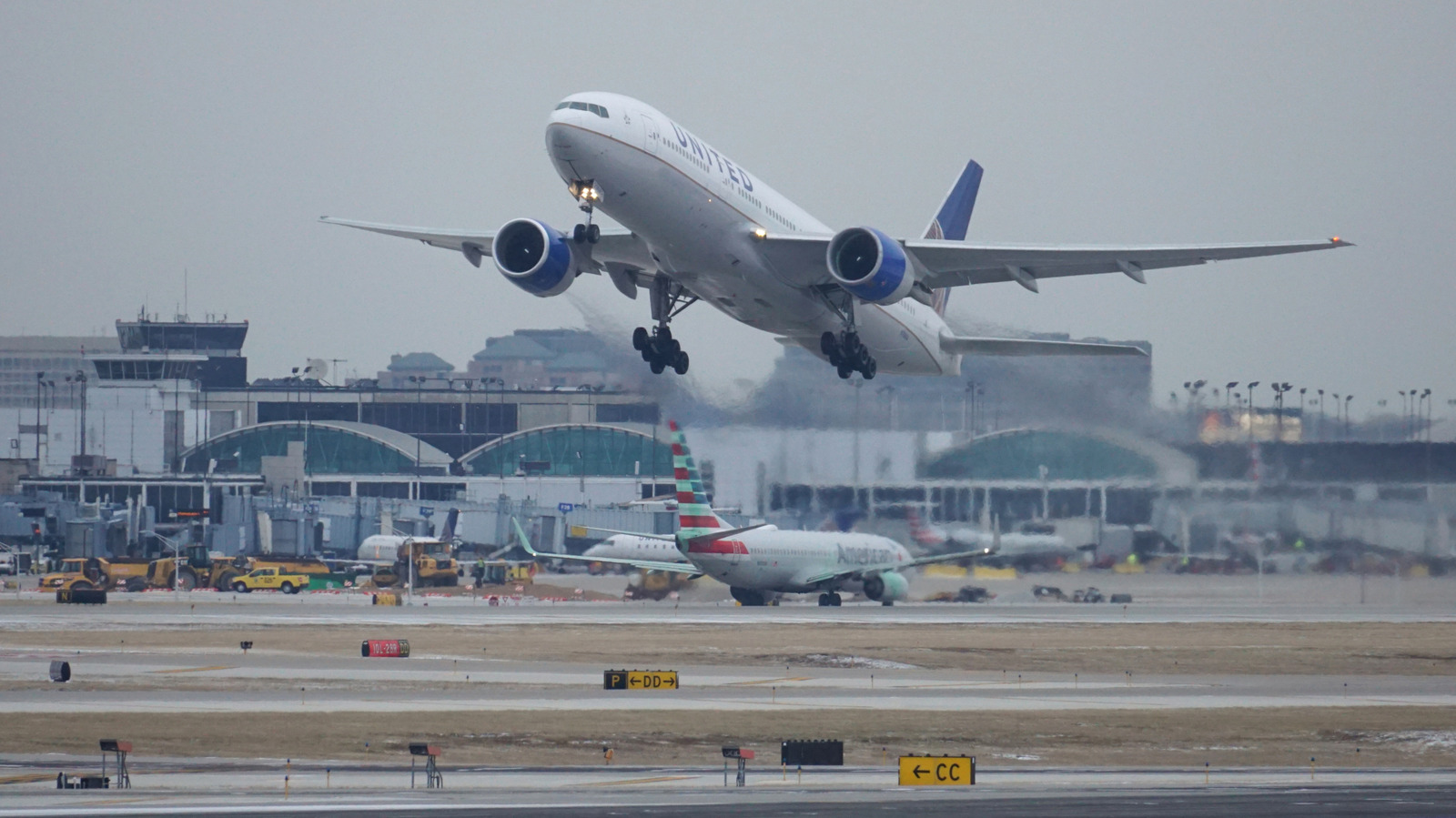
Chances are that if you're chilling in the lounge, you won't see any tar or any mac at all, as the nation's busiest airport features only runways made of concrete. JFK, on the other hand, has three concrete runways and one made of asphalt (AKA tarmac). Meanwhile, some airports, like Daniel K Inouye International in Honolulu, have only asphalt runways, and others yet (we're looking at you, ORD), have concrete, asphalt, and asphalt-concrete mixed runways.
You might think that something as important and highly regulated as a runway would be standardized across the country, but there's a surprising amount of variation here. So why exactly are some runways built using concrete and others with asphalt? Does it make a difference?
As it turns out, the construction materials used to build a runway depend on factors ranging from cost and construction needs to environmental factors and the type and volume of traffic an airport fields. In general, concrete is the more durable material, but asphalt is useful for spreading out the immense force a plane exerts on the ground during takeoff. Let's dig into the fascinating details.
How runways are engineered
While a runway's purpose might seem pretty simple, that couldn't be farther from the truth from an engineering perspective. Take-off and landing are two surprisingly different events for a runway to handle, thanks in large part to the difference in weight between planes taking off (which are filled with tons of fuel) and planes landing with the fuel tanks nearer to empty. To handle take-off weights in excess of 1,000,000 pounds, a runway needs to be able to disperse the plane's weight without damage the surface.
This is accomplished through several layers of materials, starting with the base earth the runway is built on. That's often covered with a layer of drainage material to prevent water pooling and causing pot holes. On top of that is a thick sub-base of course material, which prevents damaging the lower layers while heavy machinery lays the top two layers, known as the base course and surface course.
The base course is a support layer that hardens under pressure and distributes the surface weight further downward. The surface course is where concrete and asphalt usually come into play. This surface material gives the runway texture, which is needed to slow landing planes down, create friction, and prevent loss of traction.
Concrete can perform most of these jobs on its own, but it's cost prohibitive, and can degrade faster in climates with extreme temperature changes. Typically, it's used for high-traffic runways where the functional lifetime of the runway is the top priority. Asphalt is mostly used to add texture, but its flexibility helps it hold up better to freeze-thaw cycles. Plus, asphalt is easy to remove and replace when its lifespan is up.
Runway safety is the priority, but things still get weird
The purpose of an airport's runway is to enable aircraft to take off and land as safely as is physically possible, and the FAA takes that pursuit seriously. There are numerous safety features built into runways at all the major airports, such as minimum space requirements and even "engineered materials arresting systems," or EMAPS, which are basically supercharged runaway truck lanes, but, you know, for jet planes. The idea is that, unless a jet landing gets really weird, all contingencies are covered to achieve maximum safety.
Look a bit farther afield than major airports, though, and the asphalt-concrete dichotomy starts to break down in wondrous and weird ways. At many regional airports, you'll find turf runways, typically for hobbyist flying. Then there's the Barra Airport, in Scotland, which is one of the only places in the world where incoming flights alight on a beach. If you want a real thrill, though, may we recommend Tenzing Hillary Aiport in Lukla, Nepal, one of the most dangerous airports in the world. This is the destination most Everest hopefuls fly into, and its 1,729-foot asphalt runway drops right off the face of the earth. If that doesn't get your heart pumping, nothing will.