How to save money on your electricity bill if you're renting
Households across the country are eagerly trying to save on their electricity bills, from taking up energy-saving hacks to switching providers.
But what can you do if you're renting, and the bills are in the landlords name? Daragh Cassidy from comparison site Bonkers.ie joined Doireann Garrihy on RTÉ 2fm to share his advice for saving money on your electric bill.
Although renters can't make larger upgrades like installing solar panels, there are plenty of non-permanent changes they can make to lower their bills, Cassidy says.
"Sometimes when it comes to switching, if the bill is in the landlord's name, it can be a bit more difficult to do that, or you can't, certainly, go into a home improvement by yourself without the landlord's permission - nor do you want to if it's not your home.
"But there's lots of little things we can do around the home to use less energy and less electricity that can add up."
He stresses that "there's not one thing that's going to make a huge difference", but rather habits and small switches will make a noticeable change.
On the top of that list, Cassidy says, is conserving hot water, as heating water is the thing that adds the most cost to electricity bills, he explains.
"In most homes we'll have the immersion, which gets lots of talk obviously ... But for a lot of households, hot water is going to cost them around €2 a day, maybe slightly more. That's if they have an immersion and they don't have solar panels."
Don't leave hot taps running, and put a good lagging jacket on your immersion.
"Rather than being worried about how long you leave the immersion on for, I'd be more worried about your water usage", Cassidy says.
Leaving a hot tap running while showering or brushing your teeth, your water tank will drain, and when the immersion comes back on, it's working twice as hard to heat a full tank of water.
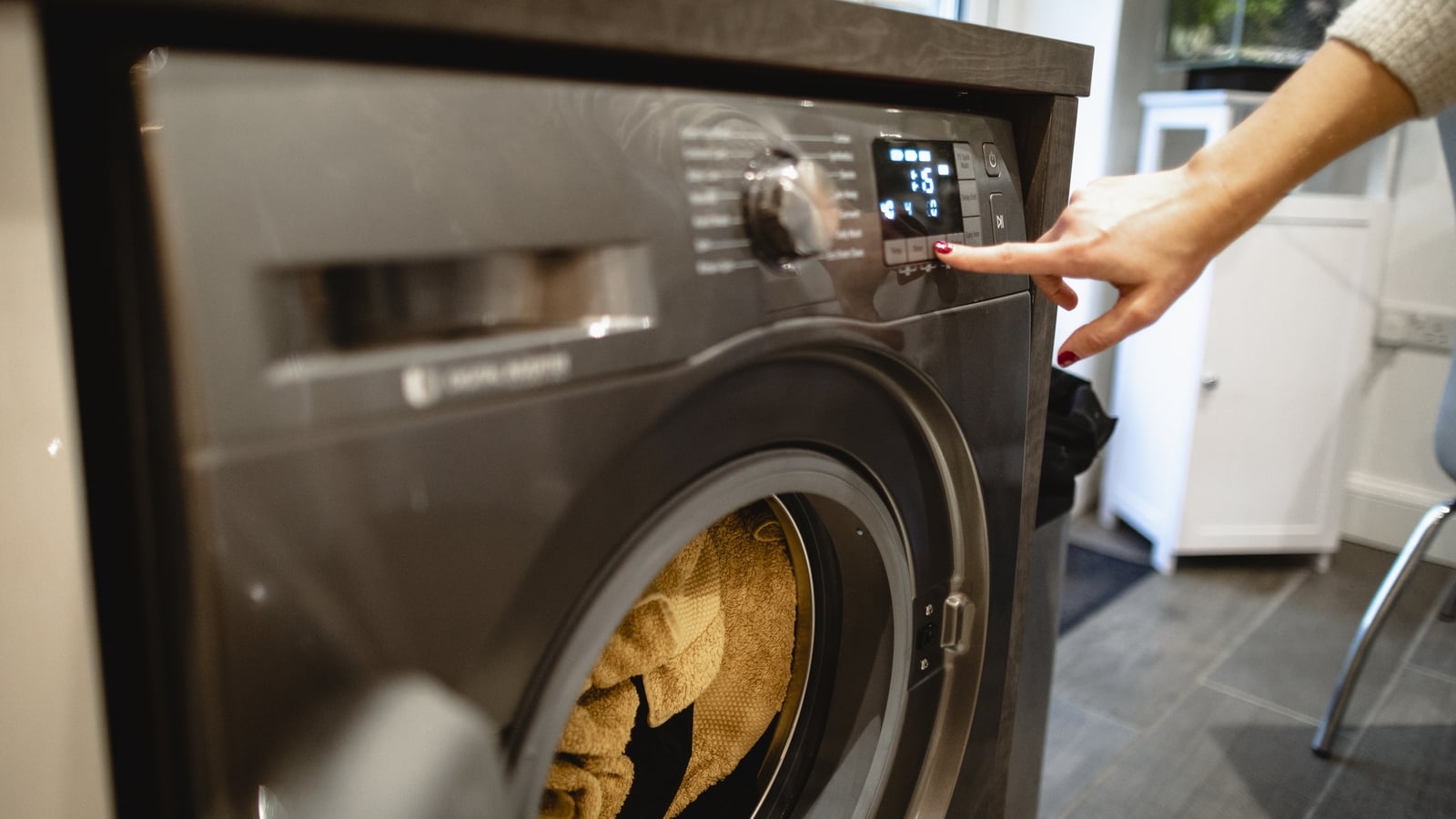
Another hack is being mindful of washing your clothes and using lower temperatures. Cassidy recommends using a 30-degree wash where possible, noting that for some items like soiled clothes, bedsheets and towels, it is encouraged to use a hot wash for hygiene reasons.
"But ask yourself, is everything that you throw in need to be at 40 degrees or 60 degrees?"
Drying clothes is another drain on your electricity, thanks to the tumble dryer, unless it's a very energy-efficient model. Cassidy says that using a tumble dryer to dry clothes can cost you up to 80c an hour.
Adding dryer balls to your load can reduce drying time by up to 25%, Cassidy adds.
A dehumidifier can also reduce drying time on your clothes: "Rather than putting your clothes into a tumble dryer - and a lot of renters, they mightn't have access to a tumble dryer, they mightn't have access to a back garden, if you're drying your clothes in your room or in your bedroom - put them on the clothes horse, turn on the dehumidifier, it'll collect the dampness and the water but it can reduce drying time by a half, maybe even more."
In comparison to a tumble dryer, a dehumidifier will cost only 4c or 5c an hour to run.
Switching providers, Cassidy says, "is the quickest, easier and simplest way to put more money back in your pocket if you're concerned with high prices".
He suggests speaking to your landlord to see what deal your home is on and whether it can be switched. "At the moment, someone who switches their gas and electricity could easily save maybe €500 or €600 a year."
One offering that might suit renters is a Time of Use plan: "Most households now should have a smart metre installed, and with smart metres, when you activate it, you can get a time of use tariff, which would charge you different rates for your electricity at different stages throughout the day."
However, Cassidy says, don't assume that simply shifting the time of the day that you do your washing will lead to lower costs: "I would say you do need to be on a plan that charges you a different rate."
To listen to the full interview, click the link above.