Current administration 'like a natural disaster' for science
Some parts of system may never recover, warns Neal Lane in interview
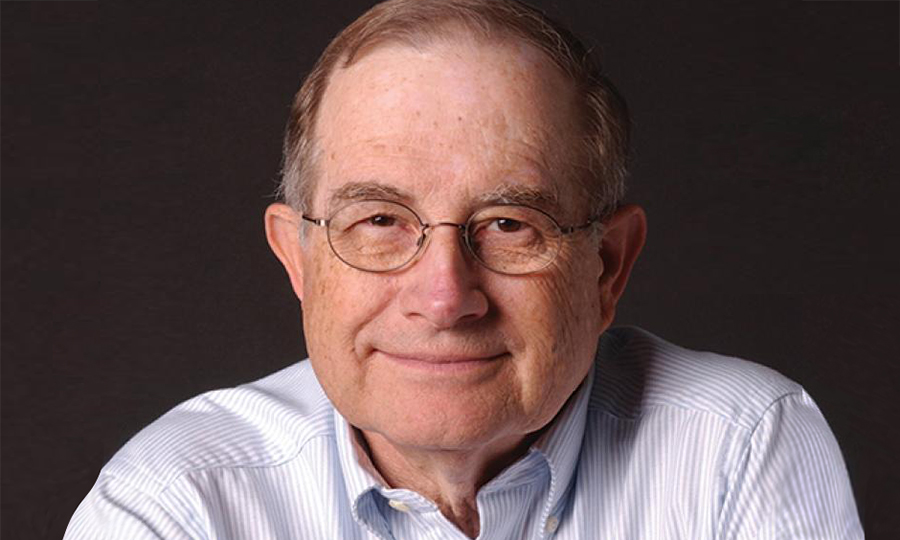
The state of science in the United States under the Trump administration is “not a nightmare from which we’re going to wake up”, according to a former director of the National Science Foundation and presidential science adviser.
However, the process of recovery and rebuilding can happen, said Neal Lane, who led the NSF from 1993 to 1998 and then advised president Bill Clinton on science.
In an interview with Research Professional News, Lane warned of significant damage to the country’s research, universities and scientific infrastructure from the actions of the current administration, but he also said he was “optimistic” about rebuilding.
“Currently, we have an administration that talks about science, talks about us being a high priority, even uses words like ‘golden age’ [of] science, but its actions, of course, are 180 degrees out of phase from the talk—except for technologies like artificial intelligence, quantum technology and applied science,” he said, speaking in a personal capacity.
Lane, currently senior fellow in science and technology policy at the Baker Institute of Rice University, said the position of science had fluctuated under previous administrations but that overall had been “pretty highly regarded” by political leaders of both parties. By contrast, “You hear nothing positive from the current administration. We’ve never really been in that situation before,” he said.
Rebuild and recover
Since Donald Trump took office for a second presidential term, US science has suffered huge budget cuts, federal layoffs and restructurings at agencies, dismissals of key science advisory boards and a shift in grant-making decisions from scientists to political appointees.
Lane is realistic. “This is happening—and it’s not a nightmare we’re going to wake up from. I view it like a natural disaster,” he said. “So the storm comes through, it destroys as much as it possibly can on lots of good things, including science. And then…the storm passes…and we start to rebuild.
“Well, we don’t quite see the storm going away, but we are starting to talk about rebuilding. How would we go about trying to recover…and, of course, it’ll never be quite the same, but are there things we could do?”
He said that, firstly, optimism and thinking positively would be vital for rebuilding science. Secondly, he emphasised the importance of rebuilding science with younger people on university campuses.
Closed labs and moving abroad
However, Lane cautioned that “some of it can’t be rebuilt”. He noted that some labs have closed and some scientists have left the country, and said that any return would not be immediate.
“Might they come back?” he asked. “Well, maybe. It’s not irreversible, but it’s a big step to decide to move your operation, your work and, in some cases, young people working for you abroad and turn around and come back again…Many universities have been damaged significantly. Certainly, it’s been a wake-up call.”
Lane said he is optimistic, noting that Congress has pushed back on the deepest cuts to science that had been proposed in the federal budget for fiscal year 2026. But he pointed out: “You give away a few per cent each year and pretty soon it starts to add up: you’re back to where your budget was 10 years ago.”
He said that money and staff had disappeared and would not necessarily come back. For example, about one-third of staff at his former agency, the NSF, have been laid off. And many of these were “rotators”, said Lane—experts including scientists, engineers and mathematicians brought in from universities under the intergovernmental personnel act, who are not officially federal employees. “So suddenly they lost all of that expertise.”
Director-less agency
Lane said that with all the disruption, the NSF is likely to lose more people still. But he added: “There are heroes in the building. These people care about the agency. They are deeply loyal to the NSF and the research community.”
As well as suffering cuts, the NSF has faced numerous other challenges. For example, it has been without a director for over a year since the previous head, Sethuraman Panchanathan, resigned suddenly in April 2025.
Jim O’Neill has been nominated as NSF director by the White House, but this choice has raised questions from the scientific community, with organisations including the American Association for the Advancement of Science calling for Congress to hold an open hearing to assess O’Neill’s suitability. He has not worked as a scientist or engineer.
Lane said he believes the new director must be someone the president is comfortable with, but he added that because of the NSF’s “special nature” as the only agency that by its statute has a mission to promote the progress of science, it needs a director with experience of science or engineering at a research level.
“That’s why I have…expressed concerns, not about Mr O’Neill as a person, but strictly about his lack of qualifications, in my view,” said Lane.
He added: “I also think it’s important—to the extent that the new director has a relationship with Congress—that it’s a positive bipartisan relationship, not someone who would be strongly associated with one particular party, because the director needs to work with Democrats and Republicans.”
Board dismissal
Another recent upheaval affecting the NSF was the administration’s abrupt dismissal of all 22 members of the National Science Board. The NSB, along with the director, establishes the agency’s policies and approves major new programmes and awards. It has also advised the president and Congress on NSF since its inception in 1950.
On 24 April, the entire board was relieved of its duties without reason or warning, causing alarm among the scientific community, with thousands of National Academy members and supporters calling for its reinstatement.
Lane said his understanding was that the administration was looking to appoint new members, but he cautioned that if they followed the model of the President’s Council of Advisors on Science and Technology “it could be a very different group of advisers” than previously. Trump’s appointments to PCAST in March received some criticism over its composition, including several technology business leaders rather than academic scientists.
The lack of an NSF director or NSB is “very worrisome” said Lane. It does not mean that important things will “not be done” but that “lots of wants and needs will be overruled”, he said.
Already, changes in the way that grants are being awarded have become politicised, said Lane. Under a recent proposal that has provoked more alarm from the science community, political appointees will have the final say on federal funding, and peer-review will “remain” advisory.
In the autumn, the NSF’s budget proposal usually goes to the Office of Management and Budget, and then back and forth between them. Without a board or director to help in discussions, Lane said that, “Realistically, when the budget request by the president to Congress goes over to the Hill, it’ll be what OMB, and maybe the Office of Science and Technology Policy…want.
“And what they want is going to be whatever the West Wing of the White House wants.”