Sainsbury's boss eyes bumper £7.3m payday as shoppers reel from higher food prices
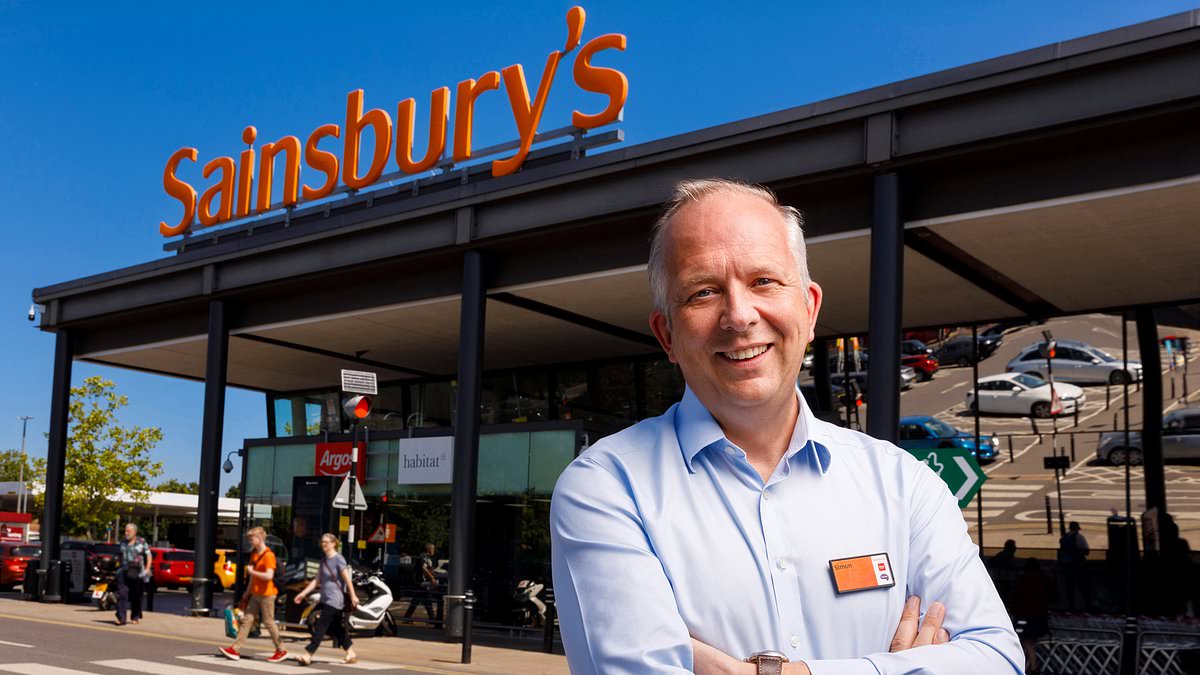
Sainsbury’s is planning to lift the cap on how much its chief executive can earn even as the supermarket warns of ‘increasing pressure on the cost-of-living’ for its customers and staff.Britain’s second biggest grocer wants to raise the maximum Simon Roberts can take home to £7.3million if targets are met – far higher than the £6million previously reported.The proposal forms part of a new boardroom pay policy that will be put to shareholders in a binding vote at Sainsbury’s annual meeting next month.It comes as shoppers reel from surging food prices after the Iran war unleashed another bout of inflation as energy costs soared.Retailers are also grappling with higher National Insurance Contributions and minimum wage costs imposed by the Labour government, with the largest of them shedding 18,000 jobs in total in the past year, according to Bloomberg News.Roberts took home £5.4million last year – almost 200 times what his average employee earns.But his pay is significantly lower than the record £10.8million that Ken Murphy scooped as Tesco boss last year – 420 times that of its typical shop-floor worker. High earner: Sainsbury’s is planning to lift the cap on how much its chief executive, Simon Roberts, can earnShareholders are increasingly concerned about these yawning pay gaps, which one campaign group said were ‘hard to square’ with the fact that ‘many staff struggled to get by’.Rachel Reeves angered grocers last month when she urged them to limit how much they charge customers for basics such as bread, eggs and milk in return for lighter regulation.The Chancellor’s price control plan was slammed by Marks & Spencer chief executive Stuart Machin as ‘completely preposterous’ while others dismissed it as a bid to return to the 1970s and an attempt to turn Britain into ‘Cuba without the sunshine’.Supermarkets are regularly accused of profiteering but the big players operate on low single-digit profit margins – kept down in part by the rise of discounters Aldi and Lidl, who now account for almost £1 in every £5 spent at the tills.Tesco is Britain’s biggest grocer with a 28.2 per cent slice of the market, according to the latest data from Worldpanel by Numerator.
The supermarket has gained share at the expense of rivals Asda and Morrisons, which have struggled after their private equity owners loaded them up with debt.Tesco’s Murphy could make up to £12million this year after his bonus plan was tweaked and a food waste target that was missed last year and replaced with a long-term goal for growing market share by an unspecified amount.A number of retailers, including Next and JD Sports, have been targeted over pay gaps and their approach to low wages.At last year’s annual meeting, 31 per cent of M&S shareholders backed a motion led by campaign group ShareAction urging the retailer to give more details about who is paid the ‘real living wage’ – a voluntary commitment made by more than 16,000 UK businesses, including half the companies in the FTSE 100 index.The real living wage is £13.45 an hour – equating to £25,000 a year for full-time staff – except in London, where it is £14.80.It is above the legal minimum wage of £12.71 an hour for workers aged 21 and over, and £10.85 for those aged between 18 and 20.Tesco, Sainsbury’s and M&S recently awarded staff above-inflation pay rises of 5 to 6.5 per cent but their wage rates are still below the real living wage benchmark. ‘It’s disappointing to see that supermarkets like M&S, Sainsbury’s and Tesco have stepped back from matching real living wage rates, whilst the gap between what bosses earn and what shop-floor staff take home is still massive,’ said Ruan Opie-Meres, a campaign officer at ShareAction.‘Rising costs are hitting the lowest-paid workers hardest,’ he added. ‘It’s hard to square that with the size of some executive pay packages when many staff are struggling to get by,’ he added.‘We urge retailers to make clear commitments to address inequality in a meaningful way, and protect all their staff by guaranteeing them a real living wage.’ ShareAction plans to quiz M&S and Sainsbury’s about their pay polices at their annual meetings next month. Sainsbury’s said big shareholders it had consulted were ‘overwhelmingly supportive’ of its new boardroom pay policy.In its annual report M&S said it was ‘committed to enhancing our workforce-related disclosures’.Its biggest shareholders were generally ‘positive’ about a new pay plan for Machin, whose maximum pay will stay at just above £6million, M&S added.Tesco said the revised targets for Murphy were aligned to ‘future strategic priorities’ but insisted ‘food waste continues to be an important part of our strategy’.DIY INVESTING PLATFORMSAJ BellAJ BellEasy investing and ready-made portfoliosHargreaves LansdownHargreaves LansdownFree fund dealing and investment ideasinteractive investorinteractive investorFlat-fee investing from £4.99 per monthFreetradeFreetradeInvesting Isa now free on basic planTrading 212Trading 212Free share dealing and no account feeAffiliate links: If you take out a product This is Money may earn a commission. These deals are chosen by our editorial team, as we think they are worth highlighting. This does not affect our editorial independence.Compare the best investing account for you