Americans in three states told to close windows NOW as lung-penetrating toxins fill the air
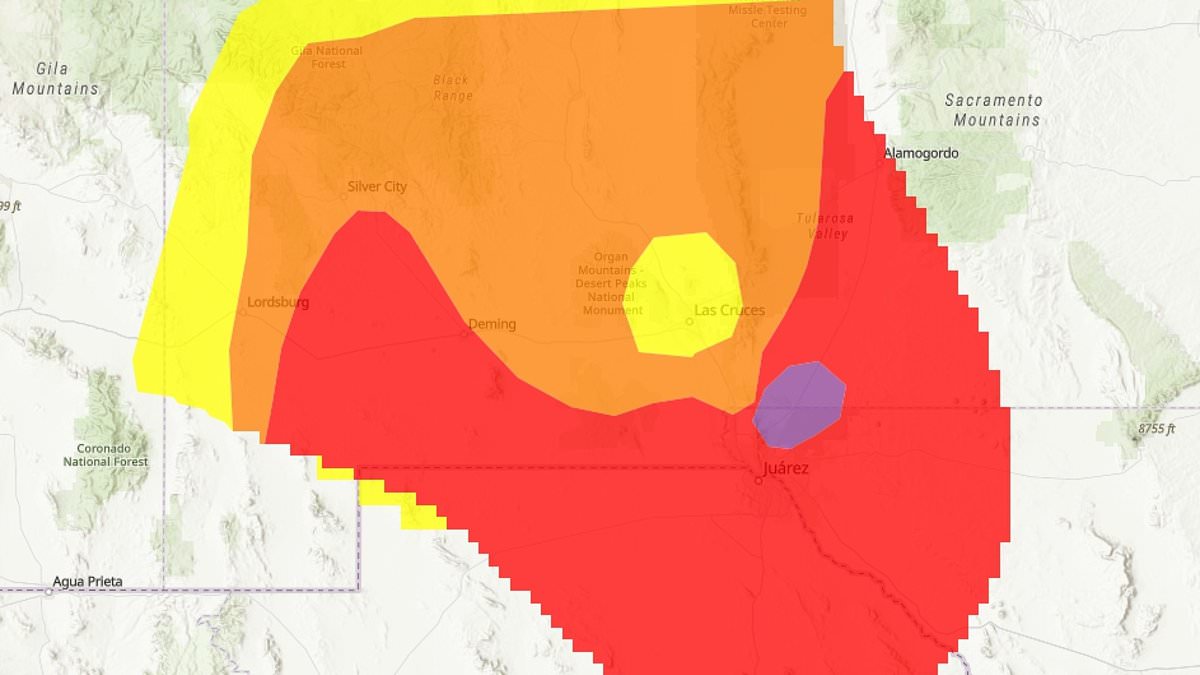
Over a million Americans have been warned to keep their windows shut and avoid working outside as a hazardous cloud of dirty air sweeps across the Southwest.Multiple air quality monitoring stations have sounded alarms in Texas, New Mexico and portions of Arizona, revealing that levels of harmful and potentially toxic particles have skyrocketed during Friday morning dust storms in the region.The largest American city at the center of the air quality emergency is El Paso, Texas, which sits right along the US border with Mexico and is home to nearly 900,000 people alone.However, the large swath of dirty and potentially dangerous air spans approximately 200 miles along the border in Texas and New Mexico.Air pollution known as fine particulate matter has been blamed for the widespread conditions. These are microscopic particles small enough to penetrate deep into the lungs, causing inflammation, breathing difficulties and other health issues when inhaled.The US Environmental Protection Agency (EPA) classified the air in the entire El Paso metropolitan area 'unhealthy' while a large patch near the US Army's Fort Bliss has been deemed 'very unhealthy.'According to the World Air Quality Index project, a nonprofit providing real-time air pollution data for hundreds of countries, the air quality index (AQI) reached 411 in the northern part of El Paso.Typically, air quality levels are only measured on a scale from 0 to 500. When outdoor air quality reaches 300 to 500, the EPA warns that everyone should avoid all physical activity outside. A major plume of hazardous air has been detected over Texas, New Mexico and Arizona on Friday, June 5 The source of the air quality alert in El Paso, Texas (Pictured) is believed to be major dust storms being blown north from Mexico (Stock Image)The main driver of the air pollution in the Southwest has been PM10, a type of fine particulate matter made up of tiny solid particles or liquid droplets floating in the air that are less than 10 micrometers in diameter, thinner than a human hair.This form of air pollution is noticeably larger than the more common PM2.5, which is typically composed of toxins or heavy metals produced by factories and car exhaust.However, PM10 can still damage the lungs, worsen respiratory issues such as asthma and contribute to heart attacks and strokes that cause premature death when inhaled consistently.In an air quality notice, AccuWeather warned: 'Exposure can result in eye and throat irritation, coughing or difficulty breathing, and aggravated asthma. More frequent and excessive exposure can result in more serious health effects.'Air quality website IQAir revealed in their live tracking data that the conditions were being fueled by steady winds moving north from Mexico.The severe conditions that have developed around El Paso have been largely blamed on the natural geography along the US southern border, including regular dust storms from the Chihuahuan Desert.Severe smog from cars, trucks and factories has also flowed across the border from the Mexican city of Juárez, which has a rapidly growing population of more than 1.6 million people.This has led the American Lung Association to give El Paso an 'F' grade for ozone pollution in 2025. Pictured: A mother and child walk in an El Paso dust storm. Breathing in the particles carried by these storms can result in serious respiratory issues (Stock Image) Air quality monitors in Texas have declared the conditions in El Paso, Texas 'hazardous' due to skyrocketing levels of fine particulate matterRead More Alarming map reveals 20 million Americans living near toxic sites tied to cancer and brain damage In New Mexico, multiple cities have been warned that the air quality has reached levels which are harmful to 'sensitive groups.'These include people with lung or heart disease, older adults, pregnant women, children and those who spend most of their day working outdoors.New Mexico's Las Cruces, Silver City, Deming and Lordsburg are all in the affected area on Friday, impacting roughly 250,000 people.The EPA said smaller patches of 'unhealthy' air also emerged in Arizona, mainly over the Maricopa Indian Reservation south of Phoenix.