Officers with Hampshire Police 'Pressured' by Diversity Course
An assessment of a mandatory diversity course which was completed by 6,250 police officers and staff working with Hampshire Police found that more than one in seven participants felt “controlled and pressured to be certain ways” during the training.
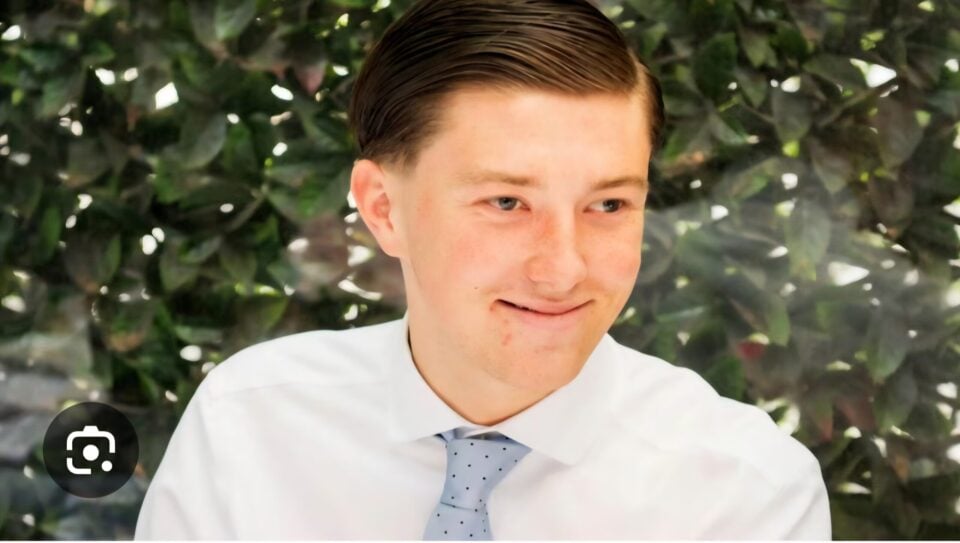
The evaluation comes as a storm of controversy and public upset continues in relation to the actions of the police force who cuffed, dragged, and arrested a stabbing victim, 18-year old Henry Nowak, ignoring his pleas apparently because he had been falsely accused of racism.
The Telegraph reports that:
Hampshire Police commissioned the University of Reading to assess the effectiveness of its mandatory Inclusion Matters course, which has been completed by 6,250 officers and staff.
The university found that 15.5 per cent of those surveyed felt “controlled and pressured to be certain ways” in the training sessions while 14.3 per cent said that “if I made a mistake, it would have been held against me”. Almost 20 per cent said “I felt I would have been rejected for saying the wrong thing”.
Almost half of respondents said they “fully disagree” when asked whether they felt “controlled and pressured to be certain ways”. A quarter (25.5 per cent) said they moderately disagreed, while 9.9 per cent slightly disagreed.
The remaining 15.5 per cent answered with either full, moderate, or slight agreement.
The inclusion course covered topics including racism, unconscious bias, privilege and “the importance of being an ally”, the Telegraph noted. The university’s review noted that “some attendees felt that they could not freely share their attitudes”, while individuals who “did not respond well to the course…may benefit from further intervention, monitoring or coaching”. The evaluation surveyed more than 1,000 police officers.
Reform leader, Nigel Farage, yesterday called on Prime Minister Keir Starmer to “end this divisive practice of two-tier policing”, saying that it is “clear and written down in ink” that anti-racism guidance adopted by British police says that officers “must treat different ethnic groups in different ways”.
The Prime Minister hit back, calling Farage’s call to ‘pure, cold rage’ an attempt to exploit a tragedy.
The National Police Chiefs’ Council (NPCC) and College of Policing now stand accused of rushing to produce a race action plan in 2020 (published in 2022) in the wake of the death of George Floyd in the US – and of instructing that ethnic groups should not be treated the same.
The “Police Anti-Racism Commitment” includes a commitment to achieving equality of “policing outcomes”. That has a particular meaning according to the document:
“It does not mean treating everyone ‘the same’ or being ‘colour blind’ (racial equality),” because “Producing equality of policing outcomes for people from different ethnic groups by responding to individuals and communities according to their specific needs, circumstances and experiences, with understanding that these will be racialised and with the aim of reducing harm.”
The NPCC says the plan sets out the “overarching ambition of the plan for a police service that was anti-racist and trusted by Black people”.
The chief constable of Hampshire & Isle of Wight Constabulary, Alexis Boon, has rejected accusations of “two-tier” policing, saying a “furore” was being “whipped up” around the murder of Henry Nowak.
“WHITENESS” NOT NEUTRAL
However, it has also emerged that the London Metropolitan Police, in a “key document” as part of its race action plan, had told its officers they could not be neutral because of their “whiteness” – insisting that neutrality is a “myth” and accusing the force of “systemic racism”.
Shereen Daniels, an HR consultant and founder of the African Diaspora Economic Inclusion Foundation, was commissioned to write a “structural review of systemic racism” for the police force. She accused the Met of not being neutral, and said “what gets framed as neutral is rarely harmless”
“Neutrality is often presented as a position of fairness, balance, or objectivity. But in practice, especially in institutions like the Met, neutrality is not neutral. It reflects dominant norms, particularly whiteness, in how risk, credibility, professionalism, and even “evidence” are defined. To claim neutrality is to claim distance from bias. But that distance is not real. It is structurally coded. It hides power while appearing impartial. Neutrality is also a false ideal. A myth that institutions and leaders use to avoid reckoning with their own design. What gets framed as neutral is rarely harmless. It often protects the status quo, deflects critique, and punishes those who name what neutrality refuses to see,” she said.
Conservative MP Chris Philp, said yesterday that: “Policing and the wider public sector has become infected by an extremist ideology that calls itself anti-racism.
“It is in fact racist itself because it urges ethnic minorities to be treated more leniently. This is divisive and in a law enforcement context also dangerous.
“This doctrine is enshrined as official police policy via their March 2025 anti-racist commitment which expressly calls for people to be treated differently based on their race. This culture has infected much of policing and in my view contributed to those officers prioritising the allegation of racism above saving a young man’s life.”