Former Habs Playoff Star Passes Away at Age 60
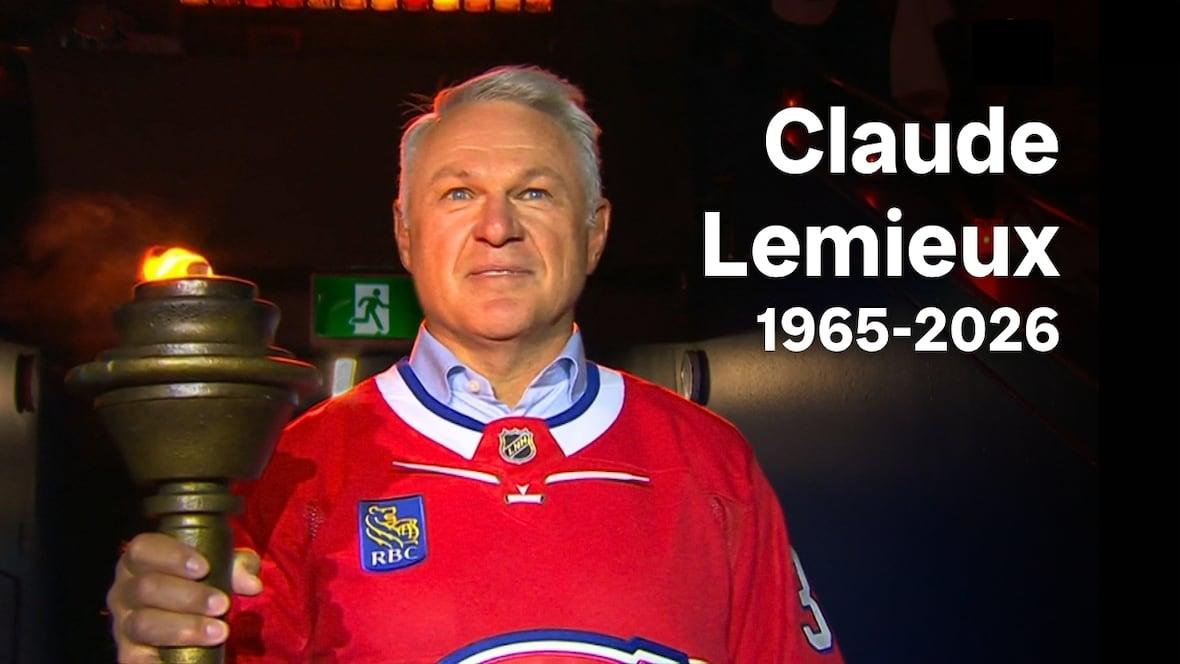
On Thursday afternoon, it was announced that former Montreal Canadiens forward and one of the star players from the 1986 Stanley Cup-winning team, Claude Lemieux, had passed away at the age of 60. The last public appearance that Lemieux made was this past Monday night when he was asked to carry the torch at the Bell Centre ahead of Game 3 of the Eastern Conference Finals between the Habs and Carolina Hurricanes. His death comes as a shock to the whole hockey world, and he will be dearly missed by the whole hockey community.
While being a solid player in the regular season, Lemieux made his career by being a playoff player as he played a key role in the postseason even before his official rookie campaign. To start his story of being an NHL player, it goes back to him getting drafted 26th overall back in the 1983 NHL Entry Draft by the Canadiens. He played a few games as he bounced back and forth between the QMJHL, the minors, and the NHL for the first two years with the team. However, the real start came at the end of the 1985-86 season when he was called up to replace an injured Mario Tremblay. Lemieux played 10 games before the end of the season, where he scored a goal and 2 assists. Nobody expected what would come next for the then 20-year-old Lemieux, as come playoff time, he would take his play to an unexpected level.
The 1986 Stanley Cup run will always be known as the one where a rookie Patrick Roy took over and led the team to win the Cup. However, there was another young talent in Claude Lemieux who also broke out and made a name for himself in the playoffs. In 20 playoff games, he led the Habs with 10 goals, which included a league-leading 4 game-winners. Lemieux was also 2nd in points behind only Mats Näslund with 16 points. The most memorable goal of all came in Game 7 of the Adams Division Finals when Lemieux scored the game-winner in overtime. During that run, he also developed himself into an agitator who would get under his opponents’ skin. In the end, he played a very big role as a young player in helping the Canadiens win the 1986 Stanley Cup. This would be the first of four Stanley Cup victories but the only one with the Habs.
Lemieux would play with the Canadiens until the 1989-90 season. Due to issues with the head coach at the time, Pat Burns, Lemieux requested to be traded and was sent to the New Jersey Devils in the summer of 1990 for forward Sylvain Turgeon. In 7 seasons with the Habs, he would score 97 goals and 189 points in 282 regular-season games. He also scored 22 goals and 45 points in 77 postseason games. He was a great depth player during his time with the Habs, but his best years certainly came in his prime with the Devils.
His time with the Devils was when he got to show how great a 2-way player he was while maintaining his role as a pest who scored big playoff goals. With the Devils, he scored his career-high 41 goals in the 1991-92 season, then had his highest point totals of 81 in the following campaign. However, it was during the 1995 Devils Stanley Cup run that he made his biggest impact in New Jersey. Lemieux would lead the postseason with 13 goals and 16 points while serving as his team’s best shutdown forward. With everything that he brought to that team, he would be awarded the Conn Smythe Trophy as the Playoff MVP.
Following his second Stanley Cup victory, he signed with the Colorado Avalanche, where he would be remembered for more of an infamous play. During the 1996 Western Conference Finals, he went to check on Detroit Red Wings forward Kris Draper. As Lemieux went to finish his check, Draper would turn his back, which led to Lemieux getting him from behind, causing the Red Wings forward to smack his face on the boards. Draper wound up with a concussion as well as a broken nose, jaw, and cheekbone in one of the nastiest resulting hits in modern NHL history. Lemieux would be suspended for two games for the hit, but he would be back in time to win another Stanley Cup, where he actually had his most productive playoff points-wise, finishing with 13 goals and 23 points in 17 games.
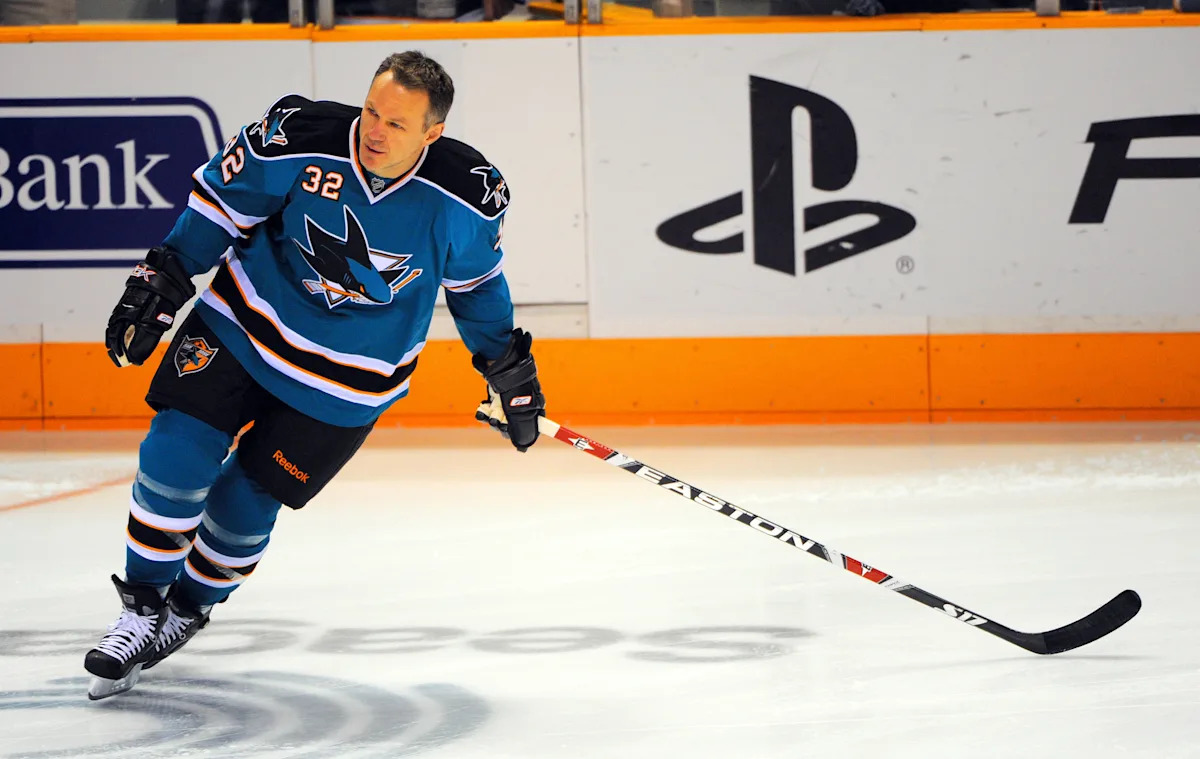
Lemieux would stay with the Avalanche until November 3rd, 1999, when he was sent back to the Devils for Brian Rolston and a swap of 1st & 2nd round picks. Later that season, Lemieux would win his 4th and final Stanley Cup with the Devils. Afterwards, Lemieux would play 3 more years between the Phoenix Coyotes and Dallas Stars before announcing his retirement for the first time after the 2002-03 campaign. He’d make a comeback 6 years later with the San Jose Sharks, where he finished with an assist in 18 games before calling it quits for good in the 2008-09 season.
He finished his career with 379 goals and 786 points in 1215 regular-season games. Lemieux also had 80 goals and 158 playoff points in 234 games in the postseason. His 80 playoff goals rank 9th all-time, and the 234 playoff games are 5th all-time. Of his 80 playoff goals, 19 of them were game-winners, which is tied for 3rd all-time with former teammate Joe Sakic behind only Wayne Gretzky and Brett Hull. Lemieux may not have become a Hockey Hall of Famer during his lifetime, but he definitely deserved consideration with his success come playoff time.
After his hockey career, Lemieux became a player agent, where he represented numerous current NHLers, including Carolina Hurricanes netminder Frederik Andersen, who will surely dedicate the rest of his playoff run to his late player agent. With that being said, both the Habs and Andersen should play hard, extra hard, in Game 5 of the Eastern Conference Finals to honour one of the fieriest pests of his generation on Friday night.
Lemieux may have been hated on the ice by his opponents, but at the same time, he got a lot of respect off ice for being a great representative of what it means to dedicate your life to the game of hockey. He will be missed but not forgotten for all those he touched by playing the game as an agitator and then being a great role model for NHLers after his playing career ended.Once again I extend my condolences to his family and friends for his loss. May he rest in peace.