Man 'woke up to find his organs harvested' after he was 'given injection'
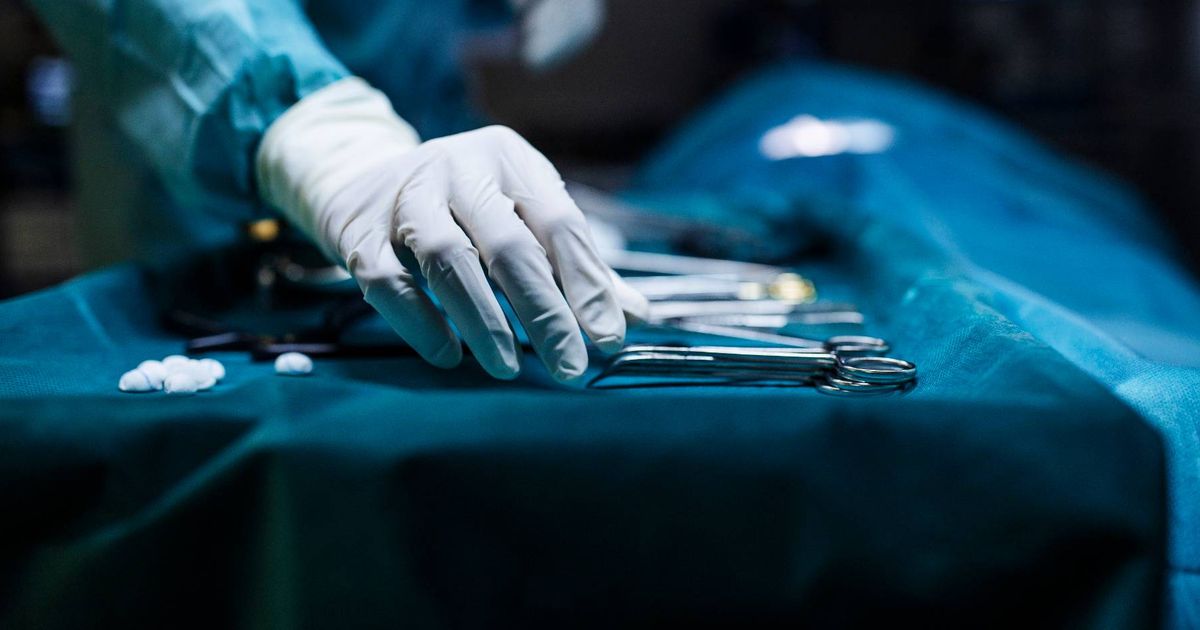
A man detained in a harsh Chinese prison has shared a harrowing account of how he says he was sedated and awoke to discover parts of his organs gone, solely due to his religious convictions.Cheng Pei Ming maintains he endured state-authorised detention and forced organ harvesting between 1999 and 2006 by the Chinese Communist Party because of his practice of Falun Gong, which was banned as an "evil cult" by China in 1999.Cheng Pei Ming states he was requested to sign a medical consent form, which he declined. Despite his refusal, he maintains he was then forcibly administered a sedative.Upon regaining consciousness, he found an incision extending down his chest. He subsequently discovered that portions of his liver and lung had been extracted while he was unconscious, according to the Diplomat.Cheng told The Daily Mail: "Six guards grabbed me and held me down and I was injected with something. The next thing I remember is being in a hospital bed with tubes in my nose and I was going in and out of consciousness. There was a tube with bloody liquid coming from under the bandaging that was on my side.", reports the Daily Star.Images of the aftermath, which Cheng suspects were taken by a hospital worker, depict him unconscious and restrained to the hospital bed.These photographs have been shared across the internet, most notably on a Chinese website known as Minghui.org, which publishes information regarding the persecution of Falun Gong practitioners. Cheng is an adherent of this spiritual movement, which has its foundations deeply embedded in Buddhist philosophy.Medical experts are unable to provide a definitive explanation as to why his organs were removed, however Professor Wendy Rogers, Chair of the International Coalition to End Transplant Abuse in China (ETAC)'s International Advisory Board, confirmed that "he did not have a disease or illness requiring this surgery."The procedure bears a striking resemblance to techniques employed in a 1990s operation used to extract liver tissue for paediatric transplants, which the professor corroborated.She stated: "Mr. Cheng's case illustrates the callous indifference to the human rights of prisoners of conscience in China... he was surgically assaulted as part of a wider pattern of persecution, incarceration and torture."Cheng is reported to have been in a severely deteriorated state following the alleged forced procedure, suffering from chronic fatigue and respiratory difficulties, yet was denied further medical treatment as he reportedly remained in detention for a further 18 months.In March 2006, he began a hunger strike, after which he was informed he would need to undergo yet another unexplained operation.Recognising this surgery could prove fatal, Cheng made the desperate decision to flee the facility in a bold bid for freedom. He said: "When they took me to the hospital again and said I had to have another operation, I thought for sure they were going to kill me."In the hours preceding his surgery, he requested that the guard monitoring his room escort him to the toilet. Upon returning, the guard neglected to re-shackle him to the bedframe and, fortuitously for Cheng, dozed off in his chair.Grasping his opportunity, Cheng made his escape via the building's fire stairs. He flagged down a taxi outside the hospital, offering tinned fruit he had taken from his room as payment for the fare. Cheng had gained his freedom.He remained in hiding within China for nearly a decade before finding unofficial refuge in Thailand. It wasn't until July 2020 that he was able to reach the United States as an official United Nations refugee.David Matas, an international human rights lawyer and ETAC Co-Founder, stated that Cheng represents thousands of victims - yet is remarkable in that he lived to tell the tale.He said: "Mr Cheng is, in one sense, a typical victim of China's forced organ harvesting practices - a Falun Gong practitioner who had their organs stolen by the CCP."In another sense, he is unusual because he survived organ extraction and escaped both the Chinese authorities and China itself."Like other Falun Gong practitioners, Mr. Cheng was never told he was going to be organ extracted. Nor was he told afterwards that he had been organ extracted. He found that out only after he fled China and was medically examined."He illustrates a general phenomenon, the exception which proves the norm, the norm in this case being the gruesome reality of the mass killing of Falun Gong for their organs."The China Tribunal, an independent People's Tribunal led by British barrister Sir Geoffrey Nice, determined in 2020 that China's forced organ harvesting from prisoners of conscience constitutes crimes against humanity.The Tribunal calculated that between 60,000 and 100,000 illegal organ transplants take place annually. The US Senate is presently examining the Falun Gong Protection Act, which seeks to impose sanctions on individuals responsible for forced organ harvesting and demand accountability from the Chinese government.Beijing has consistently refuted allegations it forcibly removes organs from prisoners of conscience and stated it ceased using organs from executed prisoners in 2015.In response to a request for comment after the China Tribunal's conclusions, a spokesperson for the Chinese Embassy in London stated human organ donation must be "voluntary and without payment."