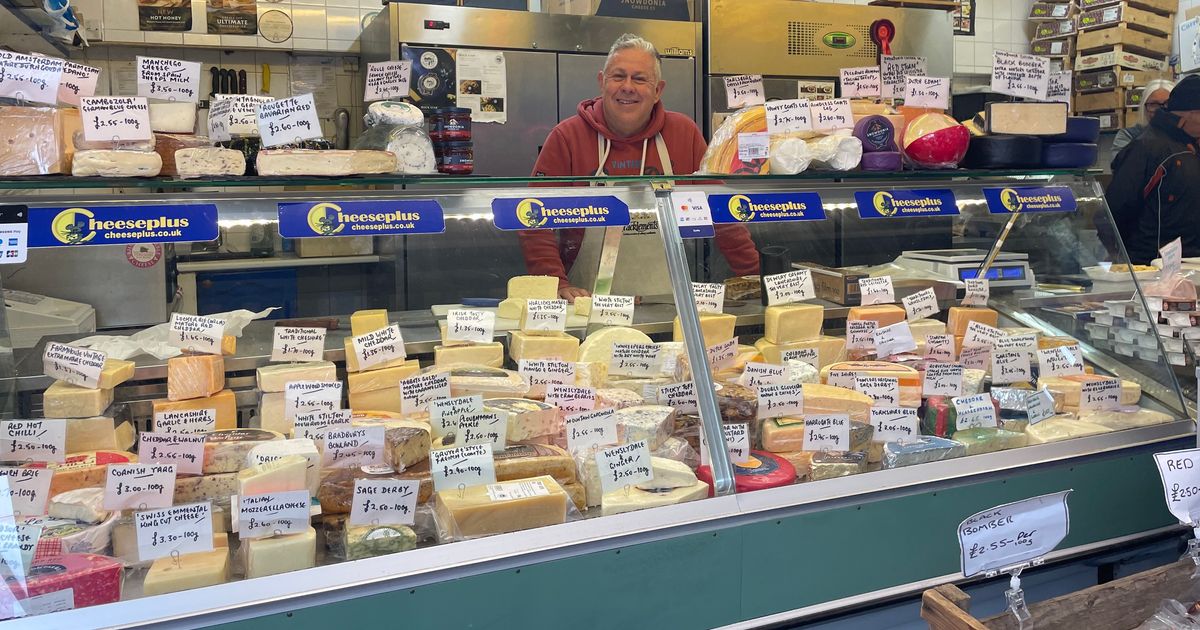
The world-famous Bury Market is battling rising costs
“Two for a pound!” shouts one trader. “They’re M&S!” yells another.Bury Market is as loud and full as ever - packed with shoppers hunting for cheap fruit, fresh meat and cut-price clothes. But behind the crowds and famous banter, traders say rising costs are putting growing pressure on one of Greater Manchester’s best-loved institutions.Bury Market draws in people not just from across the borough and wider region, but from across the UK and beyond, with coach-loads of tourists pouring to sample its delights.Click here for the latest on Greater Manchester's politics in our newsletterThe market lives up to its reputation, and has just been heralded as a Travellers’ Choice destination by TripAdvisor. The award, which is determined by reviews and ratings from visitors, puts it in the top 10pc of tourist attractions in the world.But, like everywhere, times are getting increasingly tough for those whose livelihoods depend on its trade. The cost-of-living crisis is biting here, as well, with stallholders saying costs of products have increased significantly over recent years.They are often left with the choice of taking a hit on their profits or passing those higher charges on to their customers. In some cases, price increases alone have not been enough to stop profits dropping.Mariya Mealand, who works at The Quality Stall butchers, said prices are increasing on ‘almost a weekly basis’. She added: “Every time we call the supplier, I have to ask now how much the price is because it's new prices every week.“Obviously, as a business, we need to make a certain amount of revenue so we can pay our wages, rent, and so on. So sometimes we increase the price of the product for the customer, or sometimes we can reduce the amount on a tray so we keep the price.”Despite the rising costs, Ms Mealand said the stall has a loyal customer base. She added: “I think people are, they just mainly come for the value of here and the quality of the product.“The regular customers, they are not giving up, even when the prices go up, they still come to the market. If the price changes, I say to them ‘I'm really sorry, but we can't keep it [where it was].“They're like ‘yeah, it's OK. Everything goes up.’ It is a good place and we have our customers from all over the country. I have regular customers coming from Scotland, they are literally in the middle of nowhere, but they're here every two to three weeks.”It’s not just in the food industry that prices are increasing. Michelle Blay, who owns Michelle’s Haberdashery, said the trade was a ‘bit of a struggle at the moment’.The stall sells items like buttons and ribbons. She said: “Prices are increasing all the time [and footfall] has definitely dropped off a little bit. The takings are down, it is a bit of a struggle at the moment.“People are reluctant, I think, because of the rising costs of it all, so it's just things like essentials people are buying. We sell wreaths and people are reluctant to buy them because it's a big outlay.”It’s not just wholesaler costs having an impact then, but also changing customer habits to which stallholders are having to adapt.Lillie Lowe works on F&V Brandwood butchers. She said: “[Customers] are not buying as much. They buy what they need. They're looking for cheaper alternatives. Rather than shopping weekly, they'll buy monthly. We do freezer packs for the month and it's just a bit more affordable for people.”Stalls are also getting more creative with their offerings to try to draw in more trade and to maximise income from their produce.Owner of A.G Finest Catch fishmonger Adam Griffith said his business has started selling ready-flavoured fish and seafood. But this too has impacts for his staff.He said: “We took a step away from the traditional stuff to do all kinds of different things like seasoned prawns, seasoning all kinds of different fish. That takes a lot more man hours, so we're having to be here a lot longer than we used to be, because we’re obviously having to prep the fish.”He said some wholesaler prices have been a ‘rollercoaster’ over recent years. Mr Griffith added: “We put off raising our prices up as long as possible. If the price that we are paying doesn't come down after, you know, three or four weeks, unfortunately then we have to raise the price again.”Most people are understanding of the difficulties stalls like his are facing, he said: “You might get some older people moaning about the price of stuff, but I think a lot of people just know that's the way it is, that's how it has to be.”Sharon Hallows co-owns H&S Seafood. Her stall offers off-cuts of fish at low prices, including bags of ‘meaty’ heads and bones for £2, and has started a free delivery service for customers living within a certain distance of the market.She said: “We find customers are not really buying what they want, they're buying what they can afford. So, they're looking at the prices on the day, looking at the offers that are going and they're thinking ‘I'd like a piece of halibut, but it's too expensive’, so they’ll buy a piece of something else.”She added: “What we are trying to do though is we do a free delivery service, so that'll save customers on parking and fuel prices for that way.”Despite adapting, Ms Hallows said she already knows her profits for the year will be down on what the stall took last year.It’s not all bad news for the market, however. Many stalls said low prices and the high quality of the goods on offer keep regular customers coming back as well as tempting new shoppers into the market.Paul Smedley, who owns Paul Smedleys fruit and veg stall, said prices have always been a bit ‘volatile’ in his trade depending on harvests. Increased fuel prices have seen the costs ‘shoot up’ for some produce, such as plantain, which come from further afield.However, much of what he sells is still cheap compared to supermarket prices. He said: “People are more careful with their money now which benefits us because they come to market as it's cheaper.“So footfall, I think, is quite good. People come in like ‘we can't believe you're so cheap’. We've got raspberries on two for a quid today, which is really cheap. Strawberries are one quid, peppers one pound.”Graham Hill, on the Cheese Plus stall, said his business is seeing a change in the types of people shopping at the market. He told us: “”e find that our customer base is getting a lot younger.The customers are definitely getting younger in age as people buy the tins etc at the supermarket, and then they'll come here and buy the cheese, they'll go to the butchers, and they'll also go to a greengrocers as well.“I think [it’s] because they've realized the quality of the supermarket isn't particularly good, and we give a better product. I think it's done the business good.“They all say they're sick of the supermarkets and, of course, supermarkets aren't necessarily cheap anymore, are they?”