Inflation, a New Fed Chair, and an Index Overhaul: The iShares MSCI World ETF’s Three-Way Test
US inflation at 3.8%, Fed chair change to Kevin Warsh, and MSCI index rebalancing converge to stress test tech-heavy ETF. Rate hike odds rise.
The iShares MSCI World ETF has sprinted to a record high, but the next two weeks will determine whether the rally can hold. Three distinct forces are converging: a surprisingly hot inflation reading, a change of leadership at the Federal Reserve, and a sweeping index rebalancing from MSCI. For an exchange-traded fund that leans heavily on US technology stocks, the combination has the makings of a serious stress test.
April’s consumer price data caught markets off guard. US inflation climbed to 3.8 percent year-over-year, the highest since May 2023, driven largely by a 17.9 percent jump in energy costs. The monthly headline figure rose 0.6 percent, with core inflation adding 0.4 percent. Behind the numbers lies an oil-price shock following the conflict with Iran, which contributed more than 40 percent of the overall price increase. The Federal Reserve left its benchmark rate at 3.50 to 3.75 percent, but the vote was unusually split at 8 to 4. Derivatives markets now assign roughly a one-in-three probability of a rate hike before year-end and have fully priced out any cut for 2026.
That dynamic cuts straight to the heart of the ETF. Technology stocks account for nearly 29 percent of the portfolio. The three largest holdings – Nvidia at 5.57 percent, Apple at 4.58 percent, and Microsoft at 3.31 percent – are growth names whose valuations depend heavily on distant earnings streams. Higher yields tend to compress those multiples, making the fund particularly vulnerable to a hawkish turn in monetary policy.
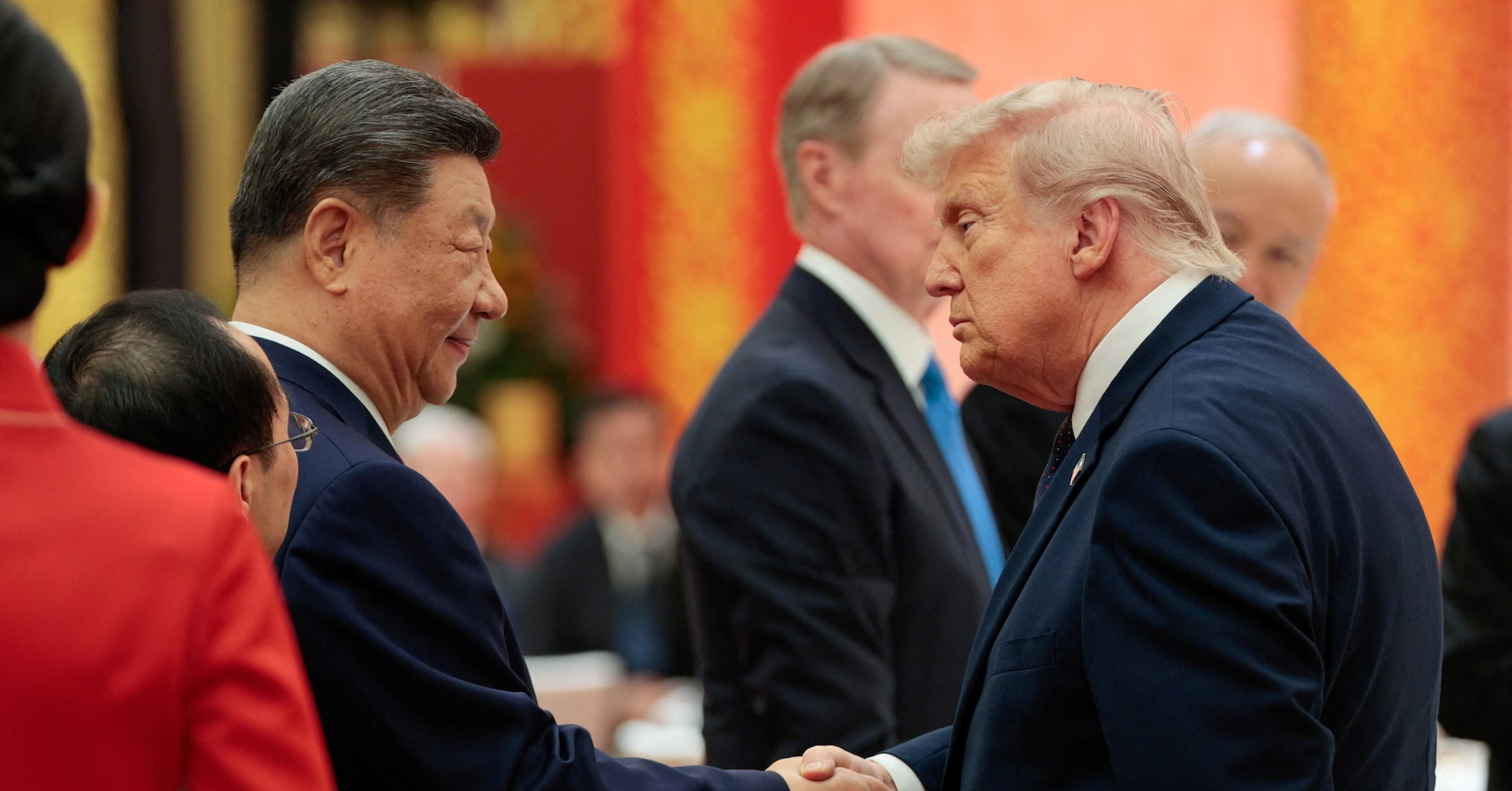
That hawkish turn now has a face. Jerome Powell’s term as Fed chair expires on May 15, and the Senate has confirmed Kevin Warsh as his successor by a 54-to-45 vote. Powell will remain on the Board of Governors, the first former chair to do so in 75 years. Warsh, who had previously advanced through the banking committee with a 13-to-11 vote, used his confirmation hearing to call for a “regime change” in monetary policy and advocated for a leaner Fed balance sheet. He also argued that more “messy” rate meetings, complete with vigorous debate, would lead to better decisions. For the ETF, any whiff of tighter policy could amplify selling pressure in its technology-heavy core.Should investors sell immediately? Or is it worth buying MSCI World ETF?
Adding to the mechanical churn, MSCI’s May index review takes effect at the close on May 29. The biggest new additions to the MSCI World are Medline A, MasTec, and TechnipFMC, which tilt the portfolio slightly toward healthcare, infrastructure, and energy services. In the broader MSCI ACWI, 49 securities are joining while 101 are being removed. A new free-float methodology debuts on June 1, with finer distinctions between high, medium, and low liquidity stocks. Physically replicating ETFs will have to mirror these adjustments, likely generating elevated trading volumes around the cutoff.
The healthcare sector, which represents about 10 percent of the fund, faces an additional headwind. Beginning in late July, the US plans to impose a 15 percent tariff on patented imported medicines from the European Union, Japan, South Korea, and Switzerland. British products would be hit with 10 percent, and for companies that have not negotiated pricing agreements with Washington, the rate could rise as high as 100 percent. FactSet has already lowered earnings expectations for the sector, adding to the negative sentiment.
Yet the fund’s recent performance has been formidable. The net asset value has gained 8.27 percent since the start of the year and 29.68 percent over the past twelve months. The closing price on Wednesday stood at $201.51, up 4.95 percent in a single month. However, the relative strength index has reached 94.6, a level that typically signals extreme overbought conditions and raises the risk of a near-term pullback.MSCI World ETF at a turning point? This analysis reveals what investors need to know now.
Operationally, there are bright spots. Samsung Electronics reported an operating profit of 57.2 trillion won for the first quarter, roughly eight times the year-ago figure, pushing its market capitalization above $1 trillion for the first time. And the fund’s fee structure remains competitive despite pressure from rivals. Invesco cut the expense ratio of its competing MSCI World product to 0.05 percent on April 1, while BlackRock’s URTH continues to charge 0.24 percent. So far, investors seem willing to pay the premium: the iShares ETF has attracted $770 million in inflows this year and holds about $7.86 billion in assets, with more than 60 percent allocated to US equities.
Between May 15 and June 1, three distinct catalysts will play out in sequence: Warsh’s formal transition at the Fed, the MSCI rebalancing, and the adoption of the new free-float rules. For an ETF that has already run hard and is trading at extremely overbought levels, the convergence of inflationary pressure, a less predictable central bank, and mechanical portfolio reshuffling leaves little margin for error.AdMSCI World ETF Stock: New Analysis - 14 MayFresh MSCI World ETF information released. What's the impact for investors? Our latest independent report examines recent figures and market trends.Read our updated MSCI World ETF analysis...