Norwegian cell manufacturer Morrow Batteries files for insolvency
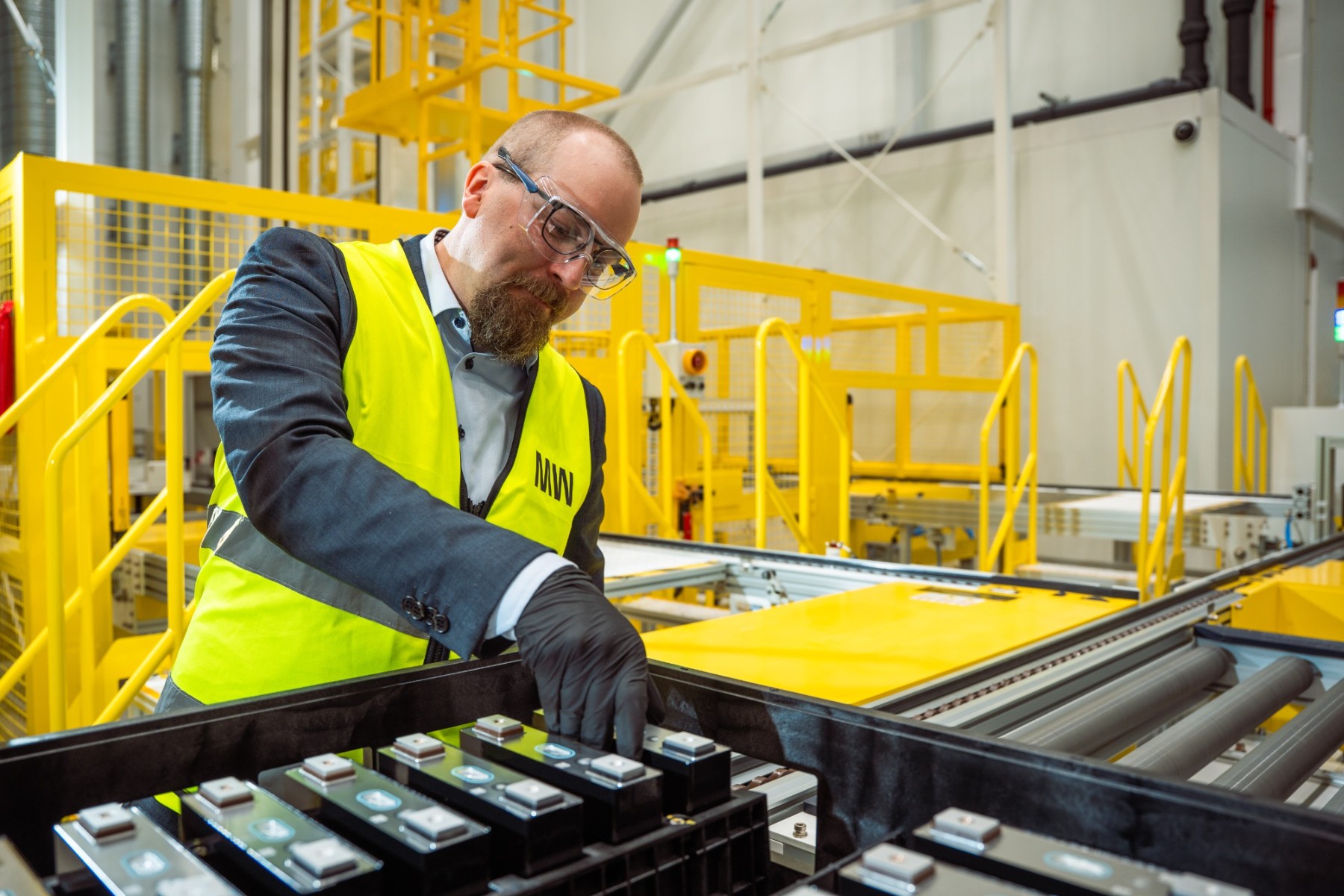
Morrow Batteries had until recently been one of the few battery cell manufacturers producing in Europe. Now, the Norwegian company has suffered same fate as the significantly larger Northvolt from Sweden: Morrow Batteries has for insolvency.The company’s downfall stems from its inability to compete in a consolidating market—it was simply too small. Its plant, which opened in summer 2024 at its headquarters in Arendal, produces prismatic LFP cells, has an annual capacity of just 1 GWh. This is far from sufficient to supply a major car manufacturer, as it only covers around 25,000 small cars with a 40-kWh battery. For comparison: VW subsidiary PowerCo states that its new cell factory in Salzgitter has an annual capacity of 20 GWh, enough for approximately 250,000 small cars.Morrow Batteries, backed in part by Siemens, had also planned to build a gigafactory. The Norwegian company intended to expand its Arendal site in four phases to reach a total capacity of 43 GWh. However, the plans never materialised, as Morrow failed to secure suitable investors. Even scaling up the existing 1-GWh facility proved difficult, with the plant apparently never reaching series production.As recently as January 2026 — around one and a half years after the factory opened — Morrow Batteries said it was ready for series production and would pursue a partnership-based approach focused on long-term investments and strategic alliances to accelerate technology validation and secure offtake agreements.Regarding its insolvency, Morrow Batteries stated that the reasons are complex: “The company has been operating in an early and capital‑intensive industrialization phase, while at the same time the global battery market has become more competitive with oversupply and resulting price pressure. In addition, increased capital costs, delays in the industrialization process, and a more restrained investment market have made it significantly more difficult to secure financing.”In simpler terms: Morrow Batteries ran out of money because no new investors came on board, interest rates rose, scaling up cell production stalled (often due to high rejection rates), and battery market prices fell, making it even harder for newcomers to compete.“Developments in the global battery market, combined with the capital requirements inherent in an early industrialization phase, have made this journey far more challenging than anticipated. We have worked intensively to find a sustainable solution but have not succeeded in securing sufficient financing within the timeframe available. At the same time, we are proud of what our employees have achieved – they have built a factory and developed technology that will hopefully prove valuable to Europe’s growing battery sector,” said Ann Christin Andersen, Chair of the Board of Directors at Morrow Batteries.According to management, at least part of the company may survive. It intends to fully support the insolvency administrator in measures to preserve value and implement solutions that enable the continuation of parts of the business.morrowbatteries.com