Plans for Irish citizens to self-isolate after leaving Hantavirus cruise ship as WHO insists outbreak will not trigger Covid-like pandemic
Authorities seek to trace passengers who disembarked before outbreak was detected
Three people have died, eight believed to have contracted virus
Ship heading to Tenerife in Spain’s Canary Islands
Human-to-human transmission is uncommon
Dutch media says air stewardess in contact with passenger taken to hospital
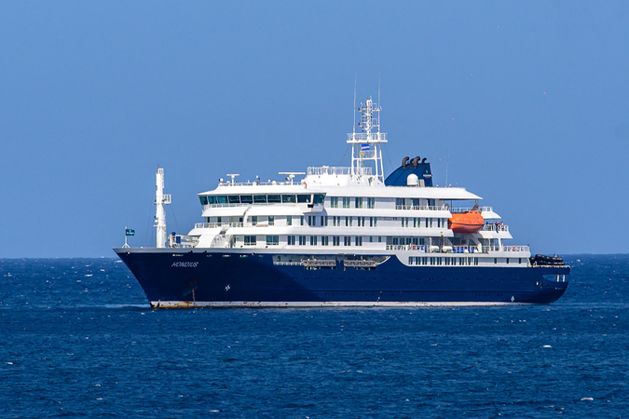
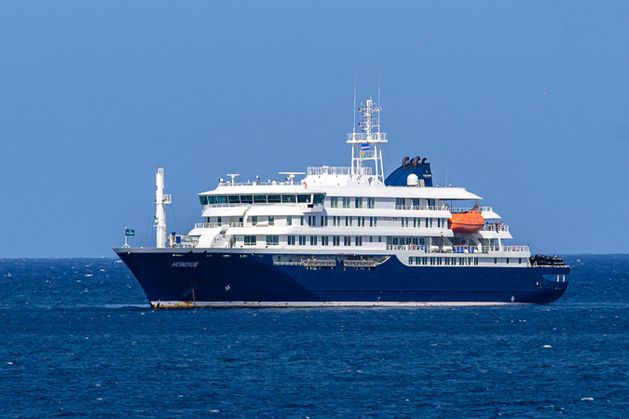
Ireland has not yet set a specific duration for quarantine, but the HSE says self-isolation will take place “for a period” and that passengers will be actively monitored.A HSE spokesperson said passengers will receive “optimal patient care and safety” and that all measures are being taken to “protect broader public health.” The HSE said decisions on where passengers will quarantine will be made on a case by case basis and if they become symptomatic they will be assessed and treated as appropriate.There are understood to be two Irish passengers on board, and they have not been affected.The World Health Organisation (WHO) stressed “This is not Covid,” after the outbreak of hantavirus onboard the Dutch flagged ship. Passengers are expected to disembark at the Canary Islands on Sunday or shortly after.Since the ship departed Ushuaia, Argentina on April 1, three passengers — a Dutch man aged 70, his 69 year old wife, and a German woman — have died. The WHO has reported five confirmed cases of the virus, which is spread by rodent urine and stool, with three more suspected.The HSE said the situation is “evolving” and is being closely monitored by the Department of Health, the HSE National Health Protection Office (NHPO), the European Commission, the European Centre for Disease Prevention and Control (ECDC), the WHO, and colleagues in Northern Ireland. It said no passengers are currently symptomatic, and public health protocols will be followed once the ship docks.The NHPO is preparing follow up care for the two Irish nationals, if needed. “Decisions with regarding repatriation will be taken depending on tier medical status, folliwng public health guidance,” the HSE said.The NHPO’s National Incidence Management Team has been activated to coordinate the public health response.The European Centre for Disease Prevention and Control (ECDC) reported one passenger is critically ill, two are symptomatic and one has an unknown status. Seven people in total presented with fever, respiratory symptoms, or gastrointestinal symptoms, with at least four progressing rapidly to pneumonia, acute respiratory distress, and shock. Three of these passengers died; one was medically evacuated to South Africa and admitted to ICU; two remain symptomatic on board; and one tested positive after returning to Switzerland.Two patients tested positive for hantavirus by PCR, and one tested positive for Andes virus (ANDV). The incubation period ranges from seven days to six weeks. Severe cases can become life threatening. ANDV, found primarily in South America, causes Hantavirus Pulmonary Syndrome (HPS) and has a high fatality rate. Human to human transmission is rare but documented in ANDV.The ECDC said human to human transmission requires close, prolonged contact. The current hypothesis is that some passengers were exposed to ANDV in Argentina before boarding and may have transmitted it onboard. All passengers are considered close contacts due to the closed environment.The ECDC recommends proactive medical evacuation for symptomatic people, testing upon disembarkation, and clear instructions for passengers until diagnosis is confirmed or ruled out. It also advises frequent handwashing, respiratory etiquette, physical distancing, and vigilant symptom monitoring.The Taoiseach has said the Government will do everything possible to make sure Irish citizens on a hantavirus-hit cruise ship get home safely, the Taoiseach has said.Tour operator Oceanwide Expeditions said two Irish nationals are on board the MV Hondius, which is at the centre of an outbreak of the disease.The World Health Organisation (WHO) has said eight cases of the virus have been reported, including three deaths.The organisation said it is working with all of the countries who have passengers on board the MV Hondius on plans for their passage home.Speaking to reporters on Thursday, Micheal Martin said health authorities are “working actively” to bring the Irish citizens home.Asked if they will have to quarantine he said: “Health Service Executive and public health protocols will apply. Obviously, quarantine and isolation will be part of that.”He added: “We have a duty of care to our citizens, we want our citizens to come back in a safe way, and we will do everything possible to facilitate that. That’s our obligation.”He said the ship is due to dock in Tenerife “shortly”, adding that “we’ll see progress from then onwards and that’s important”.Meanwhile, the hantavirus outbreak doesn't risk triggering the next pandemic, World Health Organisation (WHO) officials said, downplaying an incident that has grabbed headlines and raised concern about a new viral contagion.“This is not Covid, this is not influenza,” Maria Van Kerkhove, the WHO’s director for epidemic and pandemic preparedness and prevention, said at a briefing.“This is an outbreak on a ship. We know this virus. This is not the same situation we were in six years ago.”The vessel, the Dutch-flagged Hondius, is sailing toward the Canary Islands after evacuating three people in Cape Verde on Wednesday. Three passengers have died and eight contracted the virus, WHO director general Tedros Adhanom Ghebreyesus said, describing the situation as “a serious incident” but not one that is a public-health threat, even in the Canaries where the passengers will likely disembark.The outbreak has triggered an international public health response and grabbed headlines in an echo of the last pandemic, when cruise ships became symbols of how swiftly a pathogen could move through a confined space. Hantavirus is far less transmissible than the coronavirus and doctors say it's less adept at mutating.“The characteristics of the virus – high mortality rate, inefficient human-to-human transmission – make pandemic potential very low,” Kristen Panthagani, a doctor completing a combined emergency-medicine residency and research fellowship focusing on health literacy and communication, wrote in a blog post.“Covid was the opposite: it had a much lower mortality rate and very efficient transmission, which made pandemic potential high."One of the people evacuated in Cape Verde on Wednesday was the ship's doctor, who likely was contaminated caring for the passengers, Ms Van Kerkhove said.Virologists are racing to locate 30 passengers who left the ship in Saint Helena, an island in the South Atlantic, and others who might have been exposed to the second cruise participant, who died after accompanying the body of her husband off the ship.The 69-year-old Dutch woman traveled from the island to Johannesburg and briefly boarded a KLM flight bound for Amsterdam on April 25 before being deemed unfit to travel. A cabin attendant from the same flight has been hospitalised and tested for hantavirus, according to a Dutch healthy ministry spokeswoman. Fewer than ten people on the flight had close contact with the woman, Dutch authorities said.