Taoiseach says Government will help Irish citizens on Hantavirus cruise ship as WHO insists outbreak will not trigger Covid-like pandemic
Authorities seek to trace passengers who disembarked before outbreak was detected
Three people have died, eight believed to have contracted virus
Ship heading to Tenerife in Spain’s Canary Islands
Human-to-human transmission is uncommon
Dutch media says air stewardess in contact with passenger taken to hospital
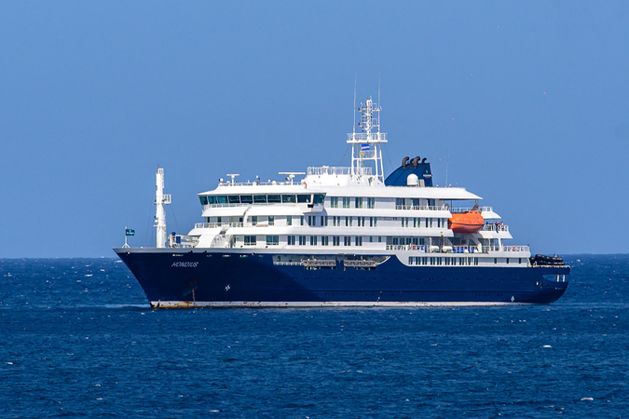
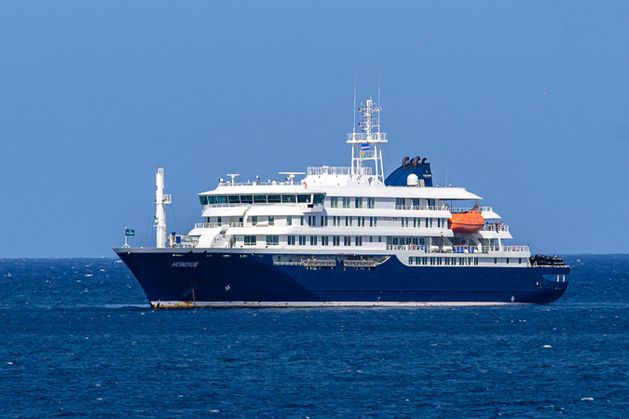
Tour operator Oceanwide Expeditions said two Irish nationals are on board the MV Hondius, which is at the centre of an outbreak of the disease.The World Health Organisation (WHO) has said eight cases of the virus have been reported, including three deaths.The organisation said it is working with all of the countries who have passengers on board the MV Hondius on plans for their passage home.Speaking to reporters on Thursday, Micheal Martin said health authorities are “working actively” to bring the Irish citizens home.Asked if they will have to quarantine he said: “Health Service Executive and public health protocols will apply. Obviously, quarantine and isolation will be part of that.”He added: “We have a duty of care to our citizens, we want our citizens to come back in a safe way, and we will do everything possible to facilitate that. That’s our obligation.”He said the ship is due to dock in Tenerife “shortly”, adding that “we’ll see progress from then onwards and that’s important”.Meanwhile, the hantavirus outbreak doesn't risk triggering the next pandemic, World Health Organisation (WHO) officials said, downplaying an incident that has grabbed headlines and raised concern about a new viral contagion.“This is not Covid, this is not influenza,” Maria Van Kerkhove, the WHO’s director for epidemic and pandemic preparedness and prevention, said at a briefing.“This is an outbreak on a ship. We know this virus. This is not the same situation we were in six years ago.”The vessel, the Dutch-flagged Hondius, is sailing toward the Canary Islands after evacuating three people in Cape Verde on Wednesday. Three passengers have died and eight contracted the virus, WHO director general Tedros Adhanom Ghebreyesus said, describing the situation as “a serious incident” but not one that is a public-health threat, even in the Canaries where the passengers will likely disembark.The outbreak has triggered an international public health response and grabbed headlines in an echo of the last pandemic, when cruise ships became symbols of how swiftly a pathogen could move through a confined space. Hantavirus is far less transmissible than the coronavirus and doctors say it's less adept at mutating.“The characteristics of the virus – high mortality rate, inefficient human-to-human transmission – make pandemic potential very low,” Kristen Panthagani, a doctor completing a combined emergency-medicine residency and research fellowship focusing on health literacy and communication, wrote in a blog post.“Covid was the opposite: it had a much lower mortality rate and very efficient transmission, which made pandemic potential high."One of the people evacuated in Cape Verde on Wednesday was the ship's doctor, who likely was contaminated caring for the passengers, Ms Van Kerkhove said.Virologists are racing to locate 30 passengers who left the ship in Saint Helena, an island in the South Atlantic, and others who might have been exposed to the second cruise participant, who died after accompanying the body of her husband off the ship.The 69-year-old Dutch woman traveled from the island to Johannesburg and briefly boarded a KLM flight bound for Amsterdam on April 25 before being deemed unfit to travel. A cabin attendant from the same flight has been hospitalised and tested for hantavirus, according to a Dutch healthy ministry spokeswoman. Fewer than ten people on the flight had close contact with the woman, Dutch authorities said.Irish passengersIreland’s Health Minister Jennifer Carroll MacNeill said Irish passengers on board the cruise ship hit by a hantavirus outbreak will be medically assessed when they arrive in Tenerife.“We’re working with the European Centre for Disease Control,” Ms Carroll MacNeill said.“There’s literally a meeting going on at the moment to think about how best we approach that. Clearly, when the ship gets to Tenerife, hantavirus patients, passengers, will be assessed as to what is their medical status. It is only then that decisions will be made about where they will be transferred and what quarantine period will be necessary.“So, I’m afraid we’re still in the gathering information stage. The Irish people need to be assessed, medically assessed, when they do get to Tenerife. On foot of that, we’ll make the next set of decisions.”Medics on board a tender with passengers evacuated from the cruise ship. Photo: APThe virus found in the victims has been confirmed as the Andean strain, which can spread among humans through very close contact.Experts have stressed that contagion is very rare and requires very close contact, but the outbreak has put health authorities on high alert.The US Centre for Disease Control and Prevention (CDC) said it was closely monitoring the situation with US travellers on board the ship, adding that the risk to the American public was extremely low at the time.One French citizen has been in contact with a person who had fallen ill but was not currently showing symptoms, French foreign minister Jean-Noel Barrot said.Argentina'’ health ministry has said it will carry out rodent trapping and analysis in the southern city of Ushuaia, the origin point of the cruise ship.Drone view of the exploration cruise ship MV Hondius off Cape Verde. Photo: APThe MV Hondius, with nearly 150 people on board, headed for Spain late on Wednesday and is expected to dock in Tenerife, in the Canary Islands, on Sunday, the EU's Centre for Disease Prevention and Control (ECDC) said.There is still no one showing any hantavirus symptoms on the ship, the ECDC, which is part of the medical team onboard the Hondius, said, adding that it was working with Spanish authorities to finalise a protocol for disembarkation.Once in Tenerife, if they are still healthy, all non-Spanish citizens will be repatriated to their countries, while 14 Spanish passengers will be quarantined in a military hospital in Madrid.Three patients were evacuated from the ship on Wednesday. One of them has been admitted to a hospital in the Netherlands, while another one was transferred to Germany for medical care.The plane carrying the third patient landed in the Netherlands on Thursday morning, after facing a delay due to a problem with the patient's life support system.British passengersTwo Britons who were medically evacuated from a hantavirus-hit cruise ship are improving, global health officials have said.A British passenger, understood to be a 69-year-old man, was taken to South Africa on April 27 and is receiving care at a private health facility in Sandton, Johannesburg.Another Briton, Martin Anstee, 56, was taken off the MV Hondius on Wednesday and flown to the Netherlands to receive specialist medical care.Dr Maria Van Kerkhove, from the World Health Organisation (WHO), said two patients – known to include a Briton – remain in hospital in the Netherlands, and another Briton is in intensive care in South Africa.She told a WHO press briefing: “I am very happy to say the patient in South Africa is doing better, and the two patients in the Netherlands we hear are stable. So that is actually very good news.”The WHO said morale has improved on board since the ship started its journey to Tenerife.It said two doctors are on board along with infectious disease experts from the WHO and the European Centre for Disease Prevention and Control (ECDC), who are conducting a medical assessment of everyone on board.While the risk to the public is low, Dr Tedros Adhanom Ghebreyesus, director-general of the WHO, said there could be more cases due to the incubation period of the Andes virus – the variant of hantavirus linked to the outbreak.“Given the incubation period of the Andes virus, which can be up to six weeks, it’s possible that more cases may be reported,” he said.“While this is a serious incident, WHO assesses the public health risk as low.”He added: “I would also like to thank the ship’s operator for its co-operation, and the passengers and crew who are going through a very difficult and frightening situation.“I’ve been in touch with the ship’s captain regularly, including this morning. He told me morale has improved significantly since the ship started moving again.”The WHO is not expecting the outbreak to be an epidemic, according to Dr Abdirahman Mahamud, director at the alert and response co-ordination department.He highlighted a similar outbreak in Argentina in 2018/19 which led to 34 cases.“If we follow public health measures, and the lessons we learned from Argentina are shared across all countries… we can break this chain of transmission and this doesn’t need to be a large epidemic,” Dr Mahamud said.“We don’t anticipate a large epidemic. With experience our member states have, and the actions they have taken, we believe that this will not lead to subsequent chain of transmission.”It emerged earlier that seven British people disembarked from the ship mid-way through the cruise, along with a woman who later died.A total of 29 people left the ship when it docked in the remote South Atlantic island of St Helena, including a Dutch woman who became unwell during onward travel and died.The woman was accompanying her husband’s body, which was being repatriated after he died on the ship on April 11.The MV Hondius cruise ship departs the port in Praia, Cape Verde (Misper Apawu/AP)