Robert Shaw Net Worth: $4M, The Sting, And Jaws
August 28, 1978. Tourmakeady, County Mayo, Ireland. Robert Shaw collapsed of a heart attack on the road outside his Irish estate at age 51. He died two years after Jaws and five years after The Sting, seven Oscar nominations short of the institutional recognition his contemporaries received. The Robert Shaw net worth at the time of his death was approximately $4 million. Equivalent to roughly $20 million in 2026 dollars, distributed across his Irish property, his Connecticut residence, his ten children, and a recurring royalty stream from the four published novels he had written between film work. The figure was small for an actor of his stature. Shaw had spent most of his salary as he earned it.
Robert Shaw The Sting
He was the heavy in The Sting, the Doyle Lonnegan whose Irish gangster mark falls victim to Newman and Redford‘s Depression-era con. Was Quint in Jaws, the shark hunter whose Indianapolis monologue is the single most quoted speech in 1970s American cinema. He was the Caldicott in From Russia with Love, the spy assassin who Sean Connery’s Bond defeats in the Orient Express train compartment. He was, repeatedly, the most charismatic supporting actor in films that made other men richer.
The fortune was small. Footprint was outsized. The Robert Shaw net worth conversation only makes sense when read against the body of work he produced in the 25 years before his death.
The $4 Million Question
Headline number is $4 million in 1978 dollars. The texture is thoroughly British.
Shaw came up through the Royal Shakespeare Company in the 1950s. His film career did not produce serious money until From Russia with Love in 1963, which paid him $25,000. The Sting in 1973 paid him approximately $300,000 plus a small back-end participation. Jaws in 1975 paid him $200,000 against modest gross participation. On a film grossing $470 million worldwide, that arrangement generated an additional estimated $1.5 million by his death and continued paying royalties to his estate for decades.
Robert Shaw Battle of the Bulge
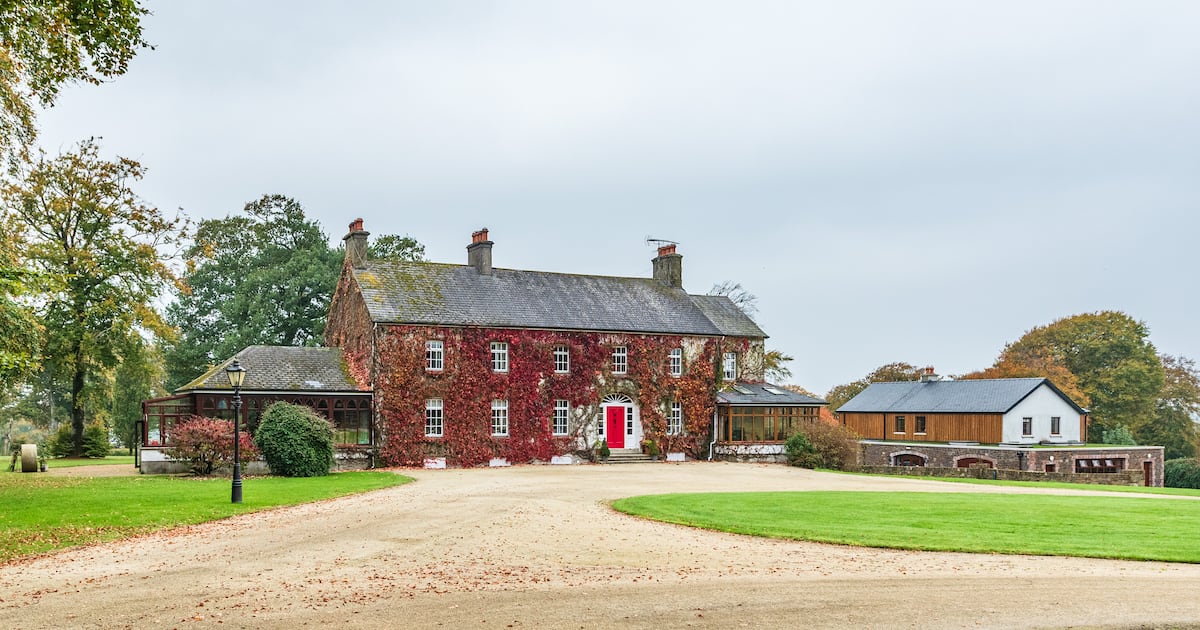
The Irish property he bought in 1968 with The Battle of the Bulge money, Drimbawn House on Tourmakeady Lake in County Mayo, was the Shaw legacy asset. He had ten children across two marriages and one long-term partnership. The property was the structural anchor that kept the family together. His estate after probate distributed the Drimbawn House and the Connecticut farmhouse to his children. The Connecticut house had been bought with The Sting money in 1974.
His four published novels (The Hiding Place, The Sun Doctor, The Flag, A Card from Morocco) generated modest but steady royalty income. Shaw had been pursuing the writing career as seriously as the acting career and considered himself a novelist who acted to fund the writing rather than the inverse.
From Westhoughton To The Royal Shakespeare
Robert Archibald Shaw was born August 9, 1927, in Westhoughton, Lancashire. The childhood was working-class Cornwall, a doctor father who suffered chronic depression and died by suicide when Shaw was 12, a mother. Moved the family to Stromness in the Orkney Islands to keep them together, and a steady early academic record that his father’s death structurally interrupted. Shaw was awarded a scholarship to RADA in 1948 and emerged from training into the Royal Shakespeare Company in the early 1950s.
The London stage was his platform for almost a decade. He played Cassius in Julius Caesar at Stratford. Played Lysander in A Midsummer Night’s Dream. He understudied Laurence Olivier. He published his first novel, The Hiding Place, in 1959 to genuine literary attention. The pattern of writer-and-actor began here and never broke.
robert-shaw-from-russia-with-love
His film breakthrough came at 36 with From Russia with Love. By 1966 he had been cast as Henry VIII in A Man for All Seasons opposite Paul Scofield, earning his only Oscar nomination for Best Supporting Actor. The film won Best Picture. Shaw did not win. The pattern of seven nominations and zero wins that defined his American contemporaries was, for him, a single nomination and zero wins. Not for lack of work.
The Sting With Newman And Redford
George Roy Hill cast Shaw as Doyle Lonnegan in The Sting in 1973 after seeing him in the underseen The Birthday Party adaptation. Lonnegan was a Chicago gangster whose betting habit becomes the mark for Henry Gondorff (Newman) and Johnny Hooker (Redford) to construct an elaborate horse-betting con around. Shaw played him with a limp, a thick brogue, and a barely-suppressed homicidal streak that turned a heavy role into the film’s most quotable performance.
The Sting won Best Picture, Best Director, and seven other Oscars. Shaw did not earn a nomination. Newman did, in Best Actor. Robert Redford did, also in Best Actor. The film grossed $156 million on a $5.5 million budget and made it Universal’s biggest release of the decade. Shaw’s salary was $300,000. The full architecture of how Redford and Newman built that decade together lives in the Robert Redford net worth pillar.
The Sting was the role that made Shaw’s American film career possible. Jaws came two years later. Without Lonnegan, Steven Spielberg might not have known to cast him as Quint.
Jaws And The Indianapolis Speech
Robert Shaw Jaws
Jaws in 1975 paid Shaw $200,000 plus modest gross participation. Spielberg was 27. The film was a troubled production that ran four times its 55-day shoot and three times its $4 million budget. Shaw played Quint, the WWII Navy veteran shark hunter whose Indianapolis monologue, delivered drunkenly in the cabin of the Orca, is the single most quoted speech in 1970s American cinema.
Shaw rewrote much of the speech himself, drawing on the actual USS Indianapolis sinking and the Carl Gottlieb dialogue. The speech runs four and a half minutes. It is delivered in a single take. It is the moment the film stops being a thriller and becomes a tragedy. Shaw was nominated for nothing in connection with it. The film won three Oscars. None went to acting.
Jaws grossed $470 million worldwide on a $9 million final budget. The gross participation Shaw negotiated was modest. It still generated an estimated $1.5 million by his death three years later. Royalties to his estate continued across the next four decades. The Indianapolis speech alone has been credited with bumping the gross participation tier of supporting actors across the entire industry.
Drimbawn House, Ten Children, And The End
Shaw married three times. His first marriage to actress Jennifer Bourke produced four children. Second marriage to actress Mary Ure, the Look Back in Anger lead opposite Richard Burton, produced four more children. His third partnership with Virginia Jansen produced two more. Total: ten children across three relationships. Mary Ure died in 1975 from an alcohol-and-barbiturate combination after their last play together opened to brutal reviews.
Drimbawn House, the Irish estate Shaw bought in 1968, was where the children spent their summers and where Shaw wrote his novels. The 100-acre property on Tourmakeady Lake in County Mayo is a stone manor house with an Irish history dating to the 1830s. Shaw considered it home. He died there of a heart attack on August 28, 1978, while driving his Toyota into the village to visit a friend. The car drifted off the road. The cause was a massive coronary. He was 51.
The Last Charisma Heavy Of His Generation
The category Shaw occupied is closed. Royal Shakespeare-trained, novel-writing, charisma-heavy supporting actor whose presence made the leading men around him better. The figure took the supporting role on principle and made the supporting role bigger than the lead, is a Hollywood economic logic that no longer renews. Streaming algorithms reward franchise faces. The mid-budget adult drama with a Robert Shaw heavy is functionally extinct.
Robert Shaw net worth ledger at death was $4 million. The cultural ledger is the speech in the Orca. He never won an Oscar. He never needed to.
Where The Conversation Continues
Social Life Magazine has been writing about luxury legacy since 2003. Polo Hamptons sponsorships for July 18 and 25 in Bridgehampton are filling now. The Shaw-coded universe is heritage, restraint, charisma without volume, and symbolic capital that earns its place in the room without announcing itself.
If your brand belongs in that conversation, the entry point is sponsorships@sociallifemagazine.com. The yacht has a finite manifest. Cabana sales are tracking ahead of last year. Categories already locked are auto (BMW), Hermès, and one real estate sponsor. The rest is open until it isn’t.