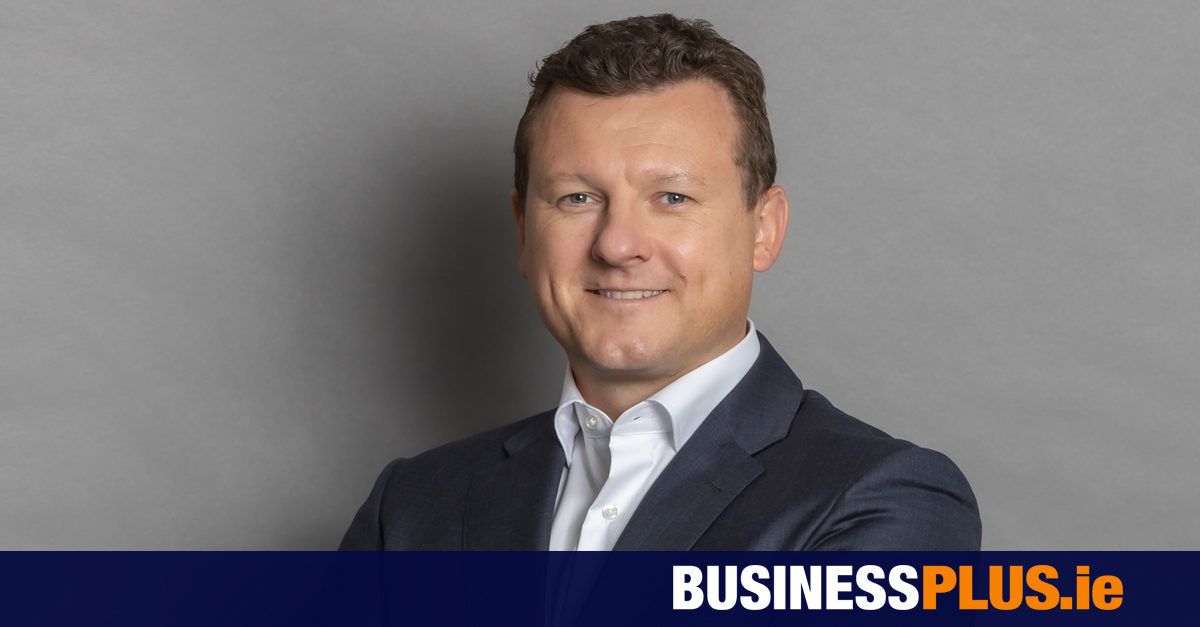
IN THE LEAD: Philip Gardiner, Director of Foresight Group, Ireland
Who or what has most influenced your leadership style?
I don’t think it’s any one person. It’s the collective experience from all the founders that I’ve had experience working with throughout my career.
For the last 15 years, I’ve had the luck of meeting people that have run, set up and operated businesses of all different sizes and types across the UK and Ireland.
That founder experience of taking on the initial risk, putting it all on the line, building the business, making decisions fast, owning it when it goes right or when it goes wrong, learning from it and growing, and then, at the same time, bringing a team along with you, and creating that culture and team spirit where the collective is better than the individual.
So how would you describe your leadership in three words?
Practical, analytical and collaborative.
How has your approach to leadership evolved over the years?
Earlier, my career was more transactional. It was doing the analysis, sitting at the desk, writing the reports over time.
Then it became more about the people, sitting on the boards of the business that we partnered with, working with the leadership team, helping them develop, and helping the business and the systems and the strategy develop.
That transition from transactional to people-focused has been the most meaningful thing that’s changed my leadership journey.
What’s the best leadership advice you’ve ever received?
To be authentic and straight.
To give the straight advice, honest, as I see it, to bring the benefit of my experience into all the decisions, not to be clouded by emotions reacting in the moment, but to look through it and to be a partner with the business that we support.
How do you handle managing up?
The biggest thing is transparency and collaboration, and that’s at all levels.
Managing up is about clearly setting expectations, understanding what the objectives and what the alignments are for everybody involved and openly communicating. It should never be a surprise. Nothing should be hidden.
What kind of workplace culture do you aim to foster?
Having a low ego and being open to challenge and being collaborative is the best approach. We make hard decisions.
We make investments into the future performance of the business. We back management teams to be successful. So we go into that with a set of assumptions and a set of expectations. The best decisions come when they are openly challenged.
You check [your ego] at the door, no matter who you are, what level you’re at, everybody has a voice, everybody has an opinion, and they all carry the same weight.
What’s your approach to making tough decisions?
Most tough decisions are trade-offs. It’s never the right or wrong answer, and it’s never black or white, and I think what helps us is intentionally stepping back in the moment and asking yourself three questions, what’s the right thing commercially in the long run for the business?
From that, what’s the second order of consequences if we make this decision? The third is, what does that mean for the team and the business?
If you can work it through in that order without reacting emotionally the moment, generally, you’re pointing in the right direction with your end decision, fantastic.
What’s been your proudest moment or achievement?
It’s when we invest into a business. We’re investing in a point in time where the founder has gone on a journey.
The business has loads of potential, but they’re typically resource constrained, so we come in and help unlock the potential.
Sometimes that’s through capital, sometimes strategic support. When you see the impact of that come through in growth in the business, improving revenue, growing employees, serving more customers, that’s unbelievably satisfying, because it’s real.
What advice would you give to other SME leaders navigating uncertain economic conditions?
Uncertainty is just a fact of life and business, as the last 10 years has shown us.
We’ve had Brexit, we’ve had Covid, supply chain disruptions, energy price increases, tariffs and inflation but we keep going.
The best advice I’d give to businesses is to see through the long run and not to get distracted by the short-term noise.
To be able to do that, there are three important things to focus on: focus on the financial resilience of the business; make sure that you always have a strong balance sheet; make sure you have operational systems that you’re not taking on too much risk.
The second is to continue to invest for growth. A short-term reaction to external noise could constrain the business, and as a result of that, then you slow down your ability to react to future opportunities.
The third is to have a partner that helps you see through the long-term run and helps support you through that curve, and take advantage of the opportunities that come on the other side.
"AIB were our cornerstone investor, and got us going"
What are the plans for the next couple of months?
We set up in Ireland in 2022. We saw the opportunity, with the really buoyant economy and the exciting opportunity with SMEs. We raised 68 million.
AIB were our cornerstone investor, and got us going. ISEF came in and followed on, and that €68 million is invested into SMEs on the island of Ireland.
We’ve six deals completed so far and invested €30m. We want to back more businesses. We want to support them and scale. And our pipeline is strong. It’s really exciting.




Comments (0)