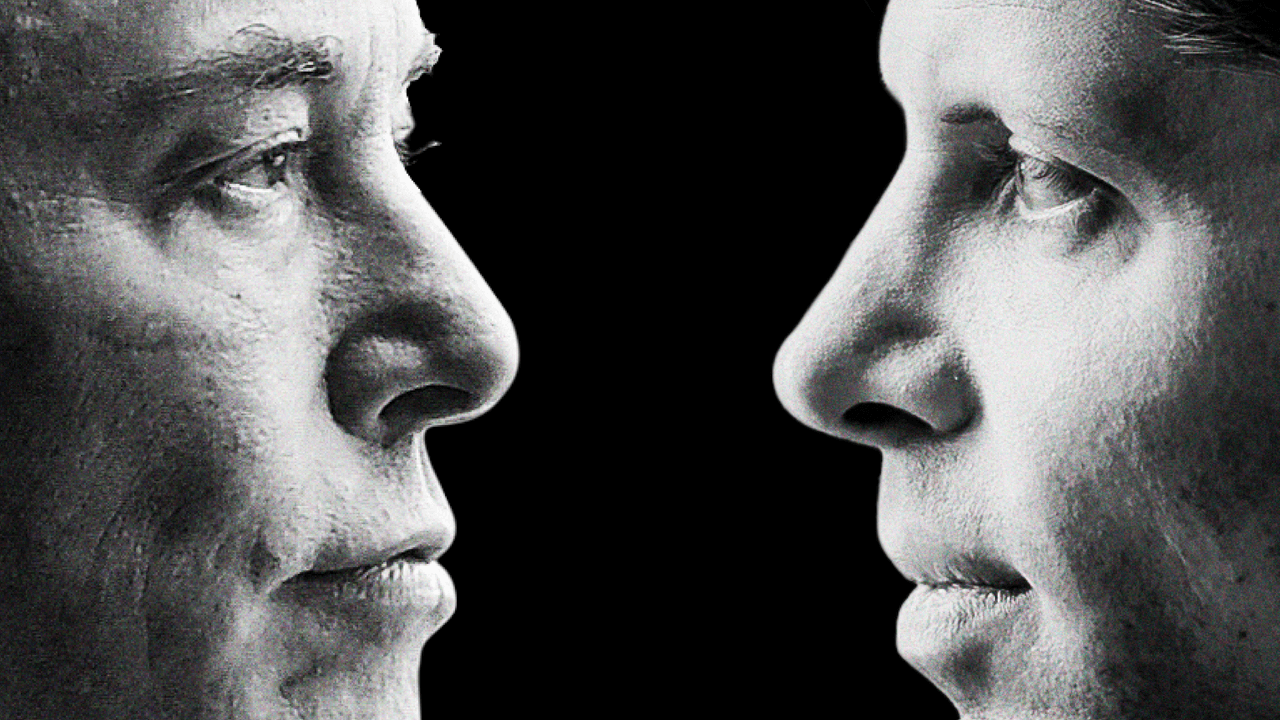
Battle of the Billionaires: What’s at Stake as Elon Musk and Sam Altman Face Off in Court
When Elon Musk finally faces off in court against Sam Altman this week, he’ll be forced to reckon with a question whose answer has seemingly eluded him his entire life: What exactly does he want?Sure, we know what he’s asking the federal court to do: force OpenAI and Microsoft to pay billions—OpenAI for allegedly defrauding him out of his donations, Microsoft for allegedly aiding and abetting that fraud. Also block OpenAI’s restructuring to a for-profit entity. Also strip Altman of his position of authority atop OpenAI.But one thing Musk wants to make sure we all know—the jury included—is that it’s not about the money. Just ahead of the trial, his side filed a motion saying he’s not going to touch a penny of the potential winnings. Instead, in a bit of pious showmanship, he promised it would all go to charity—specifically the nonprofit organization that governs OpenAI.So what does that leave him with? And why has the trial between Musk and Altman, which is ramping up to be a true spectacle, captivated Silicon Valley?Because at its core, this legal drama that revolves around artificial intelligence is actually rooted in the very human impulses of kinship, greed, betrayal, and power.Musk’s case officially kicked off two years ago, but its origins go back over a decade. In 2015, Musk, Altman, Greg Brockman, and a handful of others cofounded OpenAI as a nonprofit with the mission of creating AI for the benefit of humanity. Musk—who’s long expressed fears about a superintelligent AI—served as co-chair with Altman. According to Musk’s lawsuit, he bankrolled the operation and personally recruited key researchers, including Ilya Sutskever, whom he poached from Google. Brockman, the former CTO of Stripe, focused on the technical infrastructure. Altman, who was still running Y Combinator at the time, helped set the strategic direction.Open AI President Greg Brockman
Bloomberg/Getty ImagesThen in 2017 the group started to split. Altman, Brockman, and Sutskever appeared to favor creating a for-profit arm so they could entice outside investors to buy into the company and cover their ballooning computing costs. Musk ultimately expressed that he wasn’t on board with the for-profit idea. “Either go do something on your own or continue with OpenAI as a non-profit,” he wrote to them in an email, according to court documents. “I will no longer fund OpenAI until you have made a firm commitment to stay or I’m just being a fool who is essentially providing free funding for you to create a startup.”Altman’s side alleges that Musk’s real problem isn’t about profiting off the technology—he once even proposed attaching it to Tesla to serve as its “cash cow.” OpenAI claims Musk also wanted to be the CEO and have complete control of the for-profit. The real story, they say, is he had simply given up on the company. “OpenAI is on a path of certain failure relative to Google,” Musk wrote in an email to the other founders. “There obviously needs to be immediate and dramatic action or everyone except for Google will be consigned to irrelevance.”