Why is oil coming from northern Europe costing us more?
With a lot of Ireland's oil coming from northern Europe and not the Middle East, why are we paying so much more for our oil now even though there's no disruption to European production?
That is one of the most common queries reporters are getting when covering rising fuel prices.
So, let's try and explain it.
It is true that most of the oil consumed in Ireland comes via the UK and the North Sea, but it is not as simple as that.
The market for oil is a global one, meaning that for the most part prices aren't determined by where oil is produced or sold.
If there's a supply disruption anywhere in the world, that will have a knock-on effect on both supply and price globally.
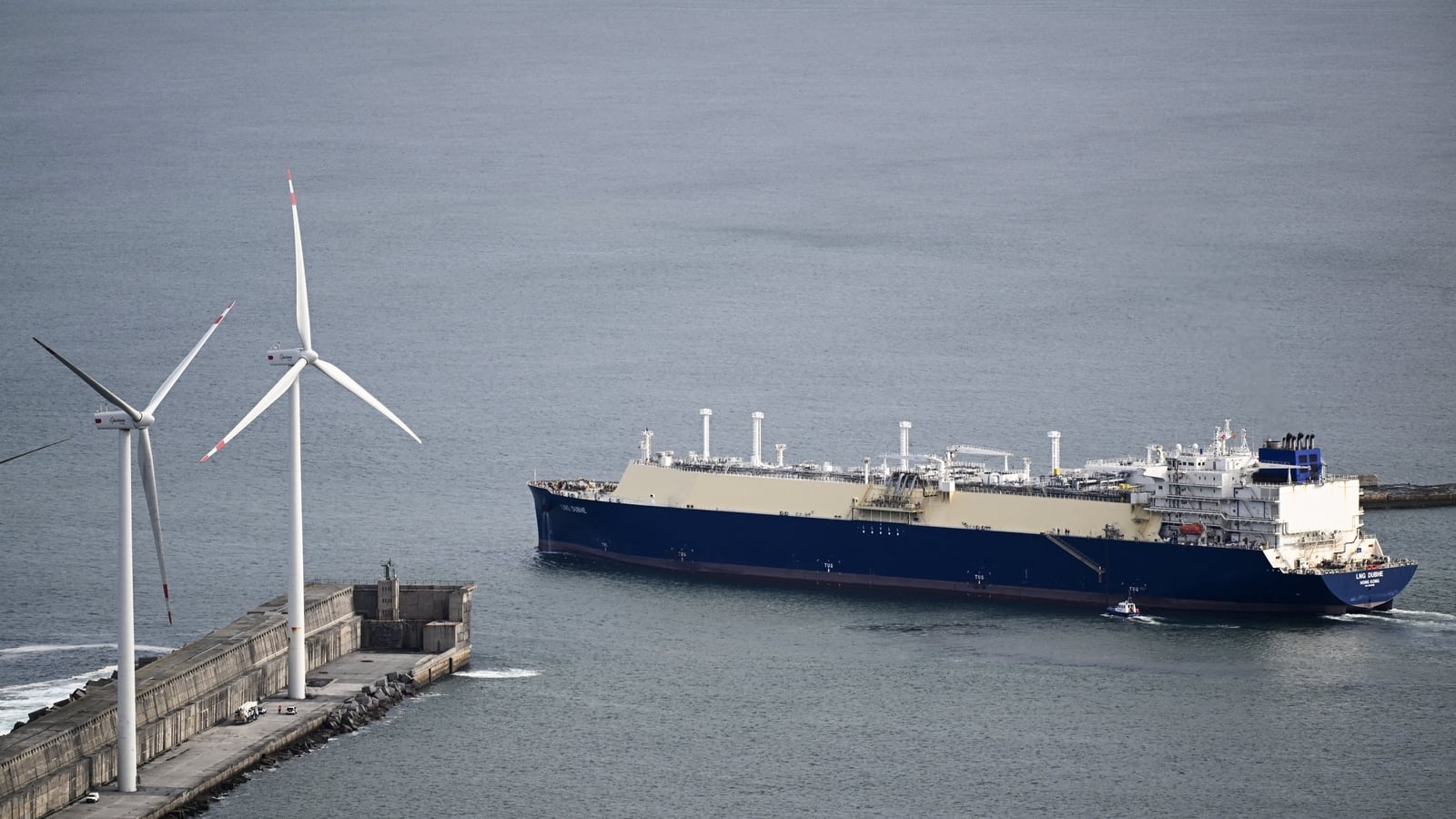
Before the latest escalation in the Middle East, around a fifth of the world's oil supplies were travelling through the Strait of Hormuz.
With the strait effectively closed to oil tankers, that is 20% less oil available globally.
And while Ireland was not terribly reliant on the strait for its supplies, other countries - particularly in Asia - were.
The Strait of Hormuz is effectively closed to oil tankers
Now the likes of China is looking elsewhere to replace those lost supplies, and it will try and buy oil from other sources, such as what's being produced in the North Sea.
Suddenly Ireland is competing with more countries when buying oil, and this inevitably drives up the price.
Brent crude is the most commonly used global benchmark for oil pricing.
At the end of February it was costing $72 a barrel, but supply disruption and uncertainty since have seen Brent crude soar above $100.
More than half of the price of a litre of diesel or petrol is made up of taxes. Why can't the Government just lower the tax on fuel by much more to ease the pressure on consumers?
This is another common question raised in recent weeks.
Since the US-Israeli attacks on Iran began on 28 February, the Government here has introduced two sets of measures to help people cope with the ensuing rising fuel prices.
This has resulted in the total tax reduction on diesel since March to 32 cent a litre, with the overall reduction on petrol coming to 27 cent a litre.
These cuts will remain in place until the end of July, and are costing the Exchequer €750 million.
But with the Spring economic statement earlier this week predicting another multi-billion euro budget surplus for the country, why can't the Government lower fuel prices further?
It could, but any action the Government might take would have consequences.
For example, if more of the Exchequer surplus is funnelled towards lowering the price of fuel, that means money has to be redirected from somewhere else.
Tánaiste and Minister for Finance Simon Harris said that he is committed to income tax cuts in October's budget, but the Government has hinted that any further fuel tax cuts between now and then could jeopardise this.
And while a €9.2 billion surplus (the prediction from the 2026 Spring Economic Statement) may seem like more than enough to do whatever is needed on any front, most of that money is based on income from what could be highly volatile corporation tax.
There is no guarantee we will be able to rely on that level of income indefinitely.
Minister for Finance Simon Harris (Pic: Collins)
Another factor here is the duration of the Middle East conflict.
We don't know how long it will last or how bad it might get, and the Government will want to keep something in reserve for later in the year in case more urgent supports are needed.
It is also worth remembering that the Government's €750m package is the most substantial package per capita of any EU member state.
Another theme that regularly comes up in our coverage of fuel-price increases is an allegation of price gouging against retailers, but is there any truth to this?
At the behest of the Government, the Competition and Consumer Protection Commission (CCPC) recently looked into this.
And with diesel prices jumping from c. €1.70 per litre to around €2.30 in the space of a few weeks, it was more than reasonable to investigate the issue.
However, the consumer watchdog found no evidence that fuel retailers were profiteering from the situation.
Indeed the CCPC determined the recent spikes in fuel prices were a result of "significant increases in international wholesale costs" and not price gouging.
Though it did add that it could not rule out that "individual companies" may have benefited from price increases.
Separately, an analysis of wholesale fuel prices (that's the price petrol stations themselves pay) showed the spikes in wholesale fuel prices since the end of February correlate closely with prices paid at the pump.
While fuel prices have soared, we cannot lay the blame at the door of retailers.
The increased scrutiny of pricing showed be welcomed though, and should be maintained to ensure any drops in wholesale fuel prices are promptly passed on to motorists at the pump.