You're removing stains WRONG! Experts reveal how to eliminate everything from tomato sauce to blood - and explain why white wine won't shift those red wine spills
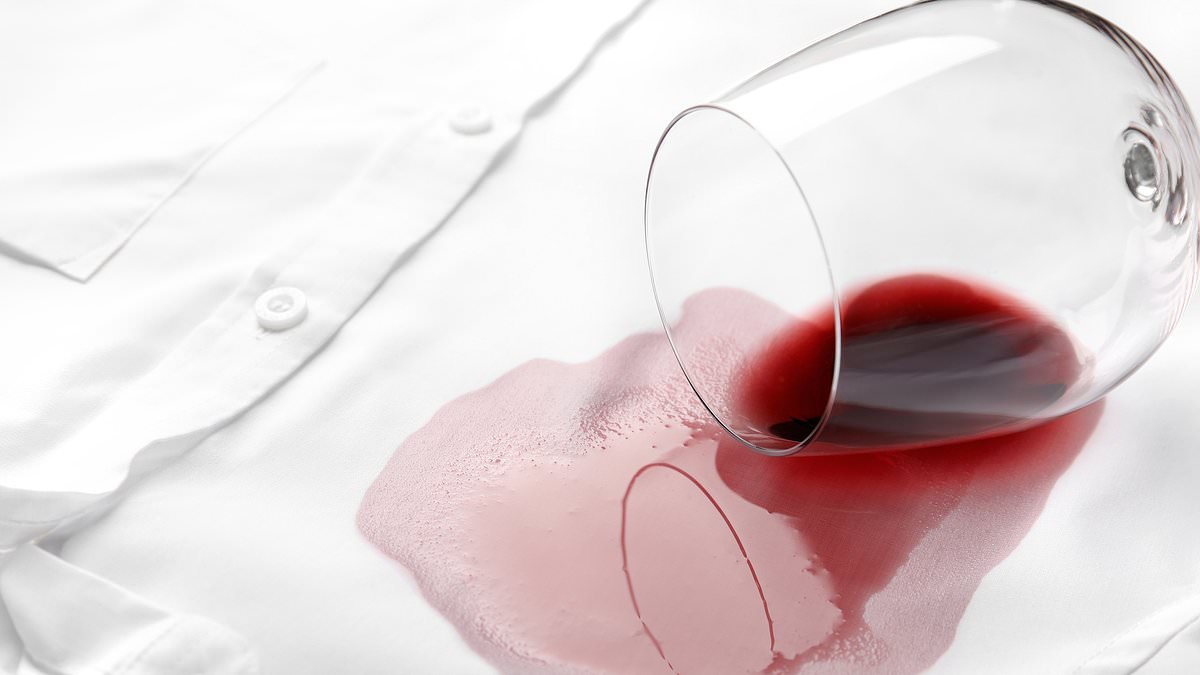
It's an old wives' tale that has persisted for decades. But it turns out white wine isn't the best solution for a red wine spill. Experts from Which? have come up with the ultimate stain removal cheat sheet for everything from blood to tomato sauce. According to their guide, if you spill red wine, washing–up liquid and hairspray are the ultimate saviours – not white wine. 'You should always check the individual care labels on your clothes before attempting these methods,' Which? cautioned. 'But as long as you proceed with relative caution, you shouldn't find they cause you any major issues.'The main takeaways are to avoid any bleaching agents on darker clothing, rinse items thoroughly before washing, and try to use cooler wash cycles to avoid "setting" stains into the fabric.'If you're really worried about ruining a treasured garment, try a discreet patch test on a lesser–seen section.' It's an old wives' tale that has persisted for decades. But it turns out white wine isn't the best solution for a red wine spillTo create the cheat sheet, Which? asked its members for their top tips to tackle five common stains – blood, red wine, grass, tomato sauce, and sun cream. It then tested the most common tips, and came out with the ultimate solution for each stain. Blood stainsIf you get blood on your clothes, you might be tempted to pop them in a hot wash.However, this is actually the worst thing you can do, according to Which?. 'Blood contains proteins that bind together when exposed to heat, making it one of the most challenging stains to remove,' the consumer champion explained. 'This means that putting blood–stained items in a hot wash is actually one of the worst things you could do, as it really fixes the stain into the fabric.'Instead, it's best to soak the stained items in a mixture of cold water and salt. If you have kids, it's likely their clothes are often covered in grass stains. Thankfully, there's a pretty easy fix – a paste made from washing–up liquid and bicarbonate of soda The ultimate stain removal cheat sheet Blood – Soak in a mixture of cold water and salt. Wash on a cool cycle.Red wine – Apply neat washing–up liquid or spray liberally with hairspray. Rinse and repeat. Wash on a cool cycle.Grass – Apply a paste of washing–up liquid and bicarbonate of soda. Rinse. Wash as normal.Tomato sauce – Scrub in neat washing–up liquid. Leave overnight. Wash as normal. Hang in direct sunlight.Sun cream – Soak in vinegar and water, or work in a bicarb paste. Leave overnight. Rinse and wash as normal. 'Salt is excellent at absorbing liquids and helping to draw out moisture, and will help to break down the proteins in the blood when combined with cold water,' Which? said. 'This will, in turn, make the stain easier to lift.'Red wine stainsAs far–fetched as it might sound, washing–up liquid and hairspray are some of the best options to shift a red wine stain, according to Which?.'Washing–up liquid contains surfactants, which helps water to soak into the tiny fibres of a fabric, trapping and lifting the stain off the material,' it said. 'Alcohol–based hairsprays can also help break down the pigment in red wine stains, meaning they're easier to remove from fabric.'Otherwise, the consumer champion advises blotting the stain with a clean cloth, before popping the item in the washing machine. It added: 'The salt absorbtion method suggested for blood stains could also come in useful here, especially if it's a large amount of red wine.'Grass stainsIf you have kids, it's likely their clothes are often covered in grass stains. Thankfully, there's a pretty easy fix – a paste made from washing–up liquid and bicarbonate of soda. 'Baking soda acts as a mild alkaline cleaner, working to break down organic pigments and disrupt the bright green chlorophyll compounds found in grass,' Which? said.'It also helps to neutralise the slightly acidic qualities of grass stains, enabling them to be dissolved and wash away more easily.'Tomato sauce stainsWhether it's a lasagna or a curry, tomato–based sauces can be a nightmare to shift from clothes. If you do end up covered in sauce, you'll be pleased to hear that good old–fashioned washing–up liquid is the solution once again. Whether it's a lasagna or a curry, tomato–based sauces can be a nightmare to shift from clothes. If you do end up covered in sauce, you'll be pleased to hear that good old–fashioned washing–up liquid is the solution once againWhich? said: 'Washing–up liquid contains surfactants and degreasers that are very good at breaking down grease and oils, enabling them to easily lift stains. 'The natural bleaching power of sunlight can finish the job of removing stubborn stains, especially on lighter fabrics.'Sun cream stainsFinally, if you end up with sun cream stains on your favourite white clothes, don't be tempted to reach for the bleach. 'Using bleach in an attempt to remove sun cream can actually turn the stains pink and make them much more noticeable, so it's best to avoid conventional bottled stain removers in this case,' Which? advised. Instead, white vinegar should be your first port of call. 'The acidic qualities of vinegar help to break down the oily, mineral components that make up most sun creams,' the consumer champion added. How do you get rid of stains?Even if you have the dining etiquette of a duchess, your clothes will at some point fall victim to a splash of sauce or a dribble of gravy. But most stains do disappear. The clue is to work out what kind of stain you’ve got . . . Alicia suggests blotting pigment-based stains such as wine and coffee with kitchen paper before pre-soaking and washing (file image)Pigment-based stainsColoured products and food e.g. wine, coffee, tea, fruit juice, perfume, grass, inkTreatment: Blot stain with kitchen paper, flush with cold water and blot again. Pre-soak using a biological pre-wash powder or apply a gel. Leave for five to ten minutes then wash.Remember: For tannin-based stains, never use salt or soap. Both will set it permanently.Protein-based stainsMost food stains eg. egg. Sweat, blood.Treatment: Lift excess solids with a blunt knife. Blot with paper towel. Soak in cold water and add a biological pre-soaking agent. Machine wash at 40c with biological detergent.Remember: Never use hot water; the protein can set into the fibres of the textiles.Grease-based stainsButter, oil, mayonnaise, sun tan lotionTreatment: Scrape off solid parts. Soak up excess moisture with kitchen paper. Sprinkle with baking powder or baby powder to absorb the oil. Shake off and apply liquid detergent, then leave for a few minutes. Machine wash.Remember: Lipstick contains grease and pigment. Treat the grease element first, then follow with a treatment for pigment-based stains if needed.