Meta’s Comeback: Muse Spark Puts Zuckerberg Back in the AI Race, Breaks With Open Source
Just a few months ago, Meta was considered an also-ran in the AI world. Llama 4 had launched in April 2025 to mixed reviews, internal turmoil painted an unflattering picture in public, and disillusionment was spreading through the developer community – not least because Meta had been caught bench-maxxing (in other words: cheating). Now, a year later, Meta is back – and back with a vengeance.
Top Rankings for Muse Spark
With Muse Spark, the first model from the newly founded Meta Superintelligence Labs (MSL), Mark Zuckerberg’s company has pulled off a leap that almost nobody had on their radar. On the Artificial Analysis Intelligence Index, Muse Spark scores 52, placing it fourth worldwide behind only Gemini 3.1 Pro, GPT-5.4, and Claude Opus 4.6. For comparison: Llama 4 Maverick debuted in 2025 with a meagre 18 points – meaning Meta has nearly tripled its performance.
It looks just as good on the Arena.ai leaderboard (formerly LMArena): in text and vision, Muse Spark currently trails only Claude 4.6, with the model lagging significantly only in coding. For Meta’s target audience – consumers on Facebook, Instagram, WhatsApp, and the Meta AI app – that should be a tolerable weakness.
The Hard Road Back
The path here was anything but straightforward. Llama 4 had not only disappointed Meta technically but also damaged its reputation: for the LMArena benchmarks, Meta had used a special, unreleased “experimental chat version,” which lastingly undermined the company’s credibility. Zuckerberg pulled the emergency brake.
In the summer of 2025, he restructured the entire AI division, founded Meta Superintelligence Labs, and brought 29-year-old Scale AI co-founder Alexandr Wang on board as Chief AI Officer – flanked by a $14.3 billion investment in Scale AI for a 49 percent non-voting stake. At the same time, Zuckerberg parted ways with his previous AI chief Yann LeCun, who is now building his own startup AMI Labs in Paris with billions in investment.
MSL rebuilt the entire stack from scratch – architecture, data pipelines, training infrastructure. According to Meta, the new pretraining stack is sufficient to achieve the same capabilities with over an order of magnitude less compute than its predecessor, Llama 4 Maverick.
Breaking With Open Source
Perhaps the most radical move: Muse Spark is no longer an open source model. With this, Zuckerberg breaks with the strategy that had earned Meta a loyal global developer community since early 2023. It is Meta’s first frontier-class release since Llama 4 Maverick in April 2025 – and the first Meta model not released as open weights. For now, Muse Spark runs exclusively in the Meta AI app, on meta.ai, and in a private API preview. When asked by VentureBeat, Meta merely stated that the existing Llama models would remain available as open source – whether the Llama family will continue to be developed at all was left open.
For the tens of thousands of developers around communities like r/LocalLLaMA, this is a heavy blow. For Meta’s business model, however, the move makes sense: anyone planning to equip each of their billions of users with a personal AI agent wants to keep control over the model.
Hyperion, Prometheus, and a $600 Billion Plan
To make this goal achievable, Meta is investing on a scale that stands out even amid the AI hype. For 2026, the company has announced capex of $115 to $135 billion – nearly double the 2025 figure. By 2028, Zuckerberg plans to pour at least $600 billion into US data centres and AI infrastructure.
The centrepieces of this offensive are two mega-clusters: Prometheus, a 1-gigawatt data centre scheduled to come online in 2026, and Hyperion in Richland Parish, Louisiana – a 2,250-acre site set to cost around $10 billion and deliver 5 gigawatts of compute capacity, with over a million GPUs for the next generation of models. The area roughly equals a quarter of Manhattan. To poach top researchers from OpenAI, Google, and Apple, Zuckerberg is reported to have offered packages of up to $200 million over four years.
Manus: The Acquired SMB Agent
But concrete, GPUs, and compute power alone don’t make an agent. Meta picked up the crucial software building block in late December 2025: Manus, a Singapore-based provider of autonomous AI agents that originally emerged from a Chinese startup. According to the Wall Street Journal, Meta closed the deal at over $2 billion, and as part of the acquisition, all remaining Chinese ties to the company are being severed.
Unlike conventional chatbots, the Manus agent handles multi-step tasks largely on its own – from market research and coding to data analysis – and the company is already making real money doing it: Manus sells its AI agents on a subscription basis to small and medium-sized businesses and recently reached an annualised revenue run rate of over $125 million. With this, Meta essentially owns a functioning B2B agent business overnight.
Strategically, the company is clearly aiming at the SMB segment, which is already among Meta’s most important advertising customers on Facebook, Instagram, and especially WhatsApp Business. Manus’s agentic capabilities map seamlessly onto surfaces like the Meta Business Suite, where small businesses are already juggling content calendars, inboxes, ads, and analytics – an execution agent could automate all of that end to end. Industry analysts see the biggest leverage in WhatsApp Business with its more than two billion users: the messenger could turn into something like an autonomous digital employee for millions of SMBs – Meta’s answer to what WeChat has long been doing in China. With this, Manus fits exactly into Zuckerberg’s dual strategy: while Muse Spark delivers the personal agent for consumers, Manus takes on the role of business agent for the long tail of small companies.
A Personal AI Agent for Everyone
What is all of this for? Zuckerberg’s vision is “Personal Superintelligence”: every single person should get their own AI agent, one that thinks, plans, communicates, and acts on their behalf in everyday life. According to a Wall Street Journal report from March 2, 2026, Meta’s CEO envisions a future in which every person inside and outside his company has their own personal AI agent – and he is starting to realise this vision with a personal agent for himself.
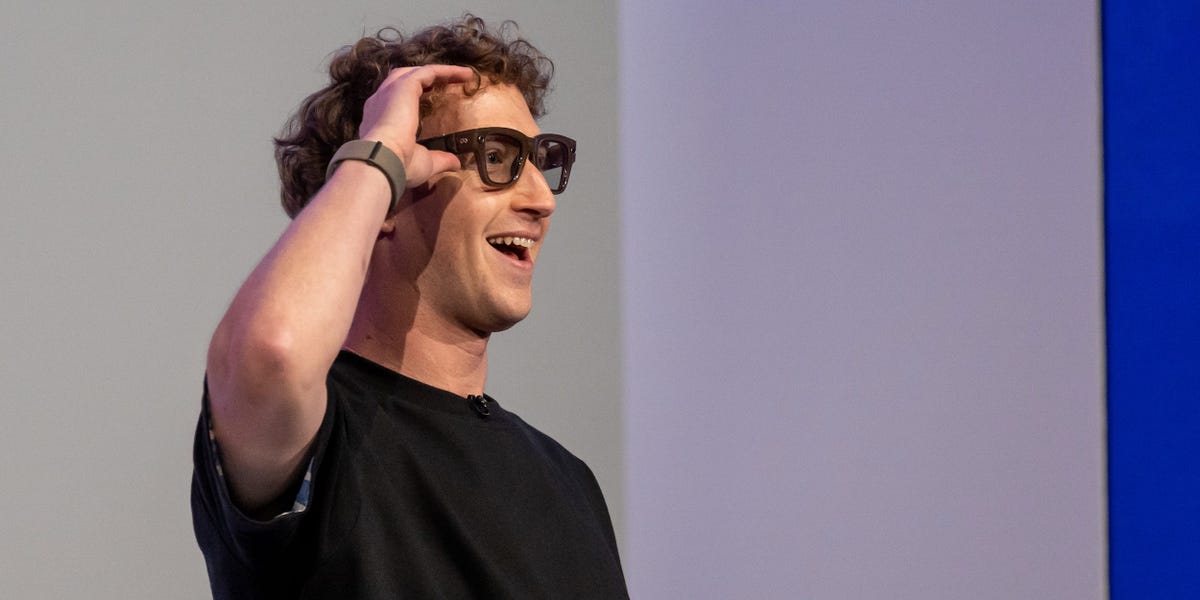
Muse Spark is the first building block for that. The model is natively multimodal, supports tool use, visual chain of thought, and – via the new Contemplating Mode – multi-agent orchestration, in which several sub-agents work in parallel on a single question. There is a clear focus on health: to develop Muse Spark’s health reasoning capabilities, Meta worked with over 1,000 physicians to curate training data. The personal agent is intended to be delivered not just through the apps, but above all via Meta’s AR/AI glasses from the Ray-Ban partnership.
Conclusion
After a year of radio silence and public mockery, Meta is back in the frontier race – earlier than expected, better than predicted, and with a completely new philosophy. The price: the open source identity that had made Meta unique in the AI world is history. What remains is a multi-billion-dollar race over who builds the personal AI agents of the future – and Zuckerberg has just made it loud and clear that he intends to be at the very front of that race.




Comments (0)