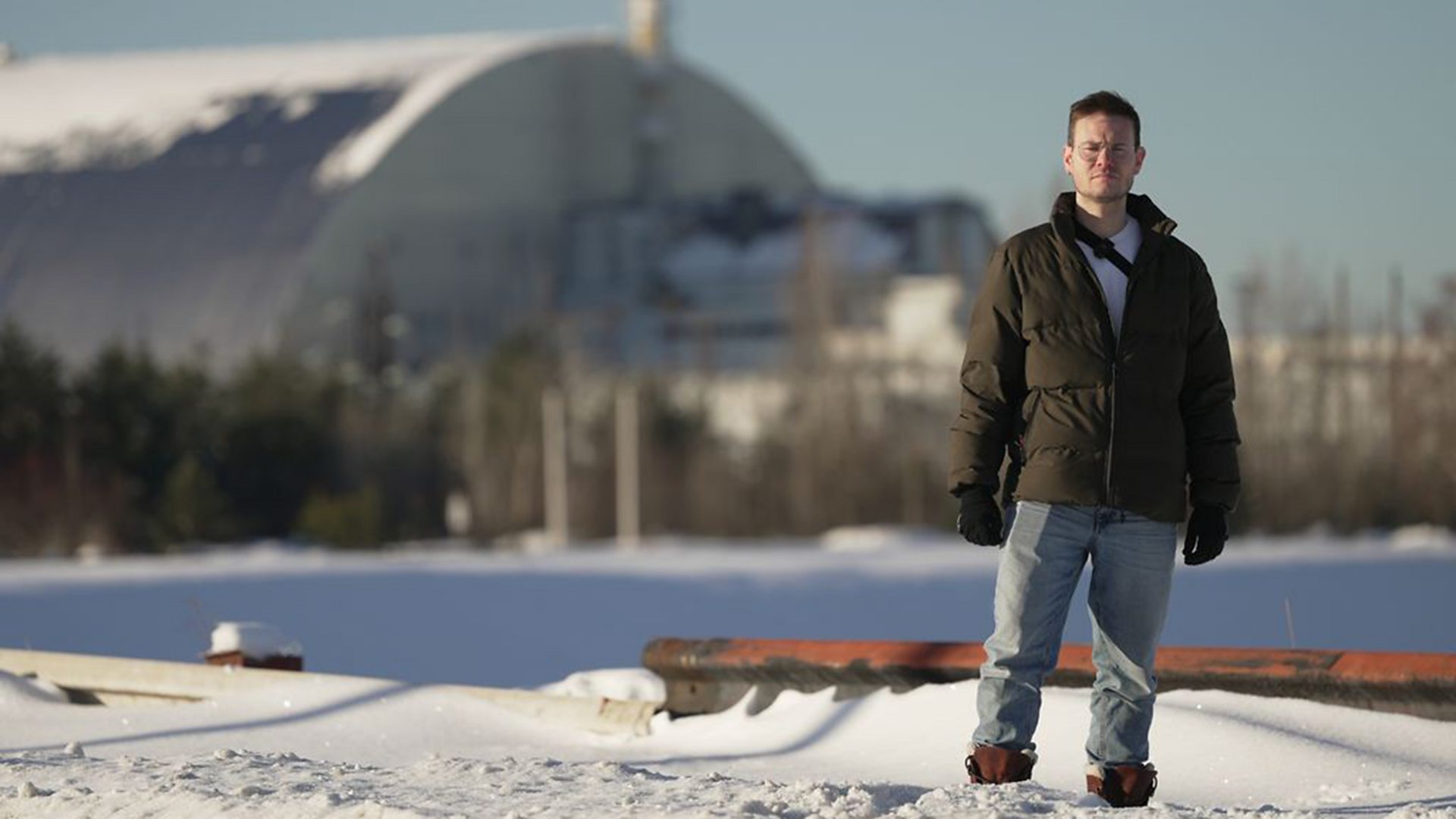
BBC marks 40 years since Chernobyl disaster with new documentary and radio special
Jordan Dunbar explores the human stories behind the 1986 nuclear catastrophe in powerful BBC World Service productions
The BBC World Service is marking the 40th anniversary of the Chernobyl disaster with a major new documentary and companion radio feature.
What Happened at Chernobyl will air on BBC One and BBC iPlayer on 20 April, with journalist Jordan Dunbar travelling to the site of the explosion to examine one of the most devastating man-made disasters in history.
The 1986 explosion at the Chernobyl Nuclear Power Plant triggered widespread radioactive contamination across Ukraine, Belarus and Russia, and is widely seen as a key factor in the eventual collapse of the Soviet Union.
In the documentary, Dunbar speaks to eyewitnesses who have never previously shared their stories with international media, as well as two former “liquidators” — workers tasked with the dangerous clean-up operation — who revisit the events that shaped their lives.
The film also explores how much of the disaster was initially concealed, and why the full scale of the crisis took time to emerge on the global stage.
Alongside the TV documentary, Dunbar also presents The Last Dancefloor in Chernobyl, a radio feature telling a deeply personal story set against the backdrop of the disaster.
The programme follows the lives of a young couple and a nightclub DJ in the city of Pripyat, capturing a moment of normality just before catastrophe struck.
From music-filled nights at a local disco to the chaos of evacuation — including a bride fleeing in her wedding dress — the story highlights the human cost of the disaster and the resilience of those who lived through it.
What Happened at Chernobyl will also be available internationally via the BBC World Service’s digital platforms, while The Last Dancefloor in Chernobyl will air on 25 April and be accessible on BBC Sounds and other podcast services.