Artemis II astronauts bet their lives on NASA's maths being right tonight: Crew will face a 24,000mph re-entry into Earth's atmosphere - with just a 3-INCH shield to protect them from the 2,760°C heat
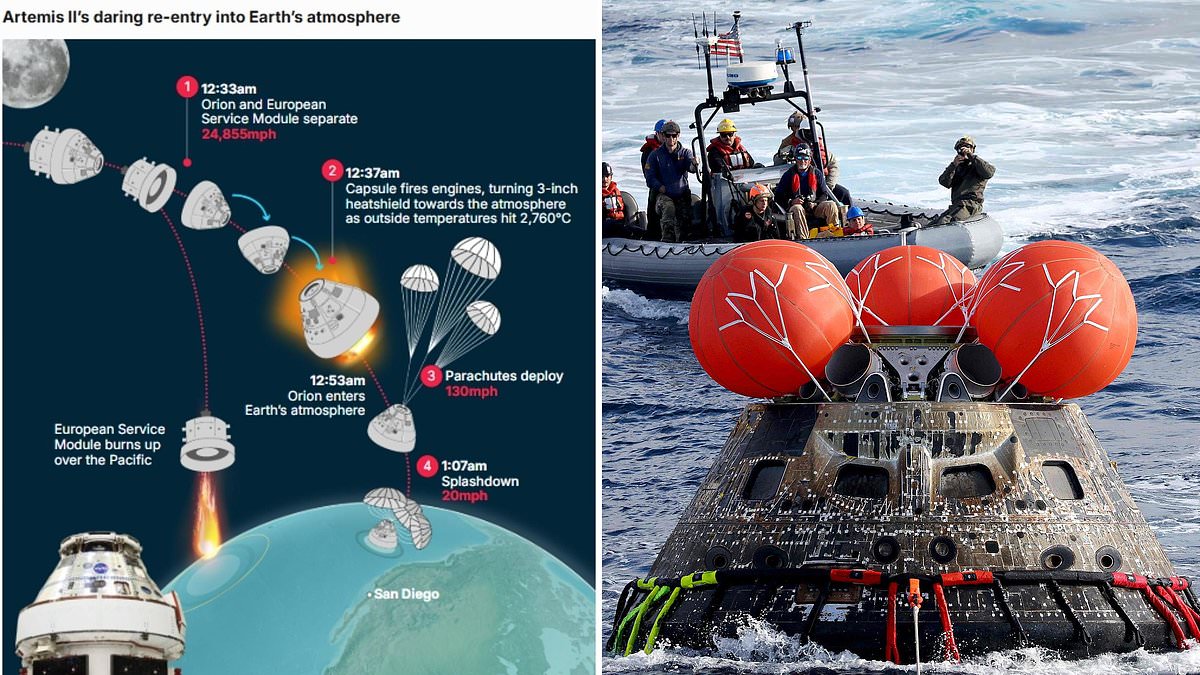
NASA's Artemis II astronauts will bet their lives on NASA's maths being right tonight, as they reach the most dangerous part of their mission. In the early hours of Saturday morning, the Orion module will make its final approach to Earth to mark the finale of its mammoth 685,000–mile (1.1 million km) journey.At around 12:33am BST, when the astronauts are just 76 miles (122km) of home, the service module which powers their spacecraft will detach from the crew capsule.The team contained within – Reid Wiseman, Victor Glover, Christina Koch and Jeremy Hansen – then face a 24,000mph (40,230 km/h) hypersonic re–entry into Earth's atmosphere.They will have only a three–inch shield to protect them from searing 2,760°C heat – just under half the surface temperature of the sun.To make things even more complicated, an intense layer of superheated plasma will form around the spacecraft, blocking radio signals and cutting off communication between the astronauts and mission control for several tense minutes.'During the final phase of the Artemis II mission, there's no backup, no contingency, and no chance of escape,' said Dr Ed Macaulay, a lecturer in Physics and Data Science at Queen Mary University of London, in an article for The Conversation. 'The four astronauts on board will be depending on a few inches of resin–coated silica to shield themselves from temperatures approaching half that of the surface of the Sun.'
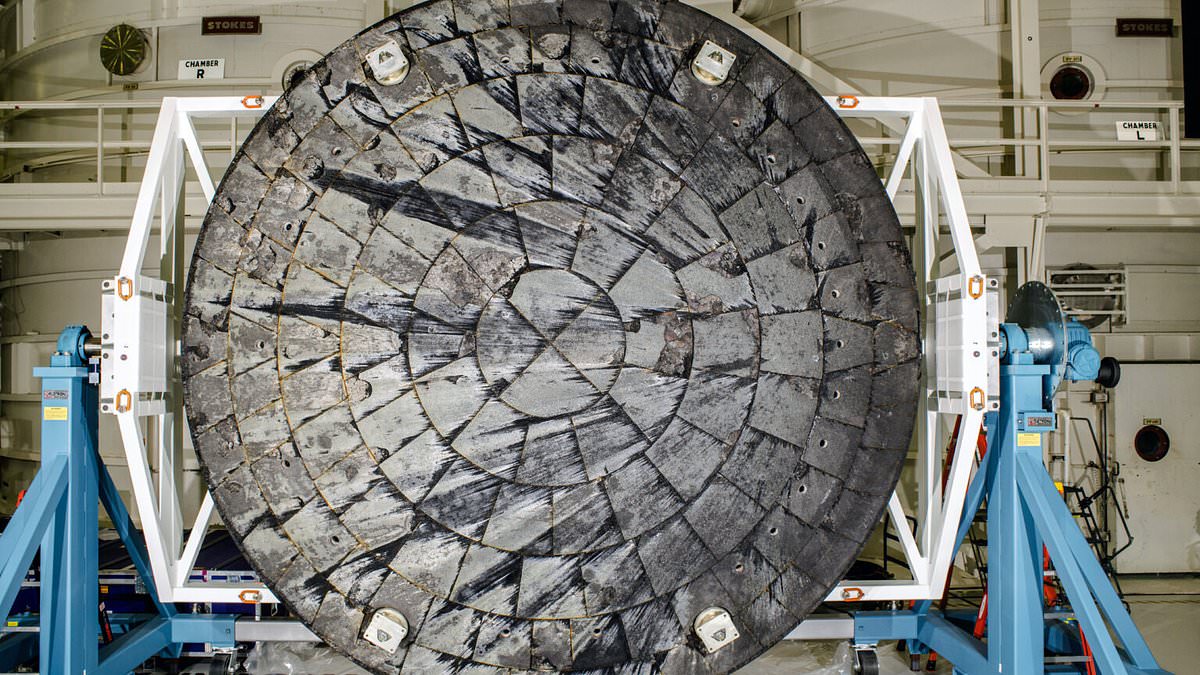
After surviving the most intense heat of re–entry, two drogue parachutes will deploy to slow Orion to about 300mph.Moments later, additional parachutes will release to further reduce the capsule's speed to under 20 miles per hour before it splashes down in the Pacific Ocean at 1:07am BST.NASA officials have warned there is effectively 'no plan B' if the heat shield fails during re–entry, which is widely considered the most perilous phase of the journey.At a press conference this week, NASA administrator Jared Isaacman said: 'In terms of what keeps me up at night, my blood pressure will be elevated until they're under parachutes in the water.'There is no plan B there. That is the thermal protection system. The heat shield has to work.'To make things even more nerve–wracking, the uncrewed Orion spacecraft used in the first Artemis mission sustained extensive damage to its heat shield.NASA's investigation found that Artemis I lost chunks of material in more than 100 locations, and some large bolts in the heat shield had even melted because of the soaring temperatures.Engineers determined that gases which should have been vented harmlessly were trapped inside the material, creating cracks which caused large chunks of the heat shield to break away. As the Artemis II mission begins its return journey to Earth, experts have raised concerns over the safety of the Orion crew capsule's heat shield. Pictured: The heat shield from the uncrewed Artemis I test Artemis II crew members: Mission Specialist Christina Koch (L), Mission Specialist Jeremy Hansen (top), Commander Reid Wiseman (R), and Pilot Victor Glover (bottom)NASA's grand finale: Key timings 12:33am: Crew module and service module separation12:37am: Capsule fires engines12:53am: Orion enters Earth's atmosphereParachutes deploy1:07am: Splashdown in sea off San DiegoAll timings BST on Saturday To address the issue, NASA has planned a steeper re–entry trajectory, pushing Orion through the atmosphere faster and reducing the amount of time it is exposed to high temperatures.According to its calculations, this should ensure that the heat shield does not crack as much.The time between re–entering the Earth's atmosphere and landing in the Pacific Ocean off the coast of San Diego will be about 13 minutes.'It's going to happen pretty quick,' mission flight director Rick Henfling said.'It's very dynamic. Similarly to the launch environment, there's not a lot of time to react.'Currently, the forecast off the Southern California coast looks mostly favourable for the splashdown, with conditions expected to be relatively calm. The navy's USS John P Murtha is en route to meet the capsule when it lands.The last time NASA sent astronauts to the Moon was as part of the Apollo 17 mission in 1972.This 'test flight' has been a resounding success so far – with the only major issue being the on–board toilet, which has been on–and–off limits to the crew since last week's launch, prompting them to rely on a back–up system. Uneven heating of the heat shield could cause parts of the Orion crew capsule (pictured) to reach dangerous temperatures This image, titled 'Earthset', was taken from the far side of the moon and shows the Earth dipping beyond the lunar horizon
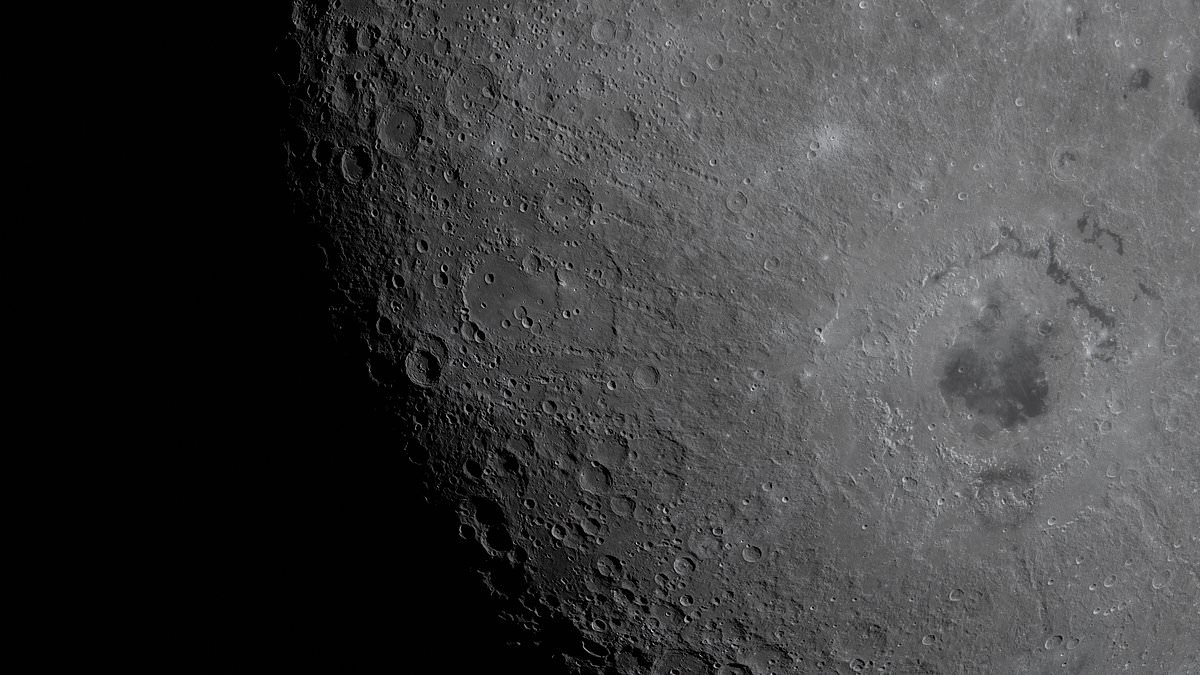
Some of the incredible photographs captured by the astronauts during their flyby include 'Earthset' – showing our home planet setting over the lunar surface.As they sped closer to home, the Artemis II astronauts said they have barely started processing the extraordinary experience they shared.'Human minds should not go through what these just went through,' mission commander Reid Wiseman said during a press conference from space.'It is a true gift. And we have a lot that we just need to think about and journal and write, and then we'll get the full feeling of what we just went through.'Pilot Victor Glover added: 'I haven't even begun to process what we've been through. We've still got two more days, and riding a fireball through the atmosphere is profound as well.'I'm going to be thinking about and talking about all of these things for the rest of my life.'NASA is seeking to return a crew to the moon by 2028, before China does in about 2030.Artemis II: Key facts Launch date: April 1Mission objective: To complete a lunar flyby, passing the 'dark side' of the moon and test systems for a future lunar landing.Total distance to travel: 620,000 miles (one million km)Mission duration: 10 days Estimated total cost: $44billion (£32.5billion)NASA Space Launch System rocket: $23.8billion (£17.6billion)Orion deep–space spacecraft: $20.4billion (£15billion)Crew: Commander Reid WisemanPilot Victor GloverMission Specialist Christina KochMission Specialist Jeremy HansenMission Stages:Launch from Kennedy Space Centre Launch Pad 39BManoeuvre in orbit to raise the perigee using the Cryogenic Propulsion StageBurn to raise apogee using the Cryogenic Propulsion StageDetach from Cryogenic Propulsion Stage and perform translunar injectionFly to the moon over four daysComplete lunar flyby at a maximum altitude of 5,523 miles (8,889 km) above the moon's surfaceReturn to Earth over four daysSeparate the crew module from the European Service Module and the crew module adapterSplashdown in the Pacific Ocean