Freudenberg exits battery and fuel cell systems business
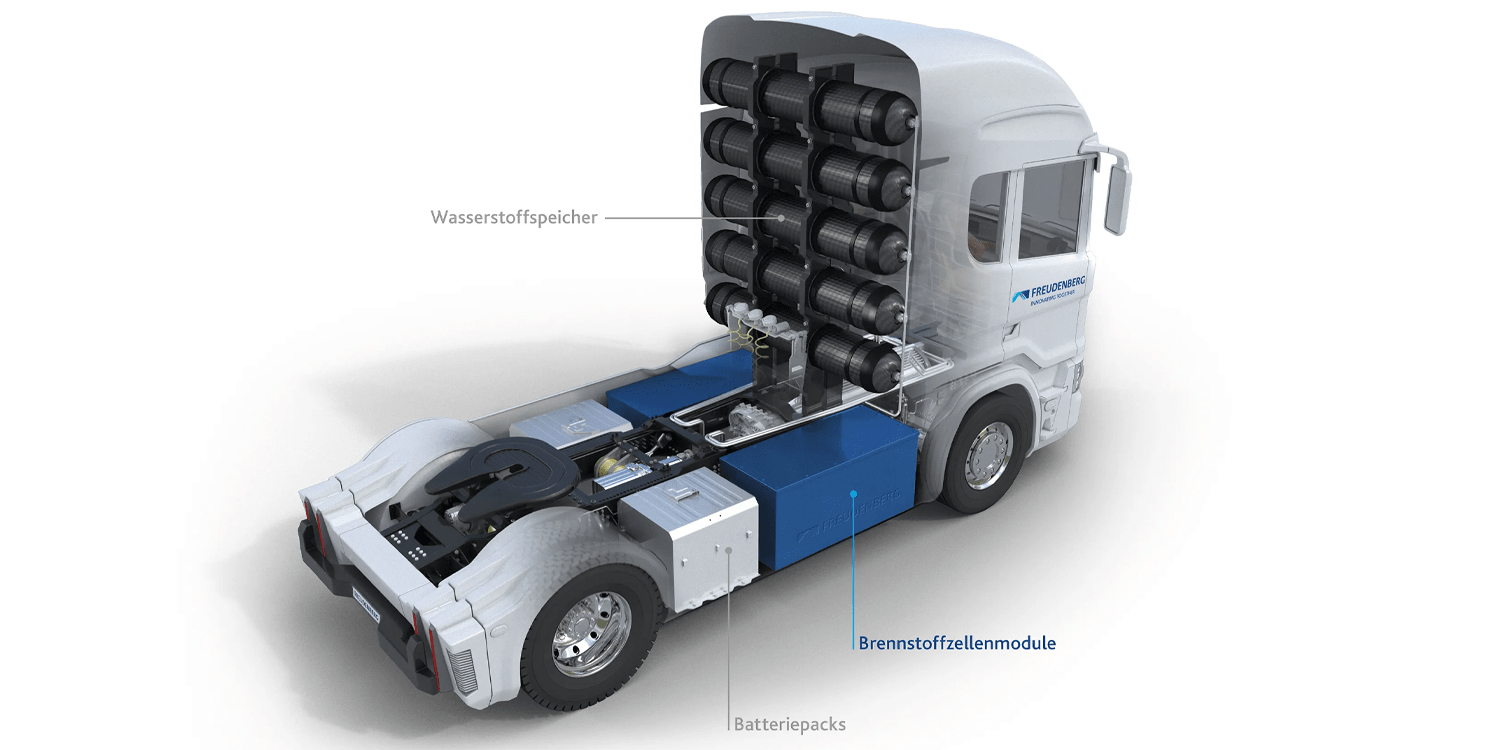
For years, Freudenberg e-Power Systems (FEPS) was one of the local providers of battery and fuel cell systems for heavy-duty applications. As recently as mid-2025, FEPS announced a new battery system for maritime applications: a solution named XWAVE, designed specifically for battery-electric and hybrid-electric ships. The business unit was active in numerous projects and consortia.For example, it collaborated with ZF to develop fuel cell systems for heavy-duty trucks. In the earlier HyFleet project, the company worked with Flixbus on a fuel cell powertrain for new long-distance bus platforms.However, this chapter has now come to an end. Freudenberg dissolved FEPS at the turn of the year, the company announced alongside its 2025 financial results. As a result, it will no longer develop or market battery cells, modules, systems or complete fuel cell systems. Only the hydrogen components business will remain, integrated into the Freudenberg Sealing Technologies unit. CEO Claus Möhlenkamp told the German newspaper Handelsblatt: “Ultimately, we decided to discontinue the business involving system integration and modules for fuel cells and batteries. However, we will continue in the components business.”Möhlenkamp further clarified: “We produced the battery systems in the USA. That has been discontinued. The hydrogen business was based in Germany. We have also closed this, except for the components division.” Around 600 employees were affected by the measure, primarily in the US. It is worth noting that as recently as the fourth quarter of 2023, Freudenberg opened a new battery laboratory in Michigan.The US market was reportedly one of the major challenges. Freudenberg described this in its annual report as follows:“The market for batteries and fuel cells in the United States developed much more slowly than expected. The difficulties can be traced to weak demand in the core applications, the lack of infrastructure, especially in the hydrogen segment, high costs and political and regulatory uncertainties. They were joined by global competitive pressures and limited opportunities for scaling, which especially complicated the systems business economically.”Beyond the US, the global market environment in 2025 was characterised by economic uncertainties, geopolitical tensions, and increased exchange rate volatility. “In several core industries – including automotive and machine manufacturing – demand was weak or in decline, especially in Europe and North America,” the annual report stated.As Möhlenkamp further explained to Handelsblatt, 70 positions will remain in Munich from the entire discontinued division.“There, we are leveraging our expertise for a hydrogen competence centre. However, the focus will shift more towards electrolysis, or hydrogen production,” said the Freudenberg CEO. “There is potential to rebuild jobs there. However, I see this more as a ten-year perspective rather than a three-year one. The fuel cell technology is mature, but the market is not yet ready.”Just six months ago, the FEPS division employed around 800 people. With approximately 600 jobs now cut and 70 positions remaining, it is likely that redundancies had already taken place earlier. According to its annual report, the Freudenberg Group employed 50,968 people worldwide across around 60 countries as of 31 December 2025. The previous year, the figure was 52,104. A significant portion of the lost positions is linked to the closure of FEPS.The Freudenberg Group generally generates its revenue across diverse business segments. The corporation is best known for its sealing and vibration control technology, nonwovens and filtration, speciality chemicals, medical technology products, and cleaning technologies. For now, Freudenberg will only continue its e-mobility solutions business in a limited capacity.freudenberg.com, handelsblatt.com (in German)