Wearables Are Getting Very Messy
Wearables are an exciting space right now. You’ve got all sorts of smart rings, fitness trackers, smart glasses, weird, useless pins stuffed with AI—you name it. You also have, as a result of all that captivating innovation, quite a few lawsuits.
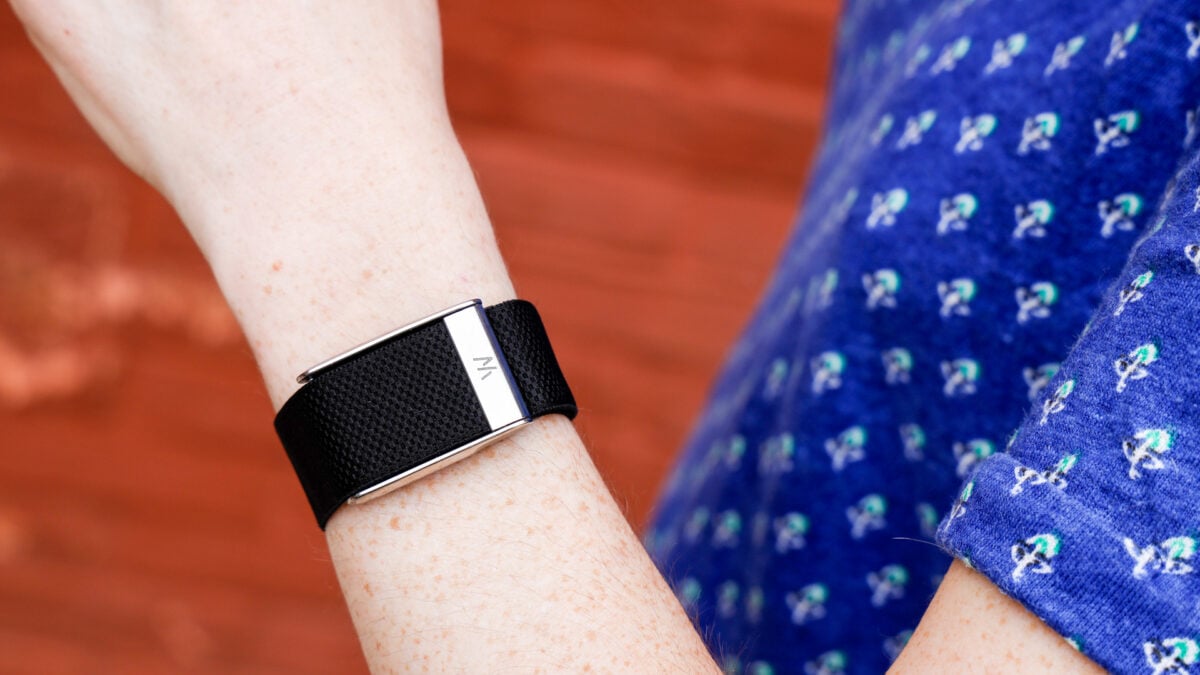
Most recently on that litigious side of things is a lawsuit from screenless health tracker company Whoop, which is suing the maker of a health app called Bevel, alleging that it’s copying core parts of Whoop’s brand. Below is a video of Bevel CEO, Grey Nguyen, talking about the lawsuit. Obviously, the details are a whole can of legal worms, but the suit centers on something called “trade dress,” which is legal terminology that refers to the way a product looks and feels—it’s that je ne sais quoi that Whoop claims Bevel is copying. Bevel, for the record, doesn’t make hardware like Whoop, but it does offer an app that’s meant to crunch the data from health wearables and provide insights on sleep, exercise, stress, and more. While Bevel doesn’t integrate with Whoop, it does use data from the Apple Health app, where data from Whoop’s band is stored. There are a lot of ways you could look at the lawsuit, but one thing is abundantly clear, and that’s the fact that Whoop (which just announced that it raised $575 million in capital this week) isn’t exactly pumped about its newfound competition—and it’s not just Bevel ruffling its feathers. In October, Whoop also sued Polar, which makes its own version of screenless fitness wearables. The complaints, as you might expect, are similar to those made against Bevel. Whoop alleges that the Polar Loop copies key parts of Whoop’s design and that the hardware is tantamount to patent infringement.
The Polar Loop, for the record, is similar to Whoop in that it tracks a lot of the same metrics, looks similar, and is also connected to an app. To make matters worse for Whoop, it’s also cheaper and doesn’t require a monthly subscription, making it an enticing competitor in the space if you’re looking to save some money and don’t mind going with a lesser-known brand.
Whether either of Whoop’s competitors is actually infringing on patents is something for a judge to decide, but for consumers, the immediate results might not be great. Think about it, if you’re a health-tracking startup looking to carve out a niche in the space, do you really want to rush ahead knowing damn well that Whoop is waiting there with a team of lawyers? Maybe you do, if you’ve got the resources and grit, but I’m going to assume that startups operating in this space will think twice with the scent of litigation in the air. Then there’s the potential fallout from lawsuits to consider. What if the court determines that companies like Polar and Bevel did infringe on Whoop’s patents? That could mean both of those brands end up either having to gut their products or drastically change them in a way that defeats the purpose. These are hypotheticals, of course, but in the pantheon of outcomes stemming from a lawsuit, they’re a real possibility.
Health wearables are only a part of the equation, too. Similar lawsuits have bubbled up in the smart glasses space, though in this case, it’s not a big name pointing the finger at a little guy; it’s everyone pointing the finger at Meta. Mark Zuckerberg’s efforts in the smart glasses space have already drawn the ire of companies claiming Meta stole their ideas to make various aspects of its Ray-Ban-branded smart glasses. While Solos, a competing smart glasses company, is alleging that Meta stole parts of its smart glasses technology, including audio and processing, to create the Ray-Ban Meta AI glasses, a company called Perceptix Technologies is alleging that Meta is infringing on its patents around electromyography (EMG) devices. For context, Meta’s Neural Band, the muscle-reading wristband that can be used to control the Meta Ray-Ban Display with finger/hand motions, uses EMG to do so. Perceptix Technologies holds patents on similar EMG devices.
Needless to say, there’s a lot of finger-pointing happening in the wearable space right now, and it’s not just people trying to get their increasingly unwelcome smart glasses to take a picture. Lawsuits like this typically don’t shake out overnight—patent litigation can take several years, especially at a high level. The consequences could be significant, though, when/if they do arrive. While Meta likely won’t stop selling smart glasses regardless of whether it loses in court, companies like Bevel and Polar may not have the same immunity. Whatever happens, I wouldn’t expect wearables to get any less spicy soon; for companies of scale, lawsuits are a small price to pay when the prospect of cornering a new market is on the table.