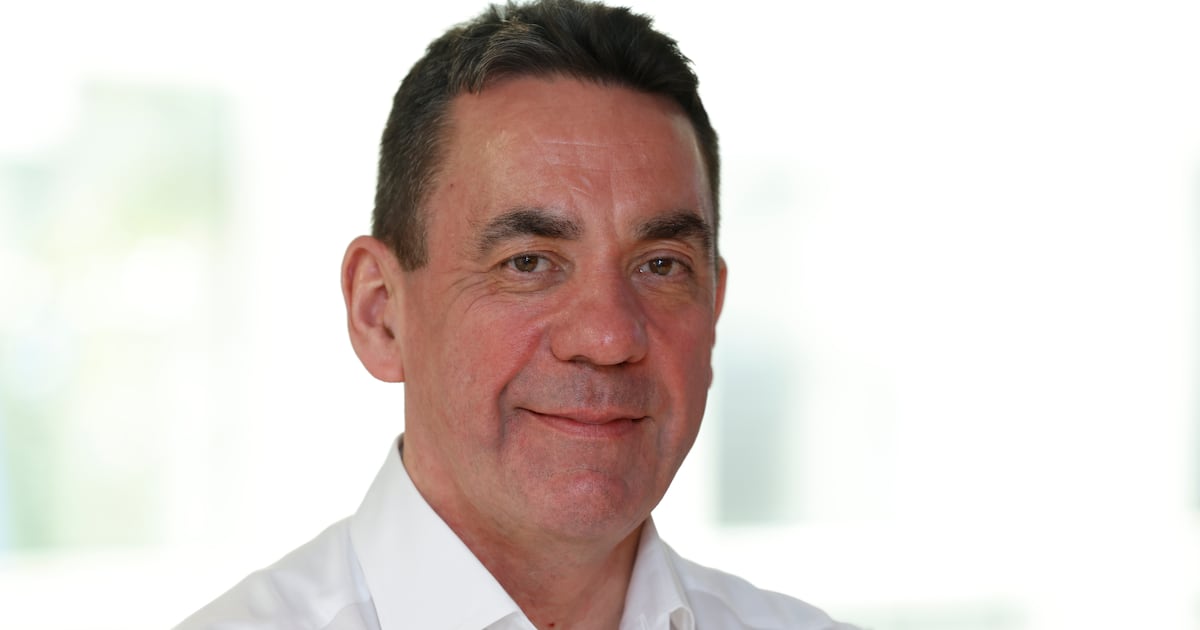
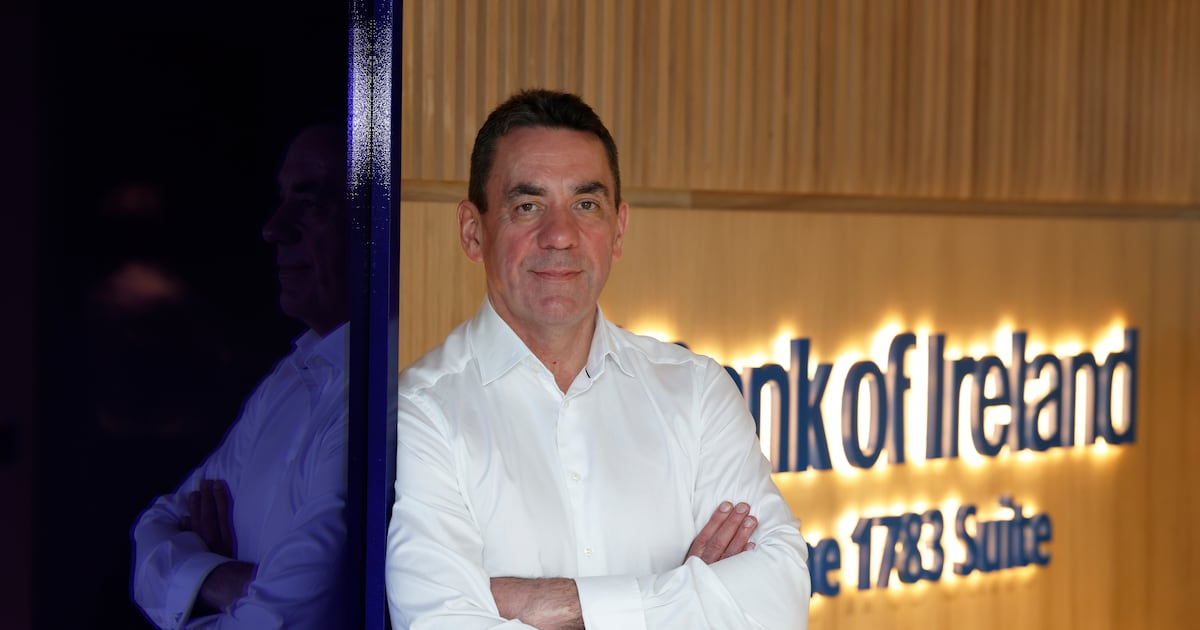
Bank of Ireland chief Myles O’Grady: ‘We are seeing, on a grand scale, intergenerational wealth’
Myles O’Grady is taking another run at a target that defeated his two predecessors. The Bank of Ireland chief executive’s strategy update, unveiled last month, contains a target for the group to grow its loan book by 4 per cent a year out to 2028. This would bring the portfolio, according to the bank’s investor presentation, to €90 billion. The bank has been here before. Crisis-era boss Richie Boucher, who oversaw a seismic reduction of the group’s unsustainable €136 billion peak loan book in 2008, and his successor, Francesca McDonagh, each had – and quietly dropped – an ambition to rebuild the group’s portfolio to €90 billion. Their efforts had been hampered by Irish households and small businesses, bruised by the crash, consistently repaying borrowings at a faster pace than taking on new debt, Brexit, slow rates of housebuilding and the Covid pandemic. READ MOREDAA retail arm, ARI, takes first step into US marketWhy do politicians want AI to go faster?Should you live in employer-provided or subsidised housing? We’re not experiencing a 1970s-style oil price shock just yet, but things are getting worseBut having grown the loan book from a low point of €72 billion in 2022 – driven by the purchase of loans from KBC Bank Ireland as well as Irish demand for credit reaching an inflection point – to €82.5 billion at the end of last year, O’Grady is happy to revisit a previously elusive target. “We have said that our loan book is going to grow by about 4 per cent per annum, and I have a high degree of confidence in this,” O’Grady, who has led the group since late 2022, tells The Irish Times. But after restructuring and shrinking the group’s UK business, which has fallen from 31 per cent of total loans to 26 per cent under O’Grady, and deciding in February to wind down its US leveraged acquisition portfolio and close its offices there, the heavy lifting will have to be done by the bank’s domestic business. “The Irish franchise has done incredibly well. This is a loan book that has grown by 33 per cent over the last three years,” he says. He has good reason for confidence, highlighting that his economists currently see the Irish economy growing an average of 3 per cent per annum over the next three years (notwithstanding the effects of the Middle East conflict), growing house completions, the Government’s strong finances and plans for €275 billion to be invested over the next decade under the National Development Plan.Business sentiment has also picked up noticeably in recent years. “Sectors that have done particularly well for us include manufacturing, retail, and engineering. These are areas where the book has grown,” he says, adding that the bank has also seen a switch from businesses looking for working capital for day-to-day operations to taking on asset finance. A month after the US and Israel first attacked Iran, O’Grady says the bank is not seeing any signs of an impact on loan demand – or other warning indicators among customers at a time of crisis. But an extended period of high oil prices poses the risk “of a global recession”, he acknowledges. “We know that elevated spikes in energy prices can result in an economic downturn, but that’s not our base case today. It’s certainly a risk that we need to keep a very careful eye on but all of the data that is emerging does not suggest that we are in that situation.“But, of course, if this conflict in the Middle East escalates or if it is protracted, then that risk is real.” Wealth ManagementO’Grady is also targeting 3 per cent and 10 per cent compound annual growth in deposits and assets under management, respectively, over the next three years. Bank of Ireland increased its assets under management (AUM) by 75 per cent to €39 billion in 2022 after McDonagh pounced on an opportunity to buy back Davy, when the stockbroking and wealth-management firm was forced to put itself up for sale in the wake of a bond-trade scandal. Since then, assets under management have grown to €60 billion, €27 billion of which is in its New Ireland life and pensions unit. O’Grady is aiming for the total figure to grow to €75 billion in 2028 and hit €100 billion two years later. The opportunity is significant. Total net Irish household wealth has grown by 120 per cent to €1.34 trillion between the start of 2009, immediately after the financial crash, and the end of last September, Central Bank of Ireland figures show.But while average households’ wealth has grown by 8 per cent a year over the past 11 years, faster than any other country in Europe, they remain significantly underinvested in traditional financial investments, at only 5.5 per cent of total assets, according to a report published last year by Fordel, a high-net-worth wealth management firm.Meanwhile, some €295 billion in wealth accumulated by “retired households” in the State is set to be transferred to family and others over the next couple of decades, Goodbody estimated in a report last year.“Ireland is a relatively young country and, for the first time, we are seeing, on a grand scale, intergenerational wealth occurring,” O’Grady says. But it’s the mass affluent market that is seen as the biggest prize for the bank and rival AIB, which is further behind the curve. “We’ve got two and a half million retail customers in Ireland, comfortably. About 150,000 of those fit, from a data perspective, the profile of customers who will be amenable to a wealth offering,” he says. “We’re making those connections, those referrals, and it’s for that reason that we expect AUM to have exponential growth.”Bank of Ireland expects its fee income to grow by 7 per cent a year out to 2028 – more than twice the pace of the Irish economy. Meanwhile, Minister for Finance Simon Harris confirmed on Tuesday that the Government plans to introduce a tax-efficient savings scheme to encourage people to invest some of their money. The final details will be in the budget.Not surprisingly, the bank is “very supportive” of the initiative, which is in line with a broader European Commission push for member states to roll out consumer-friendly savings accounts. “I think a version of an [individual savings account] is a no-regrets decision and a no-regrets product and service to get into the market,” O’Grady says. O’Grady has been emboldened in setting a second strategy update by the bank having consistently beaten key financial targets set in the previous plan. These include goals for underlying return on tangible equity, a key measure of profitability, and keeping running costs below 50 per cent of income. However, much of this performance was driven by a sharp rise in global interest rates, as central banks increased borrowing costs to combat surging inflation.At one stage, in early 2024, Bank of Ireland had €28 billion of surplus cash stashed away with the Central Bank of Ireland, earning the European Central Bank’s (ECB) then 4 per cent deposit rate. While the bank only passed on a portion of ECB rate hikes to mortgage borrowers during the period of rates tightening, it benefitted enormously as customers kept most of their money in current and on-demand deposit accounts earning little or nothing, even as the banks offered headline savings rates for certain deposit accounts of up to 3 per cent. The bank has also generated significant profits by investing surplus deposits in long-term bonds – or what is known in banking jargon as a structural hedge. This has helped ease the impact of a sharp pullback in ECB rates since mid-2024. Bank of Ireland has paid and committed to returning a total of €3.6 billion to shareholders by way of dividends and share buybacks over the past three years. While O’Grady forecasts that the bank will generate a further €3.7 billion of net capital over the next three years, RBC Capital analyst Benjamin Toms, for one, estimates it will return €4.6 billion of surplus money to shareholders for the period, as the bank also lowers its existing surplus reserves. Banking careerRaised in the south Dublin suburb of Booterstown, O’Grady began his career in 1990 as an accountant in AIB’s financial control unit before moving to London in 1995 to join Dresdner Kleinwort Benson. In 1999, he moved to Citibank in the UK, where he worked on relocating operations to lower-cost centres, with Dublin’s IFSC benefiting significantly.He returned to Ireland in 2002 as head of finance at Bord Gáis Energy and rejoined AIB in 2006, just as early signs of the banking crisis began to emerge. From 2013, he served as director of finance and investor relations, helping guide AIB back to profitability and through its 2017 initial public offering. O’Grady’s ventures outside of banking have been short-lived. Having left AIB in 2018 to join housebuilder DRes ahead of a planned flotation that was later shelved due to market turbulence, he was subsequently lured into Bank of Ireland in 2019 and quickly rose to the position of chief financial officer. After briefly leaving the bank in 2022 to join Musgrave Group, the food wholesaler and retailer, he was back with the bank by the end of the year, as CEO, after McDonagh exited to become a turnaround senior executive with Credit Suisse. Motor finance debacleO’Grady may have been away when the bank was hit by a record €100.5 million Central Bank fine for its role in the State’s tracker mortgage scandal. But he’s found himself having to deal with another customer debacle. The bank’s UK motor finance unit became embroiled in early 2024 in an industry-wide Financial Conduct Authority (FCA) investigation into the use of discretionary commission arrangements between car dealers and lenders. Following the hearing of test cases that went all the way to the supreme court in London last year, the FCA signed off on the final details of a customer redress scheme on Monday. Bank of Ireland, which has a 2 per cent share of the UK motor loans market, had set aside €429 million by the end of last year for customer compensation and related costs. It eclipses the €340 million costs the bank stomached for its role in the tracker mortgage scandal – the biggest overcharging affair in Irish banking history. Analysts, including Denis McGoldrick at Goodbody Stockbrokers, reckon that the bank’s UK provision is adequate – and may even prove to be too much – after the FCA lowered its estimated cost of the industry compensation scheme by 17 per cent to £9.1 billion (€10.5 billion). There is a high likelihood that the FCA scheme will be challenged in the courts. The bank said in a statement on Tuesday that it was “assessing the potential financial impact of the final scheme and is committed to achieving a fair outcome for customers, ensuring appropriate redress is provided where loss has occurred”.US withdrawalO’Grady insists that the bank’s decision in February to pull out of its US leveraged acquisitions finance business and close its New York office – where it has had a presence for 50 years, save for a brief period in the late 1990s – and two other US locations was not a kneejerk one. The loan portfolio stood at €2.5 billion a few years ago, but had declined to €1.2 billion by the end of last year. It will be wound down over three years. “That business model has changed. These deals are typically syndicated deals with a number of parties involved, and what we experienced over the last number of years was a shift in risk appetite that we were not comfortable with,” he says. “We will run that book down in an orderly way over the next three years.”This has been driven by more private credit funds – rather than banks – participating in the leveraged acquisition finance market. A number of US credit funds have run into issues in the past six months, hit by a spike in loan defaults, collateral markdowns and a spike in investors looking to exit. O’Grady said the group is happy to continue in the European leverage acquisition finance (LAF) market, which is dominated by banks and offers greater opportunities to generate fees. The bank’s European LAF book stood at €2.8 billion in December. Technology spendBank of Ireland invested €1.6 billion over the past three years mainly on developing its information technology It covered things like modernising its core platforms, investing in cyber and fraud protection, building a new business lending platform, and developing a new mobile phone app, which is currently being tested with “friends and family” and is on course to be launched by the end of June, according to O’Grady. “We will invest about the same over the next three years,” he says, adding that areas of focus will include the group’s wealth business and Northern Ireland operations, as well as greater use of artificial intelligence. O’Grady is keeping a close eye on activity on the new Zippay payments service launched last month by the three domestic banks as they seek to take on Revolut, the market leader in this space. “My objective is to ensure high engagement from our customers that results in the greater quantum of balance of staying within Bank of Ireland,” he says. “We’ll certainly be keeping a very close eye on the data over the next few months.” Asked whether he’s concerned about Revolut’s plans to enter the Irish mortgage market, where Bank of Ireland is the main player with a 40 per cent share, O’Grady insists he’s “very comfortable” about the group’s ability to compete. “We came out of the last strategic cycle with a very strong franchise, whether that’s in mortgages, current and deposit accounts, or the wealth business. My objective is to ensure that we deepen and expand that franchise. And I’m very confident that we can do that. But we’re certainly not complacent.”CVName: Myles O’Grady.Job: Bank of Ireland chief executive.Family: Married to Rupee and their son’s name is Rian.Hobbies: Time with family and friends, watching Rian play a range of sports. Reading, gym, and swimming.Something we might expect: He’s just back from an investor roadshow, meeting about two-thirds of their shareholder register to discuss the strategy update.Something that might surprise: He has been trying to learn Punjabi for years, as Rupee’s family is originally from India.