Middle East crisis live: Countries ‘like UK’ should go to strait of Hormuz and ‘just take fuel’, says Trump
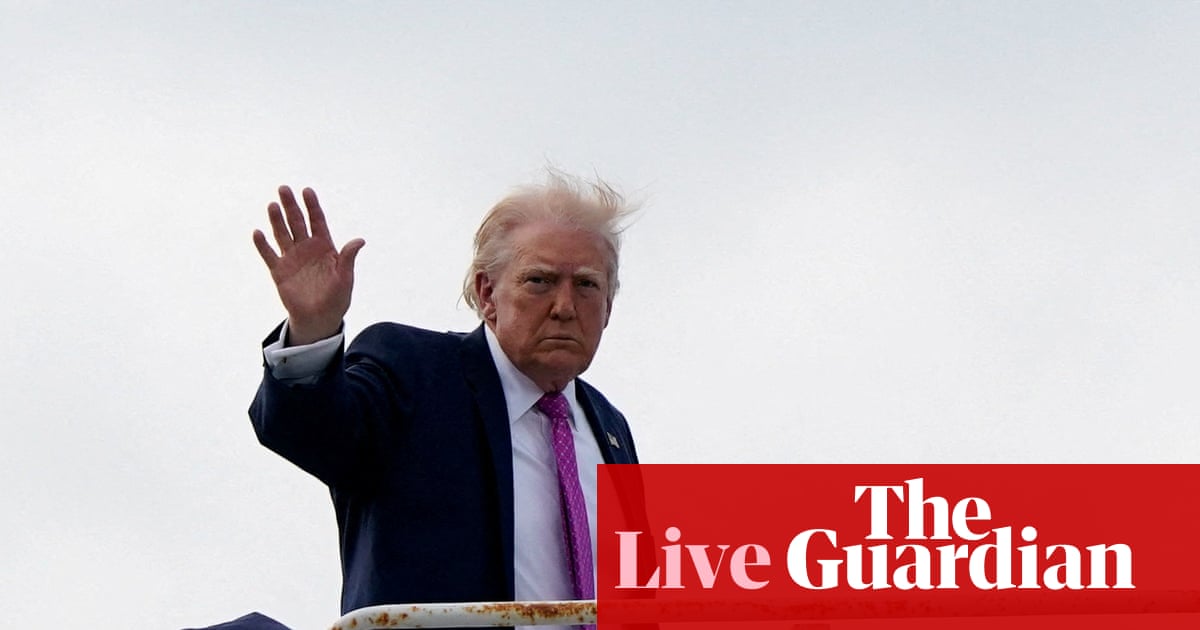
Countries like the UK should go to strait of Hormuz and 'just take' fuel, Trump saysIn a post on Truth Social, the US president, Donald Trump, has suggested that countries like the UK should build up the “courage” to go to the strait of Hormuz and “just take” fuel.“You’ll have to start learning how to fight for yourself, the USA won’t be there to help you anymore, just like you weren’t there for us,” Trump said as he criticised countries who “refused to get involved in the decapitation of Iran”.He said these countries could buy “jet fuel” from the US, where there is “plenty”, if they are running low on supplies.“Iran has been, essentially, decimated. The hard part is done. Go get your own oil!” Trump concluded his social media post by saying. More details soon…ShareUpdated at 13.24 CESTKey eventsShow key events onlyPlease turn on JavaScript to use this featureDonald Trump seems to still be bitter at European countries who earlier this month ruled out sending warships to the strait of Hormuz, despite him warning that Nato faced “a very bad future” if members failed to help reopen the vital waterway.He has reserved particular criticism for the UK’s prime minister, Keir Starmer, whom he once enjoyed warm relations with, calling him “no Churchill” and saying the so-called special relationship is not what it was after Starmer refused to permit the use of UK bases for the initial US-Israel strikes on Iran.In an unusual break from London sticking closely to Washington on foreign policy issues, Starmer has insisted the UK would not be “drawn into the wider war”. In a strong rebuke of the US-Israeli assault on Iran, widely seen to have been launched illegally, he said Britain did not believe in “regime change from the skies”.However, with the war continuing to escalate, the UK has confirmed it is authorising the use of British military bases to strike Iranian missile launchers that are targeting commercial ships in the strait of Hormuz, as my colleagues write here. Previously, UK bases were only being used to strike Iranian sites targeting British allies and interests in Gulf states.View image in fullscreenKeir Starmer has been extremely careful not to explicitly criticise Donald Trump, who has framed the British prime minister as weak for not giving the US more support over its war on Iran. Photograph: Evan Vucci/APShareUpdated at 13.45 CESTCountries like the UK should go to strait of Hormuz and 'just take' fuel, Trump saysIn a post on Truth Social, the US president, Donald Trump, has suggested that countries like the UK should build up the “courage” to go to the strait of Hormuz and “just take” fuel.“You’ll have to start learning how to fight for yourself, the USA won’t be there to help you anymore, just like you weren’t there for us,” Trump said as he criticised countries who “refused to get involved in the decapitation of Iran”.He said these countries could buy “jet fuel” from the US, where there is “plenty”, if they are running low on supplies.“Iran has been, essentially, decimated. The hard part is done. Go get your own oil!” Trump concluded his social media post by saying. More details soon…ShareUpdated at 13.24 CESTOur graphics team have produced a useful map showing the location of the Kuwaiti oil tanker – Al-Salmi – hit near Dubai, reportedly by an Iranian strike, on Tuesday (see opening summary for more details):Al-Salmi attacked.Kuwait Petroleum Corporation said the Al-Salmi was struck in an Iranian attack while anchored at Dubai port in the UAE, causing a fire onboard and other damage to the vessel.ShareUpdated at 13.17 CESTMalaysian tankers permitted to pass through the strait of Hormuz will be exempt from paying any tolls imposed by Iran, Malaysia’s transport minister, Anthony Loke, said on Tuesday.Malaysia said over the weekend that the tankers – owned by petroleum giant Petronas, Sapura Energy and maritime firm MISC – were awaiting clearance to safely sail through the narrow waterway, which has effectively been closed by Tehran as leverage in the war, started by the US and Israel on 28 February.“No, this is a complete no... The Iranian ambassador (to Malaysia) has mentioned this, no toll being imposed on Malaysian vessels,” Loke told reporters earlier today.“We are a friendly party. We have a good diplomatic relationship with the Iranian government.”View image in fullscreenShips sail through the Arabian Gulf toward the Strait of Hormuz on 23 March 2026. Photograph: APLoke said it would take time for Malaysian vessels to pass through the strait as “there are many ships that are stranded and anchored there”.Iran has allowed a trickle of ships through from nations it deems “non-hostile”, such as Thailand, China, Pakistan and India.An Iranian parliamentary committee yesterday approved a proposal to collect a toll on vessels travelling through the strait of Hormuz but said ships from the US, Israel and countries that imposed sanctions on Iran would not be permitted (see post at 08.35 for more details).ShareIn an earlier post we brought you pictures following US-Israeli airstrikes on the Husseiniya Azam – a key Shia religious site used for ceremonies and gatherings - in the Iranian city of Zanjan, with damage reportedly caused to parts of the dome and minarets. We can now bring you some more information.State television said the site “was damaged following the enemy’s morning attack on the Ferdowsi street” in Zanjan, an industrial provincial capital located about 200 miles northwest of Tehran.The airstrikes killed at least four people and injured 26 others in the area, according ISNA news agency, citing Ali Sadeghi, a provincial deputy governor.ShareUpdated at 12.31 CESTDubai’s media office said in a social media post that authorities are responding to an “incident caused by debris from a successful interception that fell on residential houses in southern Dubai, resulting in property damage and minor injuries to four Asian nationals”.ShareIsrael prepared to keep attacking Iran for 'weeks to come', military spokesperson saysWe are getting some comments through from the Reuters news agency citing an Israeli military spokesperson saying Israel is prepared for “weeks” more of fighting in its war on Iran, which began on 28 February when joint US-Israeli airstrikes killed the late Iranian supreme leader, Ali Khamenei.Lt Col Nadav Shoshani told reporters the decision is ultimately up to political leaders, but added: “we are prepared to keep operating for weeks to come. We have the targets for that, the munition for that, the manpower for that, and it’s up to the leadership to decide”.His comments come after the Israeli prime minister, Benjamin Netanyahu, said the assault on Iran was “definitely beyond the halfway point”, later clarifying he meant in terms of “missions” and “not necessarily in terms of time”.Citing reports, Amnesty International said that as of 27 March at least 1,900 people, including at least 100 Minab schoolchildren, have been killed in Iran as a result of Israeli and US attacks.ShareLorenzo TondoThe legislation makes the death penalty the default punishment for Palestinians in the Israeli-occupied West Bank found guilty of intentionally carrying out deadly attacks deemed acts of terrorism by a military court.According to the bill, those sentenced to death will be held in a separate facility with no visits except for from authorised personnel, with legal consultations conducted only by video link. Executions will be carried out within 90 days of sentencing.Israel has rarely used the death penalty, applying it only in exceptional cases. The Nazi war criminal Adolf Eichmann was the last person to be executed, in 1962.Israel approves death penalty for Palestinians convicted of carrying out fatal attacks – videoThe measure will allow courts to impose the death penalty without a request from prosecutors and without requiring unanimity, instead permitting a simple majority decision. Military courts in the occupied West Bank will also be empowered to hand down death sentences, with the defence minister able to submit an opinion.For Palestinians under occupation, the bill closes off avenues for appeal or clemency, while prisoners tried inside Israel could have their sentences commuted to life imprisonment. You can read more here:ShareThe foreign ministers of the UK, Germany, France and Italy have expressed “deep concern” over an Israeli bill (now passed into law) that would impose the death penalty on Palestinian people convicted of fatal terror attacks.In a joint statement, shared on X by the British foreign secretary, Yvette Cooper, this morning, they said:
double quotation markWe, the foreign ministers of Germany, France, Italy and the United Kingdom, express our deep concern about a bill that would significantly expand the possibilities to impose the death penalty in Israel and that could be voted into law next week.
We are particularly worried about the de facto discriminatory character of the bill. The adoption of this bill would risk undermining Israel’s commitments with regards to democratic principles.
The death penalty is an inhumane and degrading form of punishment without any deterring effect. This is why we oppose the death penalty, whatever the circumstances around the world. The rejection of the death penalty is a fundamental value that unites us.
We urge the Israeli decision makers in Knesset and government to abandon these plans.
The statement was published a day before the new law passed its final reading in the Knesset – the Israeli parliament - by 62 votes to 48 on Monday. The measure has been condemned as discriminatory by European countries and rights groups.ShareThe internet blackout in Iran has entered its 32nd day, according to internet monitoring group NetBlocks. It said in a post:
double quotation markIran’s internet blackout has entered day 32 with most users cut off from the outside world for over 744 hours.
Extended digital isolation is bringing new challenges for Iranians, from expired domains and accounts to unpatched servers on a degrading national intranet.
Those without access to Starlink or alternative ways to communicate – which are often expensive – are cut off, not only from the outside world but the blackout also severely curtails Iranian’s ability to communicate with each other, making mobilisation, for example, much more difficult.ShareIsrael’s emergency services said this morning that eight people with minor injuries were evacuated to hospitals in the Tel Aviv area, where police reported falling munitions fragments after an alert for incoming Iranian missiles.Six of the injured were treated in the city of Bnei Brak, according to Israel’s Magen David Adom emergency service.View image in fullscreenAn ultra-Orthodox Jewish man assesses the damage inside a house following an Iranian strike over Bnei Brak in central Israel on 31 March, 2026. Photograph: Ilia Yefimovich/AFP/Getty ImagesShareUpdated at 11.18 CESTThe Iranian Red Crescent Society has said its relief teams have been conducting search and rescue operations following a US-Israeli airstrike on the Husseiniya Azam – a key Shia religious site used for ceremonies and gatherings - in the Iranian city of Zanjan this morning. Here are some pictures taken in the aftermath of the attack:View image in fullscreenFollowing this morning’s US Israeli airstrike on Zanjan’s Husseiniya Azam, Red Crescent relief teams are conducting search and rescue operations. Photograph: X / @Iranian_RCSView image in fullscreenRelief teams are looking to rescue injured survivors after the reported US-Israeli attack on Zanjan’s Husseiniya Azam. Photograph: X / @Iranian_RCSShareThe UAE’s defence ministry posted to X about half an hour ago saying that its air defences were intercepting Iranian missile and drone attacks – and said this activity explained the sounds audible across various parts of the country.ShareA US-Israeli attack on the Iranian city of Mahallat last night (at about 11pm local time) killed 11 people and injured 15 others, the Tasnim news agency has cited a deputy security officer as having said.Four residential units were “completely destroyed” in the attack, in which three children were killed, according to the report, which we have not yet been able to independently verify.ShareIranian parliamentary committee approves plan to impose tolls on strait of Hormuz - state mediaIranian state media reported yesterday that an Iranian parliamentary committee had approved a proposal to collect a toll on vessels travelling through the strait of Hormuz.The strait will be closed to ships from the US, Israel and countries that have been involved in sanctioning Iran, according to a Telegram post from the Fars news agency, which said that Iran will have a “sovereign” role in the implementation of the new system.The proposal, approved by Iran’s parliament security committee, would reportedly require agreement from other countries next to the strait. It is not clear how much the toll on vessels will be.The US president, Donald Trump, warned yesterday that if a deal was not struck with Iran – including to reopen the strait of Hormuz shipping lane – US forces would destroy “all of their Electric Generating Plants, Oil Wells and Kharg Island (and possibly all desalinization plants!)”.The strait’s closure has sent global energy prices soaring, including in the US where residents are being hit hard by surging gas prices and farmers face higher fertiliser costs and falling commodity prices.ShareTwo container vessels belonging to the Chinese shipping giant Cosco have successfully passed through the strait of Hormuz as they have exited the Gulf, ship tracking data indicates.The two vessels were the CSCL Indian Ocean and the CSCL Arctic Ocean. They passed close to the Iranian-controlled island of Larak and are bound for Port Klang in Malaysia.Iran has effectively blocked the vital waterway but allowed a trickle of ships through from nations it deems “non-hostile”, such as Thailand, China, Pakistan and India.Strait of Hormuz map. ShareUpdated at 08.59 CEST