Why Is the DOJ Hoarding a Boatload of Bitcoin?
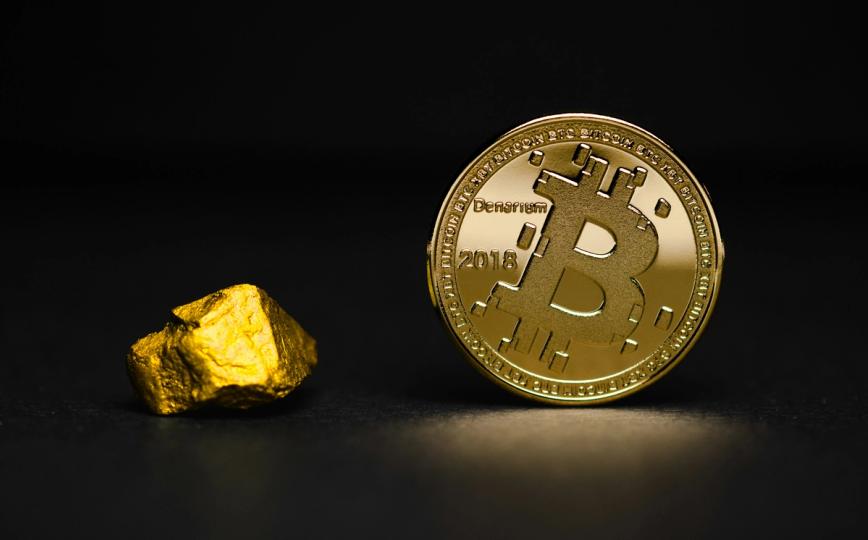
Okay, you can "follow the money" if you wish, but given the many trails of greed and grift cut by this administration through the thickets of the law, you're going to need a posse.For example, in October, the Department of Justice busted the Prince Group, a Cambodian-based organization alleged to havenetted a haul of some $15 billion in Bitcoin. From our old friends at the International Consortium of Investigative Journalism:The news offered a rare glimmer of hope for victims of sophisticated cryptocurrency scams. In part due to the ease of laundering cryptocurrencies, these victims have had a notoriously difficult time recovering their lost life savings or even getting law enforcement to begin tracing such funds. “By dismantling a criminal empire built on forced labor and deception, we are sending a clear message that the United States will use every tool at its disposal to defend victims, recover stolen assets, and bring to justice those who exploit the vulnerable for profit,” U.S. Attorney General Pam Bondi said in a joint statement.Wow. Good job, Pam. You can have a cookie as soon as you work out a plan to disperse the seized funds to the Prince Group's victims. Wait. What?But in the five months since the announcement, questions and frustrations have begun to swirl around the Justice Department’s handling of the historic cache of seized funds. The Justice Department has given little indication of what it plans to do with the 127,271 seized bitcoins, currently worth around $9 billion, as it has swiftly rejected claims on the funds made by attorneys representing hundreds of alleged victims.Daniel Thornburgh and other attorneys representing hundreds of alleged victims of crypto scams say the government is not providing a viable path for returning seized funds to rightful owners. Victims’ advocates and attorneys fear the agency may use the funds to capitalize President Trump’s national Strategic Bitcoin Reserve, a government crypto stockpile advocated by the cryptocurrency industry. This would lead to victims being revictimized by their own government,” said Thornburgh.I can't imagine why anyone would be worried about that.He is part of a growing number of attorneys and victim advocates who are calling for a special victim fund to take over responsibility for the historic sum of seized assets. They argue that this alternative offers a clearer path to victims receiving restitution. The Department of Justice declined to comment on the case.If there's anything about the crypto economy that doesn't reek like dead mackerel on a dock, I have yet to find it. Here we have a massive criminal conspiracy involving a Cambodian crypto mill that gets busted. Nobody wants to talk about where the money went, or where it is now. And it looks like the indictment of the kingpin has some holes in it.The government’s indictment of Chen contains apparent irregularities that are especially striking given the case’s significance. Prosecutors’ evidence against Chen relied in part on photographs alleged to illustrate the Prince Group’s violent methods. ICIJ confirmed that one disturbing photo included in the indictment showing a man bound to an overturned chair appears to have nothing to do with the Prince Group. The exact photo was part of a light-hearted post published on a Mongolian-language website in April of 2020, describing an unusual medical incident. In another case, a man portrayed in the indictment as a victim of the Prince Group told ICIJ in an interview he had never been the victim of organized crime.It doesn't look like any of the victims are going to see any compensation as a result of this bust.Thornburgh told ICIJ that recent conversations with Justice Department lawyers convinced him that the government was committed to denying victim claims, so he booked a trip to Cambodia on a long-shot mission to collect additional evidence linking his cases to the Prince Group. Thornburg said he spent a grueling week in early March interviewing dozens of former workers at the country’s notorious scam compounds, but had little luck finding the documentation to connect his client’s cases to the DOJ’s seized funds. “It was an incredible amount of work to demonstrate what I probably already knew, which was: this was going to be impossible,” Thornburgh said. “Even if I was successful, victims or their lawyers should not have to travel all the way across the world to recover their assets.”A perfect crime.Meanwhile, in the universe of simpler, more straightforward scams, it looks like all of us will be sending crackpot Michael Flynn a million-dollar apology. From ABC News:The settlement is well below the $50 million in damages Flynn initially sought when he first filed the lawsuit in 2023, but will still likely fuel questions as to whether Flynn received a favorable outcome due to his continued vocal support for President Trump.My questions are certainly fueled.A federal judge had previously thrown out Flynn's lawsuit in 2024 following a motion to dismiss the suit filed by the Justice Department during the Biden administration, after ruling that Flynn had failed to meet essential elements showing he was a victim of malicious prosecution. But Flynn's attorneys sought to revive their case after President Trump returned to office, and the department disclosed in a filing last year that it had been engaged in settlement talks with his legal team.Nice to know everyone is getting along so well.A Justice Department spokesperson, in a statement regarding the settlement, said, "Those who instigated the Russia Collusion Hoax and Crossfire Hurricane abused their power to mislead the American people and tarnish the reputations of President Trump and his supporters. Today’s settlement, secured by this Justice Department, is an important step in redressing that historic injustice."Oh, God. Just shut up.