Irish AI start-up targets missed calls and lost revenue in trades
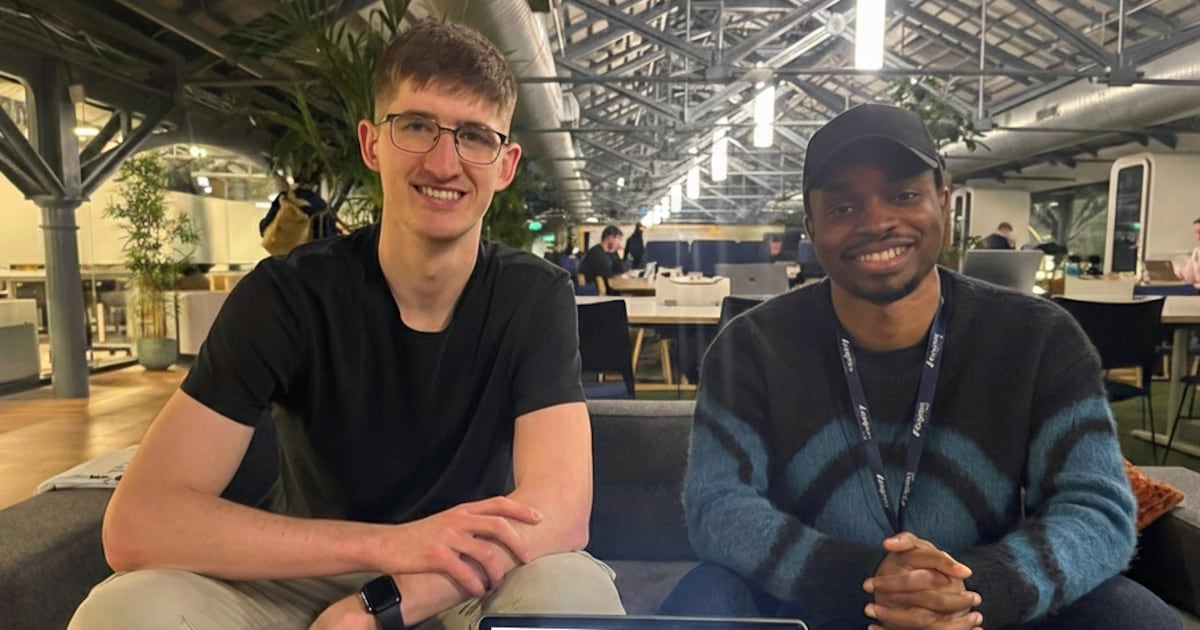
“Before we wrote a single line of code, we joined DSG Electrical contractors and did everything from answering emergency calls at 4am to helping customers when electrical poles collapsed into their garden during storms to booking jobs, chasing updates and handling the chaos that comes with running a busy trades operation. We decided to do this because in order to build for the trades, you need to live their life,” says Adelin Diac, who cofounded CallCrewAI with Emmanuel Karibiye last September.CallCrewAI is an autonomous AI operating system that automates the back office for trades and field services. It wraps around a company’s existing job-management software and automates routine administration and repetitive tasks, leaving staff free to deal with more “value-added” interactions with customers. The system answers customer calls 24/7 and can book jobs and follow up on quotes and invoices. It is trained to recognise problems and escalate emergencies, and it can provide support in more than 60 languages to a range of operators, from electricians, plumbers and pest-control companies to landscapers, heating and solar businesses, and fire, property and security services. In short, it supports any company operating in the field and trying to juggle staff across multiple jobs. Diac and Karibiye met while studying engineering at DCU. However, Diac had always wanted to start his own business and participation in a NDRC founders’ hackathon (with Karibiye) gave him the push he needed to sow the seeds for what has become CallCrewAI. READ MOREFree banking and edgy banter: Monzo raises the stakes for traditional bank customers McGrath wades into politically fraught tax waters Glasgow shows what happens if you open a mega hospital before it is ready: people dieThe Liverpudlian at the heart of the Irish economyDiac didn’t hit on the idea for CallCrewAI out of the blue. From the age of 14 he had worked in a family friend’s construction company and had seen the operational challenges at first hand.“During the hackathon, I shared the inefficiencies I’d noticed from working in construction, and we brainstormed ways to tackle them with today’s technology. Between us, Emmanuel and I combine inside industry knowledge with the technical capability to build scalable AI solutions for the trades,” Diac says.The founders won the hackathon, and their idea evolved from there with a series of iterations based on conversations and feedback from business owners. They have been working full-time on developing CallCrewAI since last September, and the company is running a number of pilots in Ireland and overseas. “Existing solutions for the trades are either basic call-answering services or complex field-management software that requires manual data entry. We’re the first to combine conversational AI with autonomous operations,” Diac says.“It’s critical to diagnose a job correctly from the first call and to ask customers the right questions to get the full picture,” he adds. “Our system doesn’t just answer calls, it detects emergencies, dispatches the right technician based on location and skills and updates job-management systems automatically. It continuously learns from every interaction to improve our service and keep workflows smooth and bottlenecks to a minimum. “Ours is an intelligent system that compounds across our entire client base and is aimed at any business that wants to save costs and increase performance and efficiency across their operations,” says Diac, who emphasises that CallCrewAI is there to help humans do their jobs, not replace them. The founders built their system in-house, which has kept set-up costs to a minimum. The business is based at Dogpatch Labs in Dublin, and Diac estimates they’ve spent about €10,000 of their own money so far, with paid pilots helping to keep the wolf from the door. The revenue model is a subscription based on volume, and there is also scope for companies to customise the system as required. Potential customers can demo the system with one aspect of their workflow, such as inbound call handling, to see how it works and add other tasks until their back office is fully automated. “We talk to companies to see what would give them the best value for money and can get them up and running within a couple of weeks,” Diac says. “Every missed call is lost revenue. Every scheduling mistake is a frustrated customer, and every hour spent co-ordinating jobs is an hour not spent growing the business,” he adds. “Trades companies are haemorrhaging money and opportunity due to operational inefficiency, and owners are drowning in day-to-day operational chaos. CallCrewAI turns this operational chaos into systematic growth.”CallCrewAI’s competition comes from traditional answering services, which Diac says lack intelligence and integration, and from field-management platforms, which require manual operation. “We’re positioned uniquely as the autonomous layer that sits on top of these platforms, actually operating them rather than just facilitating human operation.” While the founders are young, newly-minted graduates, they have not let the grass grow under their feet and have participated in both Enterprise Ireland’s New Frontiers start-ups programme and the pre-accelerator at the NDRC, which Diac says was “invaluable for foundational learning and network access”. The founders are planning a slow but steady roll-out of CallCrewAI and are looking at future funding options and building their team. While they are encouraged by the positive feedback from their pilot customers so far, they don’t underestimate the challenges that still lie ahead, including many more nights burning the midnight oil. “Time has been the main investment to date, while the hardest part commercially has been managing rapid iteration while maintaining service quality for our paying customers,” Diac says. “We’ve already pivoted from being just a voice AI platform for the trades to a specialised autonomous operating system based on customer feedback, and this meant we had to rebuild the core architecture while continuing to service existing clients. Balancing innovation velocity with operational excellence is the constant challenge.”