An bhfuil Gaeilge agat? Why the Irish language is ‘having a moment’
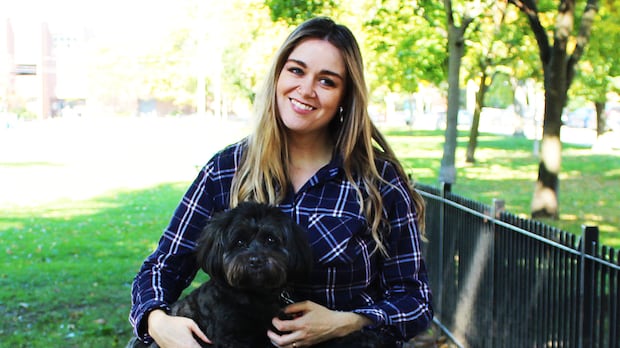
More than a decade after she moved to Canada from Ireland, Billie Shannon says she feels proud to be among the growing number of people learning — or relearning — the Irish language.“I think it's having a moment,” said Shannon, a 39-year-old dog trainer, who lives in Toronto but is originally from Dublin.“Maybe before, it wasn't cool to speak Irish. Whereas now it's like, ‘Hang on, this is ours and we were colonized and we should speak this,’” she told The Current.Irish was once spoken across the island of Ireland, though it declined over centuries of British rule, during which English became the dominant language. It’s estimated that there are roughly 80,000 native Irish speakers left on the island, out of a population of roughly seven million.The language is a compulsory subject in Ireland’s education system, though most students do not reach fluency — or maintain it into adulthood. Shannon says that like “a lot of other people from Ireland, I learned it [in school], but forgot most of it.” She now takes a weekly evening class at the University of Toronto, where students grapple with learning a cúpla focal, or a few words, in Irish. It’s an effort being repeated around the world, be it in classrooms, cellphones or computers.WATCH | Why are these Torontonians learning Irish?:The Current's Padraig Moran joined an Irish class at the University of Toronto to find out why more Canadians are learning, or relearning, the language that was once in decline.Late last year, Queen’s University in Belfast reported a 227 per cent increase in students taking Irish language classes. And in the last two years, the number of Canadians learning Irish on Duolingo has grown 18.9 per cent, the company said in a statement to The Current. That translates into 1.93 million people around the world using app to study Irish, according to Duolingo’s data.Ceithleann Ní Dhuibhir Ní Dhúlacháin teaches Shannon’s class and said her students come from a range of backgrounds. That includes people from Ireland or Canadians with Irish ancestry, but also people with no connection to the country. “Someone maybe will have found the Irish language on TikTok … or maybe they've heard the band Kneecap and that's really drawn them in,” said Ní Dhuibhir Ní Dhúlacháin, a native Irish speaker who grew up in a Gaeltacht — an all-Irish speaking area — in Gweedore, Co. Donegal.“They might be just curious to see what all the fuss is about, to see what Irish is.”The 'poetic magic' of IrishCathal Ó’Muircheartaigh might be one of those Irish speakers that people are encountering on social media. He grew up in Ireland and attended a gaelscoil, a school where every subject is taught through Irish (similar to French immersion). That meant he was fluent by the age of 12. But that fluency faded when he switched to an English-speaking secondary school and then dimmed further at university, where he didn’t have the opportunity to speak Irish.“I suppose it was always in the back of my mind that it was something that I wanted to return to … something I kind of kicked down the road year after year,” said Ó’Muircheartaigh, 33, who is from County Kildare but now lives in Sheffield, England, where he works as a coach for a soccer team.LISTEN | What do you love about Irish?:The Current5:04'It's a beautiful language, it's a lot of fun'Late last year, Ó’Muircheartaigh started posting daily videos in Irish to his instagram account @thereelmurts, as a way to force himself to engage with Irish more regularly. He had just wanted to connect with other speakers, but his videos drew a huge response, racking up 35,000 new followers in three months.Ó’Muircheartaigh thinks people are curious about the language and want to learn more, particularly some of what he calls the “poetic magic” of Irish. He gave the word for freckles as an example.“There's no direct translation for the word ‘freckles’ in Irish, but what we say instead is póigíní gréine,” he explained.A póg is a kiss, the suffix -ín indicates that something is small, and gréine refers to the sun.“Instead of saying freckles, we say little sun kisses,” he said.Famine was major 'turning point'The history of the decline of Irish speakers is long and complicated, but Pa Sheehan points to Ireland’s Great Famine in the 1840s as a key turning point.Over successive years that decade, a blight destroyed the potato crops that poorer Irish people relied on. That led to widespread starvation, even as large quantities of viable food were being exported to Britain. At the beginning of the famine, Ireland had a population of eight million. “It is estimated that about one million people died and about one million people emigrated during the couple of years that the famine lasted,” said Sheehan, an assistant professor in the Celtic studies program at the University of St. Michael’s College, at the University of Toronto.“The majority of those people would have been Irish speakers … the majority of [migrants] did not bring the language with them, or if they did it was lost after a generation.”Sheehan said that the famine also affected how the language was viewed, and it came to be “associated with a kind of poverty, backwardness, a rural lifestyle.” Pa Sheehan is an assistant professor in the Celtic studies program at the University of St. Michael’s College, at the University of Toronto. (Submitted by Pa Sheehan)As economic migration continued to be a fact of life for generations of Irish people throughout the 20th century, many felt the language didn’t hold the same opportunities as English.That negative perception appears to be shifting. In a survey published in March, researchers found that 68 per cent of respondents want to improve their Irish, with that number rising to 73 per cent among under-35s. The research was conducted via an online survey among a nationally representative sample of 1,000 adults in the Republic of Ireland in December 2025.Sheehan wonders if time has played a role in eliminating the shame that people once felt around Irish and whether “the current generations don't have that baggage.”Canadian couldn't imagine life without IrishKieran Walker was born and raised in Halifax after his mother and grandparents emigrated there from Belfast in the 1970s, when his mother was still a child.The family spoke no Irish, but Walker decided to learn it at university after a trip with a group of other second-generation Canadians. “Everyone else had their language, whether that was Arabic, Polish, Portuguese,” he remembers, adding that it made him question why he didn’t know more Irish, and why his mother and grandparents didn’t speak it. WATCH | Learning a few phrases in Irish:Gearóid Ó Treasaigh from Galway, Ireland, is in New Brunswick teaching Irish studies at St. Thomas University through the Ireland-Canada University Foundation. He gives CBC TV host Clare MacKenzie a lesson in Irish greetings.Now fluent, Walker teaches Irish classes in Halifax. His mother and other family members have also started to learn the language — and he’s teaching a few words to his two-year-old nephew.“It's amazing that it still exists when there was so much work that went into trying to make sure that it and other Indigenous languages ... would cease to be spoken,” he said.“I couldn't, at this point in my life, imagine my life without the Irish language. It's very much part of who I am.”Sheehan said he sees speaking Irish as a serious responsibility. “Languages live because people speak them … there's no other way around that,” he said.He said that might just mean learning a few phrases, teaching those phrases to someone else — or in his case passing the language down to his future children.“We're all doing our part and we need to do our part because so much damage was done for so many centuries that we've a lot of making up to do,” he said.The poll by Amárach and Gaelchultúr interviewed 1,000 adults online in the Republic of Ireland in December 2025. We cannot accurately calculate the margin of error for online surveys. For comparison purposes only, a probability sample of the same size would yield a margin of error of 3.1 per cent, 19 times out of 20.